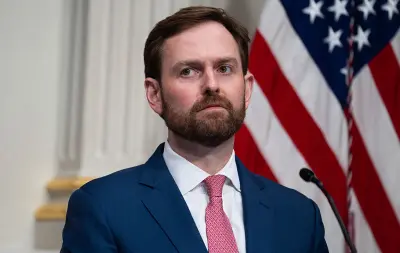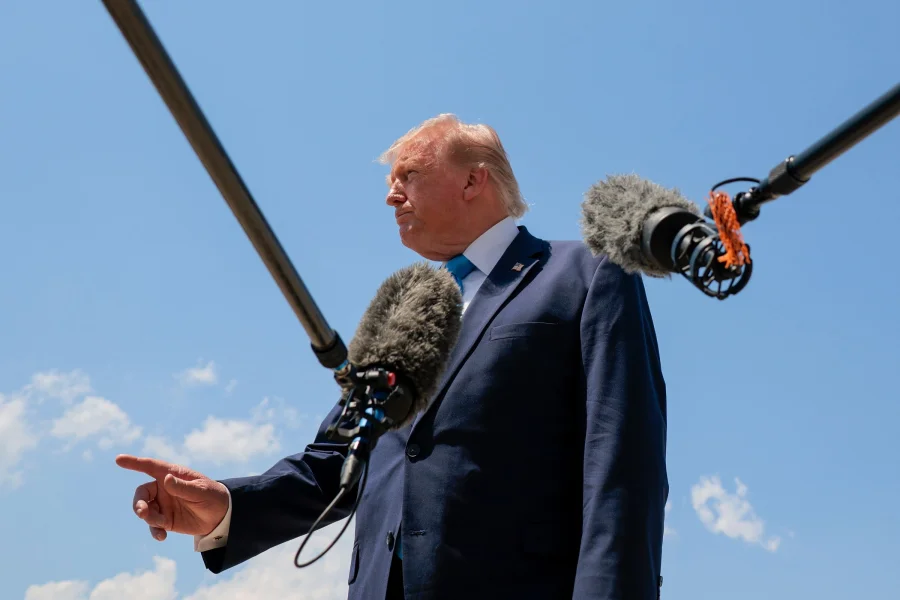
What started as a routine policy shift has spiraled into a full-blown internal war inside the Trump administration. The battle is over something that will shape the future of nearly every industry: how to regulate artificial intelligence.
After Donald Trump killed an executive order designed to oversee AI development, the administration didn't find clarity. Instead, it found chaos. Officials are now locked in a bitter struggle with each other — and with powerful AI executives — over what, if anything, can be salvaged.
The result is a fractured White House, a confused tech industry, and a growing sense that America's leadership in AI could be at risk.
How the AI Regulation Battle Began Inside the White House
The conflict traces back to a single decision. The Trump administration revoked a previous executive order that had established a framework for regulating artificial intelligence. That order, put in place by the previous administration, aimed to balance innovation with safeguards against risks like bias, national security threats, and job displacement.
By killing it, the administration signaled a desire for a lighter regulatory touch. But what followed was anything but smooth.
According to reports, administration officials quickly found themselves at odds. Some wanted a more aggressive, hands-off approach that would let the industry self-regulate. Others argued that without some form of federal oversight, the U.S. would fall behind global competitors like China and the European Union, which are moving fast to set their own AI rules.
Meanwhile, AI executives — who had been hoping for clear, predictable guidelines — were left frustrated. The uncertainty, they warned, was worse than any regulation.
Why This Matters Right Now
This isn't just a Washington drama. The outcome of this internal fight will affect millions of people.
Artificial intelligence is already reshaping healthcare, finance, education, and national security. How the U.S. chooses to regulate it will determine everything from the safety of self-driving cars to the fairness of hiring algorithms to the privacy of personal data.
For businesses, the lack of a clear federal policy creates a patchwork of state-level regulations that are expensive and confusing to navigate. For workers, it raises questions about job security and retraining. For the average citizen, it means uncertainty about how AI will impact daily life.
The world is watching. And the clock is ticking.
Who Is Fighting Whom Inside the Administration
The fractures run deep. On one side are officials who believe the market should decide how AI develops. They argue that government intervention will stifle innovation and hand an advantage to countries like China.
On the other side are those who see AI as a potential threat — to national security, to democratic institutions, and to the economy. They want guardrails in place before it's too late.
Caught in the middle are AI executives. Some have publicly called for regulation, fearing that without it, public trust in AI will erode. Others privately worry that any regulation will slow their growth and profitability.
The result is a three-way tug-of-war: pro-regulation officials, anti-regulation officials, and a tech industry that can't agree on what it wants.
What We Know So Far — and What Remains Unclear
Here's what is confirmed: The executive order was revoked. Internal meetings have been tense. No new policy has been announced.
What remains unclear is whether the administration can find a compromise. Some insiders suggest a scaled-back order is being drafted. Others say the divisions are so deep that nothing will pass until after the next election.
Also unclear is the role of Congress. While the White House struggles internally, lawmakers on both sides of the aisle are beginning to draft their own AI legislation. That could either force the administration's hand — or make the internal conflict irrelevant.
Risks, Concerns, and the Balanced View
The risks of inaction are significant. Without federal guidelines, states like California and New York are moving ahead with their own rules. That creates a compliance nightmare for companies operating nationally.
There's also the risk of falling behind. The European Union has already passed its AI Act. China has its own regulatory framework. The U.S., once the undisputed leader in AI, risks losing its edge.
But there are also risks in acting too quickly. Overregulation could stifle innovation, drive startups overseas, and slow the development of life-saving AI applications in medicine and climate science.
The balanced view is this: The administration needs to find a middle ground. One that protects citizens without strangling innovation. One that provides clarity without being rigid. One that asserts American leadership without isolating global partners.
That's easier said than done — especially when the people making the decisions can't agree among themselves.
Why Similar Conflicts Are Growing Across the Government
This isn't an isolated incident. Across federal agencies, similar battles are playing out over everything from data privacy to autonomous weapons to AI in hiring.
The Department of Defense wants to use AI for national security. The Federal Trade Commission is worried about consumer protection. The Department of Labor is concerned about jobs. Each agency has its own priorities, and they don't always align.
This fragmentation is making it nearly impossible to create a unified national AI strategy. And that, experts say, is exactly what the U.S. needs right now.
"Without a coherent federal approach, we risk a future where AI develops in a regulatory vacuum — or worse, a chaotic patchwork of conflicting rules." — Tech policy analyst
What Readers, Users, and Investors Should Know Now
For businesses: Expect continued uncertainty. Don't rely on federal guidelines anytime soon. Plan for state-level compliance instead.
For investors: The lack of clarity creates both risk and opportunity. Companies that can navigate the regulatory chaos may emerge stronger. But volatility is likely.
For the general public: Stay informed. The decisions being made — or not made — in Washington will affect your job, your privacy, and your safety. Pay attention.
What Could Happen Next
Several scenarios are possible. The administration could patch together a compromise order that satisfies no one but provides temporary clarity. Or the internal war could drag on, leaving the U.S. without a federal AI policy for years.
Congress could step in, passing its own legislation that overrides the executive branch's paralysis. Or the states could continue to lead, creating a de facto national policy through their individual laws.
One thing is certain: The world won't wait. While Washington fights, other nations are moving. The question is whether the U.S. will lead — or be left behind.
Our Take: Why This Story Matters Beyond One Administration
This isn't just about Donald Trump or his team. It's about a fundamental question that every government will face: How do you regulate a technology that is evolving faster than the laws designed to control it?
The internal war inside the Trump administration is a symptom of a larger struggle. It reflects the difficulty of balancing innovation with safety, freedom with oversight, and national interests with global cooperation.
How this conflict is resolved — or not — will set a precedent for years to come. It will shape not just AI policy, but the broader relationship between government and technology.
That's why this story matters. Not because of the political drama. But because the outcome will affect every one of us.
FAQs
Why is the Trump administration divided over AI regulation?
The administration is split between officials who want minimal government intervention to encourage innovation and those who believe federal oversight is necessary to address risks like national security threats, bias, and economic disruption.
What happened to the previous executive order on AI?
The Trump administration revoked a previous executive order that had established a regulatory framework for artificial intelligence. This decision triggered internal conflict over what, if anything, should replace it.
How does this internal conflict affect the AI industry?
The lack of clear federal policy creates uncertainty for AI companies, making it difficult to plan for compliance. Some executives want regulation for clarity, while others fear it will slow innovation and growth.
What could happen if the U.S. doesn't create a unified AI policy?
Without federal guidelines, states will create their own rules, leading to a costly patchwork of regulations. The U.S. also risks falling behind global competitors like the European Union and China, which are already implementing their own AI frameworks.