When Julie Masino took the helm at Cracker Barrel, she inherited a brand bruised by its own hand. The 2024 decision to redesign the chain’s beloved folksy logo had sparked a firestorm among loyal customers, and the company was still reeling. But by early 2025, the turnaround seemed to be working. Financial performance had improved in recent quarters, and the stock had doubled this year.
So when Cracker Barrel announced on Monday that Masino was stepping down next month, Wall Street was stumped. The stock dropped 6% on the news before paring some of those losses. Investors who had bet on a recovery were left wondering: why now?
Why Wall Street is scratching its head over the CEO change
The timing is what makes this move so puzzling. Masino had just begun to show results. The logo controversy had faded from headlines, same-store sales were stabilizing, and the stock was on a tear. For a company that had been written off by some analysts, this was a rare bright spot.
Abrupt leadership changes at a moment of fragile recovery often signal deeper trouble — or a board that sees a different path forward. But Cracker Barrel offered no hint of discord. Instead, it framed the transition as the outcome of a “comprehensive succession planning and search process.”
Who is David Deno and why his selection raises questions
What may be more head-scratching than Masino’s departure is Cracker Barrel’s pick to replace her: David Deno, former CEO of Bloomin’ Brands, the parent company of Outback Steakhouse.
Deno is a veteran of the casual dining industry, but his background is in steakhouse chains — a very different beast from Cracker Barrel’s country-store-meets-restaurant model. Outback Steakhouse is known for its Australian-themed menu and bar-centric atmosphere, while Cracker Barrel trades on nostalgia, home-style cooking, and a retail store filled with rocking chairs and old-fashioned candy.
The cultural and operational gap between the two brands is significant. Investors are asking whether Deno can translate his experience at a large, publicly traded steakhouse operator to a chain that relies heavily on its unique brand identity and roadside location strategy.
The logo controversy that still haunts Cracker Barrel
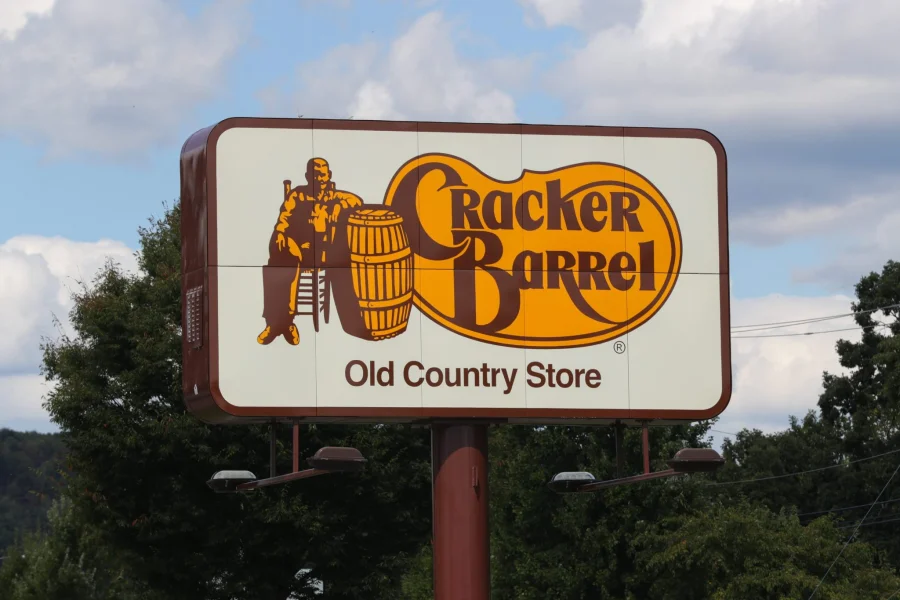
To understand the stakes, you have to go back to 2024. Cracker Barrel redesigned its logo — a move meant to modernize the brand but which instead alienated its core customer base. The backlash was swift and loud. Longtime patrons accused the company of abandoning its roots, and social media erupted with complaints.
Masino spent much of her tenure trying to undo that damage. She refocused on the brand’s traditional appeal, emphasizing the rustic, folksy charm that had made Cracker Barrel a staple for road-tripping families. The strategy appeared to be working, but the scars remain.
What this means for Cracker Barrel’s loyal customers
For the millions of Americans who stop at Cracker Barrel for Sunday breakfast or a holiday meal, the leadership change raises an uncomfortable question: will the brand change again? Deno’s background at Bloomin’ Brands — which also owns Carrabba’s Italian Grill and Bonefish Grill — suggests a more corporate, multi-brand approach. That could mean menu changes, pricing shifts, or a push toward a more standardized dining experience.
Regulars who value the quirky, inconsistent charm of Cracker Barrel may be wary. The chain’s strength has always been its distinctiveness — the wooden rocking chairs on the porch, the peg games on the tables, the gift shop that feels like a time capsule. Any move toward homogenization risks losing what makes Cracker Barrel special.
What the company says about the succession plan
Cracker Barrel has not provided detailed reasoning for the change beyond citing a “comprehensive succession planning and search process.” The company’s board appears to have decided that Deno’s experience in scaling a large restaurant group is what Cracker Barrel needs now.
Deno, for his part, has a track record of operational discipline. During his tenure at Bloomin’ Brands, he oversaw cost-cutting measures and menu simplification. But he also faced challenges: the company struggled with rising labor costs and changing consumer preferences toward fast-casual dining.
Why the timing matters for investors
The stock’s 6% drop on the announcement reflects genuine uncertainty. Cracker Barrel had been one of the better-performing restaurant stocks this year, and the sudden leadership change injects risk into the narrative. Investors who bought in on the turnaround story are now wondering if the momentum can continue under a new CEO.
Analysts will be watching Deno’s first moves closely. Will he maintain Masino’s strategy of brand rehabilitation, or will he pivot toward cost-cutting and operational efficiency? The answer will determine whether Cracker Barrel can sustain its recovery — or slip back into decline.
Confirmed facts vs what remains unclear
Confirmed: Julie Masino is stepping down as CEO next month. David Deno, former CEO of Bloomin’ Brands, will replace her. Cracker Barrel shares fell 6% on the announcement. Masino had overseen a stock doubling this year and improving financial performance.
Unclear: The exact reason for Masino’s departure. Whether the board pushed her out or she chose to leave. Deno’s specific strategy for Cracker Barrel. Whether the logo controversy will resurface under new leadership.
Risks and balanced view of the leadership change
The risks are clear: a new CEO from a different restaurant segment may not understand Cracker Barrel’s unique brand DNA. The stock could face further volatility if Deno’s strategy disappoints. And the logo controversy could reignite if the company makes any move perceived as abandoning its roots.
On the other hand, Deno brings deep experience in managing a large, multi-brand restaurant group. He knows how to control costs, streamline operations, and navigate a challenging labor market. If he can apply those skills without eroding Cracker Barrel’s identity, the company could emerge stronger.
Wider trend: Casual dining’s struggle for relevance
Cracker Barrel’s leadership drama is part of a larger story. Casual dining chains across America are fighting for survival as consumers shift toward fast-casual options, delivery apps, and home cooking. Brands like Applebee’s, Chili’s, and TGI Fridays have all faced similar pressures.
What sets Cracker Barrel apart is its strong brand loyalty and unique retail component. But that also makes it harder to change without alienating customers. The new CEO will have to walk a tightrope between modernization and tradition.
What Cracker Barrel customers and investors should watch for
For customers: Pay attention to menu changes, pricing adjustments, and any shifts in the store’s retail offerings. If Deno starts rolling out standardized items or removing quirky favorites, that’s a signal of a broader strategy shift.
For investors: Watch the next earnings call for clues about Deno’s priorities. Look for mentions of brand positioning, cost structure, and same-store sales trends. The stock’s reaction to the first few quarters under new leadership will be telling.
Future outlook: What could happen next
If Deno sticks with Masino’s playbook of brand rehabilitation, the recovery could continue. If he pivots toward aggressive cost-cutting or menu standardization, the stock could face headwinds. The biggest risk is a repeat of the logo controversy — any move perceived as abandoning Cracker Barrel’s identity could trigger another customer backlash.
The next 12 months will be critical. Deno needs to prove he understands what makes Cracker Barrel special while also delivering the operational improvements that the board clearly wants.
Our Take
This is a story about the tension between brand identity and corporate efficiency. Cracker Barrel’s strength has always been its distinctiveness — the feeling of stepping into a simpler, more nostalgic America. But that same distinctiveness makes it hard to manage like a standard restaurant chain.
David Deno is a capable operator, but his background suggests a focus on scale and standardization. That may not be what Cracker Barrel needs right now. The company’s recovery was fragile, and a sudden leadership change risks undoing the progress Masino made. Wall Street’s skepticism is justified — and customers should be paying attention too.
Frequently Asked Questions
Why did Cracker Barrel CEO Julie Masino step down?
The company has not provided a specific reason, citing only a “comprehensive succession planning and search process.” Masino had been making progress on the brand’s recovery after the 2024 logo redesign controversy.
Who is the new Cracker Barrel CEO?
David Deno, former CEO of Bloomin’ Brands, the parent company of Outback Steakhouse, Carrabba’s Italian Grill, and Bonefish Grill. He takes over as CEO next month.
How did the stock react to the CEO change?
Cracker Barrel shares fell 6% on the announcement before partially recovering. The drop reflects investor uncertainty about the timing and the choice of successor.
What does the logo controversy have to do with this?
The 2024 logo redesign alienated loyal customers and damaged the brand. Masino had been working to repair that damage. The new CEO’s approach to brand identity will be closely watched.