The Gulf is racing to become the world’s next AI powerhouse. Billions of dollars are pouring into massive data centers, cloud infrastructure, and cutting-edge research. But there’s a problem lurking beneath the waves — one that could bring the entire digital ambition crashing down.
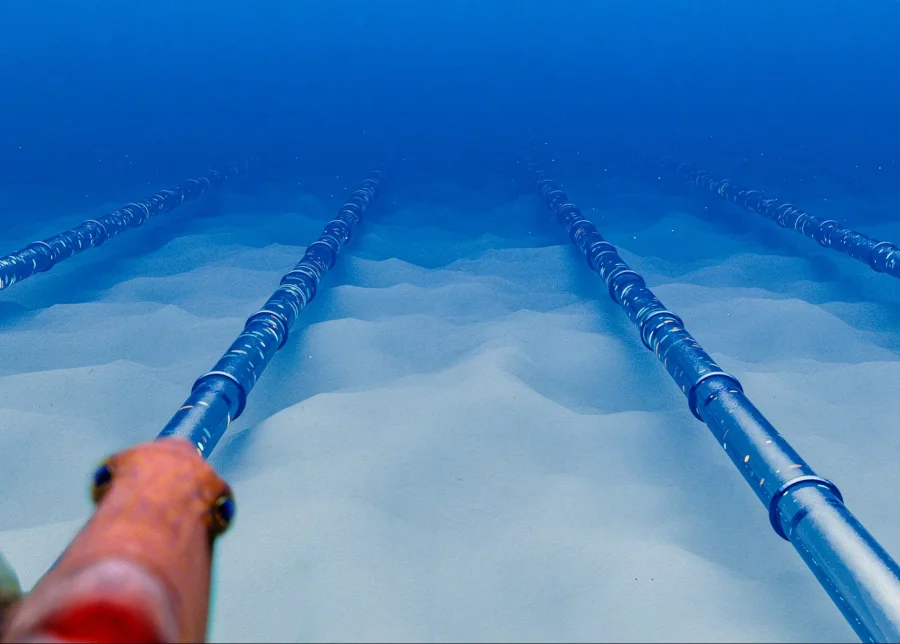
Undersea cables, the invisible arteries of the internet, are the region’s Achilles’ heel. And as AI demands more data, more speed, and more reliability than ever before, the stakes have never been higher. A single cut, a single disruption, and the Gulf’s AI boom could face a digital blackout.
Why This Matters Right Now
This isn’t a distant, theoretical risk. It’s a live, escalating crisis. The Gulf’s hyperscalers — Google, Microsoft, Amazon, and local giants — are betting everything on uninterrupted, high-bandwidth connectivity. AI training models consume data at a staggering rate. A cable disruption doesn’t just slow down Netflix; it halts AI research, freezes financial markets, and cripples cloud-dependent businesses.
For the millions of people across the Gulf who rely on seamless digital services — from banking to healthcare to education — the fragility of this infrastructure is a silent threat. And for investors pouring capital into the region’s AI future, it’s a risk that could wipe out billions.
How the Undersea Cable Problem Unfolded
The Gulf has long been a global hub for energy. Now, it’s positioning itself as a hub for data. But the geography that made it rich in oil also makes it vulnerable for internet traffic. The region’s undersea cables pass through narrow, geopolitically tense waterways — the Strait of Hormuz, the Red Sea, the Bab el-Mandeb strait.
According to reports from WIRED and other outlets, these chokepoints are where the risk concentrates. In recent years, incidents have multiplied: ship anchors dragging across cables, deliberate sabotage, and geopolitical tensions threatening critical infrastructure. The Houthi attacks in the Red Sea, for example, have already disrupted shipping lanes. Experts warn that undersea cables could be next.
“The Gulf’s digital future is built on a fragile foundation,” says a cybersecurity analyst quoted in the Stimson Center report. “A single cable cut in the Red Sea could disrupt internet traffic for a third of the world.”
Who Is Affected and What Officials Are Saying
The impact is not limited to tech giants. Every Gulf citizen, every business, every government service depends on these cables. When a cable is damaged, internet speeds drop, latency spikes, and critical services can go offline. For AI companies, the consequences are even more severe: training a large language model can take weeks and cost millions. A disruption could mean starting over.
Gulf officials are aware of the vulnerability. According to the Better World Campaign analysis, governments are now exploring new cable corridors that bypass the most dangerous chokepoints. Saudi Arabia and the UAE are investing in terrestrial fiber routes that connect to Europe and Asia via land, reducing reliance on sea cables. But these alternatives are expensive and time-consuming to build.
“We cannot afford to have our AI ambitions held hostage by a single cable,” a Gulf telecommunications official told WIRED. “We are diversifying routes, investing in redundancy, and exploring satellite backup. But the reality is, the infrastructure is not yet where it needs to be.”
What We Know So Far — and What Remains Unclear
What we know:
- Undersea cables in the Gulf region are vulnerable to disruption from ship anchors, earthquakes, and geopolitical conflict.
- AI data centers require massive, uninterrupted bandwidth. A cable cut can halt operations.
- Hyperscalers are pushing for new cable routes and terrestrial backups.
- The Red Sea and Strait of Hormuz are identified as critical chokepoints.
What remains unclear:
- How quickly new cable corridors can be built and operational.
- Whether satellite alternatives like Starlink can provide sufficient bandwidth for AI workloads.
- The full extent of geopolitical risk, particularly from Iran and Houthi forces.
- Whether current redundancy plans are adequate for the scale of AI demand.
Risks, Concerns, and the Balanced View
The risks are real and growing. But it’s important to maintain perspective. The Gulf is not alone in facing this challenge. Every region with undersea cable dependencies — from Southeast Asia to the Mediterranean — faces similar vulnerabilities. What makes the Gulf unique is the speed and scale of its AI ambitions, combined with its geopolitical volatility.
Bull case: The Gulf has the financial resources to build world-class redundant infrastructure. Governments are already investing in multiple cable routes, terrestrial backups, and satellite systems. The region’s hyperscalers are experienced in managing risk. The AI boom could actually accelerate infrastructure improvements.
Bear case: The infrastructure is not keeping pace with demand. A major disruption could set back AI projects by months or years. Geopolitical tensions could escalate, turning cables into targets. The cost of true redundancy may be prohibitive, leaving the region exposed.
Critics also point out that the Gulf’s AI push is partly driven by a desire to diversify away from oil. But if the digital infrastructure is as fragile as the oil infrastructure, the region may simply be swapping one vulnerability for another.
Why Similar Trends Are Growing Globally
The Gulf’s undersea cable problem is part of a larger global pattern. As AI and cloud computing drive exponential growth in data traffic, the world’s internet infrastructure is being tested like never before. From the South China Sea to the Mediterranean, cable disruptions are becoming more frequent and more consequential.
According to the AGSI analysis, the number of cable faults globally has increased by 30% in the last five years. The causes range from natural disasters to human error to deliberate sabotage. And as AI models become larger and more data-hungry, the tolerance for any disruption is shrinking.
The Gulf is at the epicenter of this trend because of its unique combination of factors: massive AI investment, strategic geography, and geopolitical tension. What happens here could serve as a warning — or a model — for the rest of the world.
“The Gulf is building the future on a foundation of glass and copper that runs through some of the most dangerous waters on Earth. It’s a gamble that could pay off — or leave the region disconnected at the worst possible moment.” — Cybersecurity analyst, Stimson Center
What Readers, Users, and Investors Should Know Now
For businesses and investors in the Gulf AI ecosystem, the message is clear: don’t take connectivity for granted. Due diligence should include an assessment of cable routes, redundancy plans, and backup options. Companies should demand transparency from their internet service providers about cable resilience.
For everyday users, the risk is less immediate but real. A major cable disruption could mean slower internet, interrupted streaming, and delayed cloud services. It’s worth understanding where your data travels and how vulnerable it is.
For policymakers, the priority must be accelerating infrastructure diversification. Terrestrial fiber routes, satellite backup, and new cable corridors should be treated as national security priorities, not just commercial projects.
What Could Happen Next
In the short term, expect more investment in cable redundancy and alternative routes. The Gulf’s hyperscalers will likely push for faster deployment of new cables, possibly through public-private partnerships. Satellite systems like Starlink and Amazon’s Project Kuiper could play a growing role, though they currently lack the bandwidth for large-scale AI workloads.
In the medium term, the region may see a shift toward more localized AI infrastructure — smaller data centers that can operate independently of global cables. Edge computing and distributed AI models could reduce dependence on long-haul connectivity.
In the long term, the Gulf’s undersea cable problem could drive innovation in cable technology itself. Stronger, more resilient cables, better monitoring systems, and faster repair capabilities could emerge as a new industry.
But the clock is ticking. The AI boom is not waiting for the infrastructure to catch up. Every day of delay increases the risk of a catastrophic disruption.
Our Take: Why This Story Matters Beyond One Incident
The Gulf’s undersea cable problem is not just a technical issue. It’s a story about the tension between ambition and reality, between digital dreams and physical constraints. The Gulf wants to be the world’s AI leader. But leadership requires resilience, not just investment.
This story matters because it highlights a fundamental truth about the digital age: the internet is not a cloud. It’s a physical network of cables, routers, and data centers, all vulnerable to the same forces that have always shaped human history — geography, politics, and conflict.
The Gulf’s AI boom is a remarkable achievement. But it will only be sustainable if the infrastructure beneath it is as strong as the ambition above it. The world is watching to see if the region can solve its undersea cable problem before the problem solves itself.
FAQs
Why are undersea cables critical for AI in the Gulf?
AI data centers require massive, uninterrupted bandwidth to train and run models. Undersea cables are the primary way data flows between the Gulf and global cloud hubs. A disruption can halt AI operations, delay research, and cause significant financial losses.
What are the main threats to undersea cables in the Gulf region?
The main threats include ship anchors dragging across cables, earthquakes, and geopolitical tensions in chokepoints like the Strait of Hormuz and the Red Sea. Deliberate sabotage by state or non-state actors is also a growing concern.
How are Gulf countries responding to the undersea cable vulnerability?
Gulf nations are investing in new cable corridors that bypass dangerous chokepoints, building terrestrial fiber routes, and exploring satellite backup systems. They are also working with hyperscalers to improve redundancy and monitoring.
Can satellite internet replace undersea cables for AI workloads?
Currently, satellite systems like Starlink lack the bandwidth and low latency required for large-scale AI training. They can serve as backup for critical communications but cannot yet replace undersea cables for primary AI infrastructure.