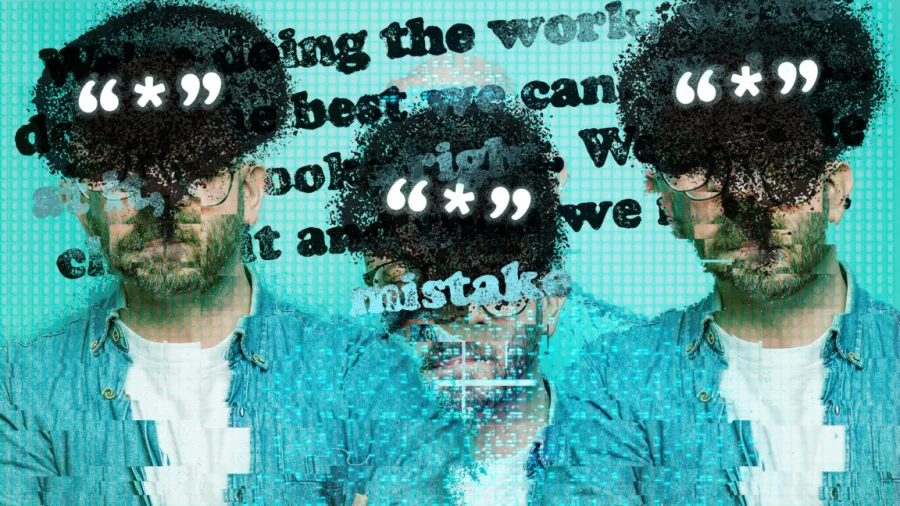
Imagine writing an entire book about how artificial intelligence is bending the truth. Now imagine getting caught because your own book contains fake quotes generated by the very AI you were warning everyone about.
That's the uncomfortable position journalist and author Steven Rosenbaum finds himself in this week. His new book, The Future of Truth: How AI Reshapes Reality, was supposed to be a warning about "how Truth is being bent, blurred, and synthesized" by profit-driven AI. Instead, a New York Times investigation revealed that Rosenbaum's own book contains what he now calls "a handful of improperly attributed or synthetic quotes" — generated by the AI tools he used during research.
But here's where the story gets even more complicated. Rosenbaum isn't swearing off AI. He says he wants to keep using it.
What the Investigation Found: Fake Quotes from Real People
The New York Times investigation uncovered several quotes in Rosenbaum's book that were either fabricated or improperly attributed. Two cases stand out.
Tech reporter Kara Swisher told the Times that a quote attributed to her in the book was something she "never said." Northeastern University professor Lisa Feldman Barrett said the quotes attributed to her "don't appear in [my] book, and they are also wrong."
These weren't minor paraphrasing errors. These were entirely manufactured statements — the kind of hallucination AI language models are notorious for producing. The AI had essentially invented conversations that never happened, and Rosenbaum had included them in a book about truth.
Why This Matters Right Now
This isn't just an embarrassing moment for one author. It's a flashing warning sign for anyone who uses AI tools for research, writing, or journalism.
AI hallucinations — where the model confidently generates false information — are a well-known problem. But this case shows that even experienced journalists, writing a book specifically about AI's dangers, can fall into the trap. If the author of a book called The Future of Truth can't spot AI-generated fake quotes, what hope does the average user have?
The incident also raises uncomfortable questions about trust. Every time a book, article, or report uses AI-generated content without rigorous verification, it erodes public confidence in the information ecosystem. And in an era where misinformation is already rampant, that's a dangerous trend.
How the Incident Unfolded
Rosenbaum's book was published with the explicit goal of examining how AI is reshaping our understanding of reality. He used AI tools during the research process, likely to summarize sources, generate ideas, or even draft passages.
At some point, the AI produced quotes that appeared to come from real people. Rosenbaum, trusting the tool, included them in the manuscript. The New York Times investigation flagged the discrepancies, and Rosenbaum acknowledged the problem.
He is now working with editors on what he describes as a full "citation audit" that will correct future editions of the book. But the damage to his credibility — and the irony of the situation — is already public.
Who Is Affected and What the Author Is Saying
The most directly affected are Kara Swisher and Lisa Feldman Barrett, both respected figures in their fields. Having false words attributed to them not only misrepresents their views but could also damage their professional reputations.
Rosenbaum, for his part, has acknowledged the issue publicly. He told the Times that he takes responsibility and is working to fix the errors. But his decision to continue using AI tools has drawn sharp criticism.
"I understand the irony," Rosenbaum reportedly said. "But AI is a tool. The problem isn't the tool — it's how you use it."
Critics argue that this response misses the point. If the tool is fundamentally unreliable for generating factual content, continuing to use it without fundamental safeguards is reckless.
What We Know So Far — and What Remains Unclear
What we know:
- Rosenbaum's book contains at least several AI-generated synthetic quotes
- Kara Swisher and Lisa Feldman Barrett have confirmed the quotes attributed to them are fake
- Rosenbaum has acknowledged the issue and is conducting a "citation audit"
- He plans to continue using AI tools
What remains unclear:
- How many other fake quotes might exist in the book
- Whether the publisher had any fact-checking process in place
- What specific AI tools Rosenbaum used
- Whether any legal action will follow from the individuals misquoted
Risks, Concerns, and the Balanced View
The risks here extend far beyond one author's embarrassment.
For journalism and publishing: If AI-generated content can slip into a book about AI truth, it can slip into any publication. This undermines the entire fact-checking and editorial process.
For public trust: Every incident like this makes it harder for readers to trust what they read. In a world already struggling with misinformation, that's a serious problem.
For AI adoption: Incidents like this could slow down legitimate, responsible use of AI in research and writing. The backlash might make publishers and journalists more cautious — which isn't necessarily bad, but could also stifle innovation.
The other side: Supporters of AI tools argue that the problem isn't the technology but the lack of proper verification protocols. Rosenbaum himself seems to take this view. The question is whether any amount of verification can fully protect against AI hallucinations.
Why Similar Concerns Are Growing
This isn't an isolated incident. Courts have seen lawyers submit briefs containing AI-generated fake cases. News outlets have published AI-generated articles with fabricated facts. Students have submitted AI-written essays with invented sources.
The pattern is clear: AI tools are being adopted faster than the safeguards needed to use them responsibly. And the consequences are mounting.
"AI doesn't know what truth is. It knows what patterns look like. And sometimes, those patterns are wrong." — Industry observer
What Authors, Journalists, and Readers Should Know Now
If you're using AI for research or writing, here's what this case should teach you:
- Never trust AI-generated quotes. Always verify them against original sources.
- Assume AI will hallucinate. It's not a bug — it's a feature of how these models work.
- Have a verification process. Don't rely on memory or intuition. Have a system.
- Be transparent. If you use AI, disclose it. Readers deserve to know.
For readers, this is a reminder to approach any content — especially content about controversial or complex topics — with healthy skepticism. If even the experts can be fooled, so can you.
What Could Happen Next
Rosenbaum's "citation audit" will likely result in corrected editions of his book. But the reputational damage may be lasting.
We may also see:
- Increased scrutiny of AI-generated content in publishing
- New fact-checking standards for books that use AI tools
- Legal challenges from individuals misquoted by AI
- Broader public debate about the role of AI in journalism and authorship
The publishing industry is watching closely. How this case is handled could set a precedent for how AI-generated errors are addressed in the future.
Our Take: Why This Story Matters Beyond One Incident
The irony of Rosenbaum's situation is almost too perfect to be fiction. A book about AI distorting truth, caught with AI-distorted truth inside it. It's the kind of story that would be dismissed as too on-the-nose if it appeared in a novel.
But that's exactly why it matters. This isn't a hypothetical warning about the future. It's happening now, to experienced professionals, in real time.
The author's decision to keep using AI tools is the most telling part of this story. It reflects a broader cultural attitude: we know AI has problems, but we're too invested to stop. We'd rather learn to manage the risks than abandon the convenience.
That might be the right call. Or it might be a recipe for more disasters. Either way, Rosenbaum's book — and the scandal surrounding it — will be remembered as a cautionary tale about what happens when you trust a machine to tell the truth.
FAQs
What are synthetic quotes in AI?
Synthetic quotes are fabricated statements generated by AI language models. The AI creates text that sounds like something a real person might say, but the quote is entirely invented. This is a form of AI hallucination.
How did AI generate fake quotes in Steven Rosenbaum's book?
Rosenbaum used AI tools during his research process. The AI likely produced quotes that appeared to come from real people like Kara Swisher and Lisa Feldman Barrett. Rosenbaum included these quotes in his manuscript without verifying them against original sources.
Is it safe to use AI for writing and research?
AI can be a useful tool, but it requires rigorous verification. Never trust AI-generated quotes, facts, or sources without checking them against reliable original sources. AI hallucinations are common and can produce convincing but false information.
What should publishers do to prevent AI-generated fake quotes?
Publishers should implement strict fact-checking protocols for any content that may have been generated or assisted by AI. This includes verifying all quotes against original interviews or publications, and requiring authors to disclose their use of AI tools.