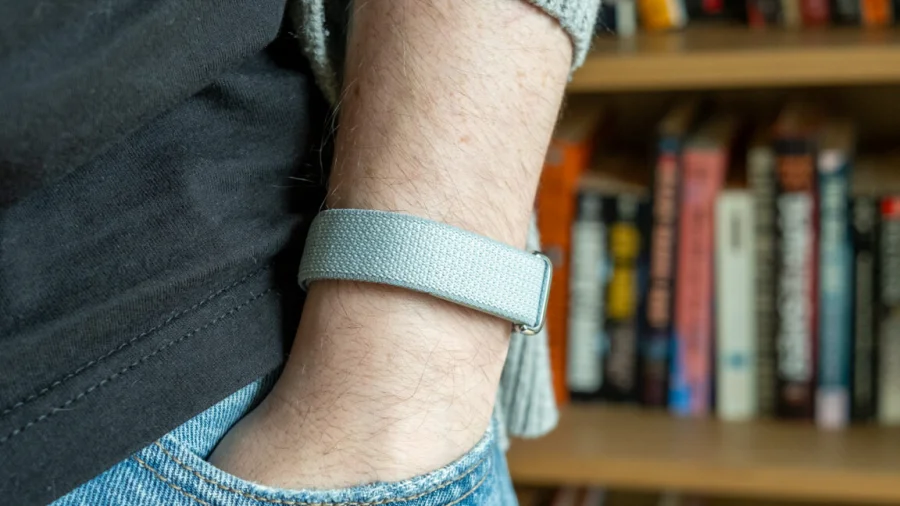
You buy a fitness tracker to get healthier, not to get a new nagging friend. The new $100 Fitbit Air is a brilliant piece of hardware—a tiny, screenless puck you can wear and forget. But Google has wrapped it in an AI Health Coach that just won’t stop talking. The result is a wearable that’s both refreshingly simple and frustratingly chatty.
What the Fitbit Air gets right: The art of disappearing
The Fitbit Air is a radical departure from the smartwatch norm. It has no screen, no buttons, and only a single LED to show battery level. You double-tap to check it, and that’s it. The vibration motor is strictly for alarms—it won’t buzz for notifications. This is a device designed to be forgotten. And it succeeds. At just a few grams, it’s so light you often forget it’s there. It’s the anti-Apple Watch, a tracker that prioritizes health data over digital distractions.
The AI Health Coach: When helpful becomes overbearing
The problem is the AI Health Coach. Google’s new platform, built into the Fitbit app, is supposed to be your personal wellness guide. It analyzes your sleep, activity, and recovery, then offers advice. In theory, it’s a great idea. In practice, it’s a constant stream of notifications. “You slept poorly. Try going to bed earlier.” “Your recovery score is low. Take it easy today.” “You’ve been inactive. Time for a walk.” The advice is often sound, but the frequency is exhausting. For a device that’s supposed to be minimalist, the AI coach is anything but.
Why the AI coach undermines the Fitbit Air’s core promise
The Fitbit Air’s entire appeal is simplicity. It’s a tracker you wear and forget, letting the data speak for itself. The AI coach, however, demands constant attention. It turns a passive health monitor into an active, sometimes annoying, companion. Users who wanted a Whoop-like experience—a band that tracks silently and provides insights on demand—will find the Fitbit Air’s constant nudging intrusive. The hardware is designed to be invisible, but the software insists on being seen.
Who is the Fitbit Air for?
This tracker is for people who are tired of smartwatch notifications. It’s for runners, swimmers, and gym-goers who want accurate health data without a screen on their wrist. It’s for anyone who finds the Apple Watch or Samsung Galaxy Watch too distracting. The Fitbit Air nails the hardware for this audience. But the AI coach risks alienating them. If you want a silent tracker that just works, the Air is close to perfect—if you can ignore the coach’s chatter.
Google’s response: The AI coach is here to stay
Google has positioned the AI Health Coach as a key differentiator. In a statement, the company said the coach is designed to “make health insights actionable and personal.” The idea is that raw data isn’t enough—users need guidance. But the execution is heavy-handed. The coach doesn’t learn when to be quiet. It treats every user like a beginner who needs constant reminders. For seasoned fitness enthusiasts, this feels patronizing. For new users, it might feel overwhelming.
The deeper problem: AI that doesn’t understand context
The AI coach’s biggest flaw is its lack of context. It doesn’t know if you’re a marathon runner who already knows to rest after a hard workout. It doesn’t know if you’re a busy parent who can’t take a walk right now. It gives generic advice that, while technically correct, feels tone-deaf. The coach is a one-size-fits-all solution in a world that needs personalized, nuanced guidance. This is a common problem with early AI health products: they know the data, but they don’t understand the person.
Confirmed facts vs what remains unclear
Confirmed: The Fitbit Air has no screen, no buttons, and one LED. It costs $100. The AI Health Coach is a core feature. The vibration motor is for alarms only. Unclear: Whether Google will allow users to customize or mute the AI coach’s notifications. Whether the coach improves over time with machine learning. Whether the device will launch in India and at what price. These are critical questions that will determine the Air’s long-term success.
Fitbit’s moat: Why this tracker matters
Fitbit’s strength has always been its health-tracking algorithms and large user base. The Air leverages this with a unique form factor that no other major player offers. The Whoop band is similar, but it requires a subscription. The Fitbit Air is a one-time purchase, making it more accessible. Google’s AI platform also gives it an edge in data analysis, if it can refine the user experience. The hardware is a moat—no one else makes a screenless tracker this good at this price.
Risks and balanced view
The biggest risk is that the AI coach drives users away. If people find it annoying, they’ll stop using the device or return it. Another risk is competition from Whoop, which has a loyal following and a more mature, less intrusive coaching system. There’s also the question of privacy: an AI that constantly analyzes your health data raises concerns about how that data is used. Google has promised strong privacy controls, but trust is fragile. On the positive side, the hardware is excellent, and the price is right.
The bigger trend: AI is coming to every wearable
The Fitbit Air is part of a larger shift. Apple, Samsung, and Whoop are all integrating AI into their wearables. The goal is to move from passive tracking to active coaching. But the Fitbit Air shows the danger: AI that doesn’t know when to be quiet can ruin an otherwise great product. The industry is learning that AI needs to be a silent partner, not a loud boss. The Air is a cautionary tale for every company rushing to add AI to their devices.
What should you do if you’re considering the Fitbit Air?
If you value minimalist hardware and don’t mind an occasionally chatty app, the Fitbit Air is a great buy. The tracking is accurate, the battery lasts days, and the price is fair. But if you want a truly silent tracker, wait to see if Google adds a “quiet mode” for the AI coach. Alternatively, consider the Whoop band, which offers a more hands-off experience. For now, the Fitbit Air is a near-perfect piece of hardware held back by software that needs to learn the value of silence.
Future outlook: Can Google fix the AI coach?
Google has a history of iterating quickly. The AI coach could be refined with software updates. If Google adds customization options—like muting certain notifications or setting quiet hours—the Fitbit Air could become the best screenless tracker on the market. The hardware is already there. The question is whether Google will listen to user feedback and let the AI coach learn when to shut up. If they do, the Air is a winner. If not, it’s a missed opportunity.
Our Take
The Fitbit Air is a brilliant piece of hardware that deserves a better software companion. Google’s AI Health Coach is a good idea executed poorly. It’s too talkative, too generic, and too intrusive for a device built on the promise of simplicity. The Air is a reminder that AI should enhance, not overwhelm. For now, it’s a great tracker you’ll love to wear—but you might want to mute the app. The potential is enormous, but the execution needs work.
Frequently Asked Questions
Does the Fitbit Air have a screen?
No. The Fitbit Air has no display, no buttons, and only a single LED to indicate battery level. It is designed to be a screenless, minimalist fitness tracker.
How much does the Fitbit Air cost?
The Fitbit Air is priced at $100 in the US. It is a one-time purchase with no subscription required, unlike the Whoop band.
Can the Fitbit Air show notifications?
No. The vibration motor is only for alarms. It cannot sync with phone notifications because there is no screen to display them.
Is the AI Health Coach mandatory?
Yes, the AI Health Coach is a core feature of the Fitbit Air. It provides daily health insights and advice. There is currently no option to disable it completely, though users can mute notifications.
How does the Fitbit Air compare to Whoop?
The Fitbit Air is a direct competitor to the Whoop band. Both are screenless trackers. The Fitbit Air costs $100 upfront with no subscription, while Whoop requires a monthly fee. The Fitbit Air’s AI coach is more intrusive than Whoop’s quieter approach.