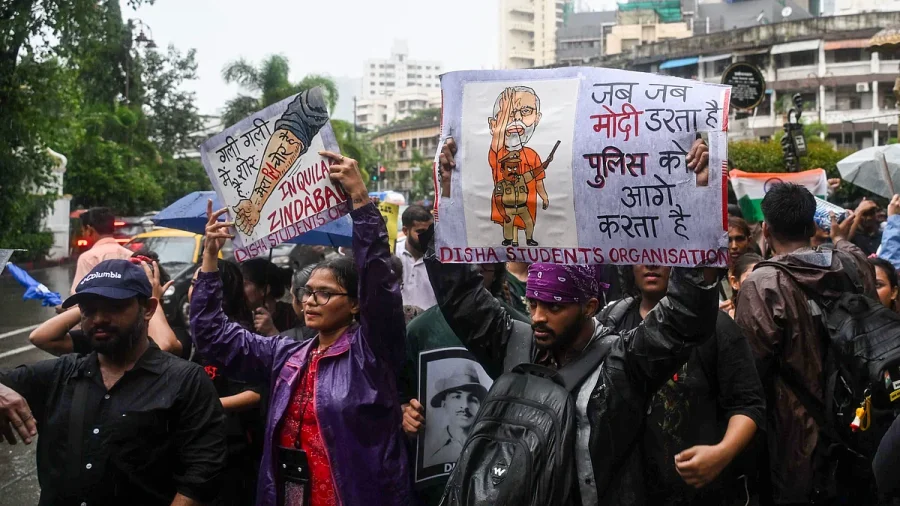
For the third consecutive day, the streets of Mumbai echoed with the voices of students, activists, and political leaders, united in their condemnation of police action in Delhi and their demand for accountability over exam irregularities. The protests, which began earlier this week, have now become a sustained movement, drawing hundreds of young demonstrators to key locations across the city.
Why Mumbai Is Protesting: Exam Irregularities and Police Crackdown
The immediate triggers for the protests are two-fold. First, demonstrators are demanding the resignation of Union Education Minister Dharmendra Pradhan, holding him responsible for alleged irregularities in national examinations. Second, they are denouncing what they describe as police "brutality" against protesters and supporters of the Cockroach Janta Party (CJP) during a march towards Parliament in Delhi on July 21. The events in Delhi have galvanized outrage in Mumbai, with many seeing the police response as an attack on democratic dissent.
Day 3: A Gathering at Chembur Despite Heavy Police Deployment
On Wednesday, 22 July, the epicenter of the Mumbai protests shifted to Dr Babasaheb Ambedkar Garden in Chembur. Despite a heavy police deployment intended to prevent large gatherings, hundreds of youngsters assembled, carrying placards and chanting slogans. Eyewitnesses reported that the atmosphere was tense but determined, with protesters linking the local issue of exam fairness to the broader national concern over police conduct.
Eyewitness Accounts: Detentions and Tensions
According to eyewitnesses, several protesters were detained by police during the Chembur demonstration. The exact number of detentions remains unclear, but the actions have further fueled anger among the demonstrators. Political parties, including the Congress, have joined the protests, with leaders being forcibly evicted during a march earlier in the week. The police have not yet issued a detailed statement on the detentions, but the confrontations highlight the growing friction between authorities and the protest movement.
Who Is Affected: Students, Activists, and the Public
The protests are primarily driven by students who feel their futures are compromised by exam irregularities. However, the movement has broadened to include activists concerned about civil liberties and political leaders seeking to hold the government accountable. For the general public in Mumbai, the daily disruptions and police presence have become a visible reminder of the tensions simmering over education policy and law enforcement practices.
Official Response and Demands
The central demand of the protesters is the resignation of Union Education Minister Dharmendra Pradhan. They argue that the exam irregularities have caused undue stress and uncertainty for millions of students across the country. Additionally, they are calling for a thorough investigation into the police action in Delhi and for those responsible for any excessive force to be held accountable. As of now, the Union Education Ministry has not responded directly to the resignation demand, but the issue is expected to be raised in Parliament.
What the Protests Mean for Education and Democracy
These demonstrations are not just about a single exam or a single incident of police action. They represent a growing frustration among young Indians with systemic issues in education governance and the handling of dissent. The sustained nature of the Mumbai protests—now in their third day—suggests a deeper malaise that could have political repercussions. Analysts note that the combination of exam anxiety and perceived police overreach is a potent mix that could mobilize more people in the coming days.
Confirmed Facts vs What Remains Unclear
Confirmed: Protests occurred in Mumbai for the third day on 22 July. Demonstrators gathered at Dr Babasaheb Ambedkar Garden in Chembur. Demands include the resignation of Union Education Minister Dharmendra Pradhan and condemnation of police action in Delhi. Eyewitnesses reported detentions. Unclear: The exact number of protesters detained. The official police account of the events. The specific nature of the exam irregularities being protested. Any formal response from the Union Education Ministry.
Risks and Balanced View
While the protesters have legitimate grievances, the situation carries risks. Continued protests could lead to further detentions and potential clashes with police, especially if the government views the demonstrations as a law-and-order challenge. On the other hand, critics of the protest movement argue that some groups may be using the issue for political gain, potentially overshadowing the genuine concerns of students. A balanced view recognizes the right to peaceful protest while also acknowledging the need for authorities to maintain public order.
Wider Pattern: Student-Led Movements in India
This protest is part of a broader pattern of student-led movements in India, from the anti-CAA protests to demonstrations against education policy changes. Young Indians are increasingly willing to take to the streets to voice their concerns, and social media has amplified their ability to organize quickly. The Mumbai protests reflect this trend, with the Chembur gathering being organized through informal networks and messaging apps.
Practical Guidance for Affected Students and Citizens
For students concerned about exam irregularities, it is advisable to stay informed through official channels from the National Testing Agency (NTA) or the Ministry of Education. Those wishing to participate in protests should do so peacefully, carry identification, and be aware of their legal rights. Citizens can follow verified news sources for updates and avoid spreading unverified claims on social media that could inflame tensions.
Future Outlook: What Could Happen Next
The protests show no signs of abating immediately. If the government does not address the core demands—such as a transparent investigation into exam irregularities and a review of police conduct—the movement could spread to other cities. Conversely, if authorities engage in dialogue, there may be a de-escalation. The coming days will be critical in determining whether this remains a localized protest or grows into a larger national issue.
Our Take
The Mumbai protests are a reminder that governance failures—whether in education or law enforcement—can quickly erode public trust. The sustained energy of the demonstrators, particularly the young students, signals a demand for accountability that cannot be ignored. While the government has the right to maintain order, it must also listen to legitimate grievances. The best outcome would be a transparent process that addresses exam irregularities and a clear, independent review of the police action in Delhi. Anything less risks deepening the divide between the state and its citizens.
Frequently Asked Questions
Why are students protesting in Mumbai for the third day?
Students are protesting against exam irregularities and condemning police brutality in Delhi during a march towards Parliament on July 21. They are demanding the resignation of Union Education Minister Dharmendra Pradhan.
What happened at the Chembur protest on 22 July?
Hundreds of protesters gathered at Dr Babasaheb Ambedkar Garden in Chembur despite heavy police deployment. Eyewitnesses reported that several protesters were detained by police.
Who is Dharmendra Pradhan and why are protesters demanding his resignation?
Dharmendra Pradhan is the Union Education Minister. Protesters hold him responsible for alleged irregularities in national examinations, which they say have caused stress and uncertainty for students.
What is the connection between the Mumbai protests and the Delhi police action?
The Mumbai protests are partly a response to the police crackdown on protesters and Cockroach Janta Party (CJP) supporters during a march towards Parliament in Delhi on July 21. Demonstrators see this as an attack on democratic dissent.