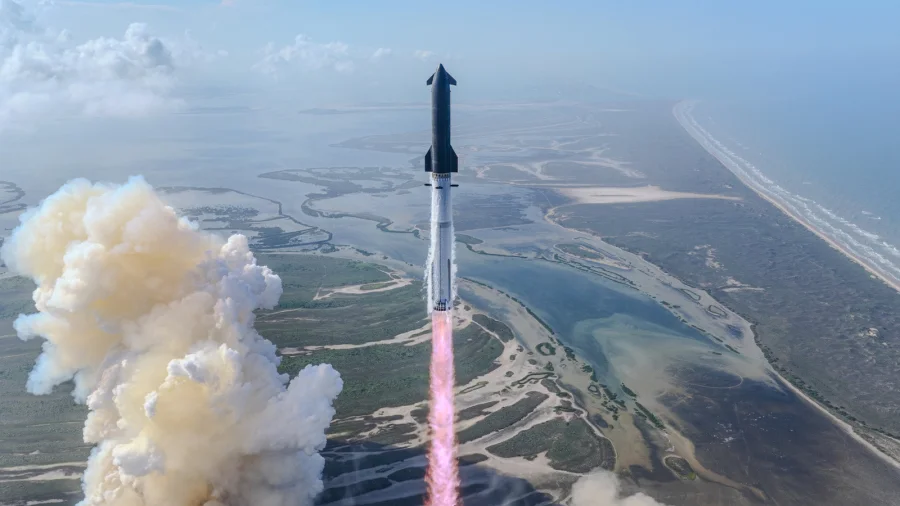
The world held its breath as the most powerful rocket ever built roared to life over the Texas sky. But what happened next — a mix of triumph and technical drama — has left engineers, investors, and space enthusiasts with a single, powerful question: Did SpaceX just prove it can take humanity to the Moon?
SpaceX Starship V3’s First Test Flight: A Major Step Forward Despite Engine Troubles
On Friday, May 22, 2026, SpaceX launched its heavily upgraded Starship V3 rocket from Starbase, Texas, in what officials are calling a largely successful debut test flight. According to Reuters, the mission achieved most of its primary objectives, even though both stages of the rocket suffered engine failures during the flight. The result is a significant confidence boost — not just for SpaceX and its investors, but for NASA, which plans to use the Starship vehicle for future missions to the Moon under the Artemis program.
Why This Matters Right Now
This test flight isn’t just another rocket launch. It’s a critical milestone for humanity’s return to the Moon — and eventually, to Mars. NASA has invested heavily in Starship as part of the Artemis program, which aims to land astronauts on the lunar surface for the first time in over 50 years. A failure here could have delayed those plans by years. A success — even an imperfect one — keeps the timeline alive. For investors, it signals that SpaceX’s ambitious engineering is on track. For the public, it’s a reminder that space exploration is still a high-risk, high-reward endeavor.
How the Starship V3 Test Flight Unfolded
The launch itself was a spectacle. The Starship V3, a heavily redesigned version of its predecessor, lifted off from SpaceX’s Starbase facility in South Texas. The initial ascent appeared smooth, with the Super Heavy booster and Starship upper stage separating as planned. However, during the flight, both stages experienced engine failures — a detail that SpaceX has not fully explained yet. Despite these issues, the vehicle completed its primary mission profile, including a simulated landing attempt. The test flight was cut short, but the data collected is expected to be invaluable for future iterations.
Who Is Affected and What Officials Are Saying
The impact of this test flight ripples across multiple groups. NASA, which has contracted SpaceX for the Artemis Human Landing System, is watching closely. NASA Administrator Jared Isaacman publicly congratulated Elon Musk and the SpaceX team, signaling confidence in the partnership. Investors, who have poured billions into SpaceX, will see this as a validation of the company’s technological trajectory. And for the broader public, the success — however imperfect — keeps the dream of human spaceflight alive. “Both stages of the rocket suffered engine failures but the test flight was largely successful,” the BBC reported, quoting sources familiar with the mission.
What We Know So Far — and What Remains Unclear
What we know: The Starship V3 launched successfully. Both stages experienced engine failures. Most mission objectives were achieved. NASA has expressed confidence in the result.
What remains unclear: The exact nature and cause of the engine failures. Whether the simulated landing was successful. The timeline for the next test flight. How these failures will affect the Artemis schedule. SpaceX has not released a detailed post-flight report yet.
Risks, Concerns, and the Balanced View
While the test flight is being called a success, the engine failures are a reminder that Starship is still a work in progress. Critics point out that a rocket that suffers engine failures on both stages is not yet ready for crewed missions. The complexity of the Starship design — with 33 Raptor engines on the Super Heavy booster alone — means that reliability is a major challenge. On the other hand, SpaceX’s iterative approach — “fail fast, learn faster” — has historically led to rapid improvements. The company has a track record of turning test flight anomalies into engineering breakthroughs.
Why Similar Trends or Concerns Are Growing
The space industry is at a pivotal moment. Private companies like SpaceX, Blue Origin, and Rocket Lab are pushing the boundaries of what’s possible, but each test flight carries immense financial and reputational risk. The Starship V3 test flight is part of a broader trend: the shift from government-led space programs to commercial partnerships. This model offers speed and innovation, but also introduces new vulnerabilities. As NASA relies more on private partners, the success or failure of a single test flight can have outsized consequences for national space policy.
- SpaceX’s Starship is the largest and most powerful rocket ever built, standing nearly 400 feet tall.
- The Artemis program aims to land the first woman and the next man on the Moon by 2027.
- SpaceX has already conducted multiple Starship test flights, with each iteration improving on the last.
“Both stages of the rocket suffered engine failures but the test flight was largely successful – a result that will likely boost confidence both for investors and for Nasa.” — BBC News
What Readers, Users, or Investors Should Know Now
For investors, this test flight is a positive signal, but not a guarantee. SpaceX remains a private company, so direct investment is limited, but the success could boost confidence in the broader space sector. For space enthusiasts, the message is clear: Starship is getting closer to operational readiness. For the general public, it’s a reminder that space exploration is a marathon, not a sprint. The next few months will be critical as SpaceX analyzes the data and prepares for the next test flight.
What Could Happen Next
SpaceX is expected to conduct a thorough investigation of the engine failures before the next launch. The company may also accelerate work on Starship V4, which could incorporate lessons learned from this flight. NASA will likely review the data to assess whether the Artemis timeline remains feasible. If the next test flight is fully successful, it could pave the way for an uncrewed lunar landing demonstration within the next two years.
Our Take: Why This Story Matters Beyond One Incident
The Starship V3 test flight is more than a technical achievement — it’s a symbol of human ambition. In an era of geopolitical uncertainty and environmental challenges, the idea that we are one step closer to becoming a multi-planetary species is profoundly hopeful. Yes, there were engine failures. Yes, there are risks. But the fact that a privately built rocket can push the boundaries of what’s possible — and do so with the backing of the world’s leading space agency — is a testament to human ingenuity. This test flight matters because it proves that the future is still being built, one launch at a time.
FAQs
Was the SpaceX Starship V3 test flight successful?
Yes, the test flight was largely successful. Despite engine failures on both stages, SpaceX achieved most of its primary mission objectives, boosting confidence for NASA’s Artemis moon missions and investors.
What went wrong during the Starship V3 test flight?
Both the Super Heavy booster and the Starship upper stage experienced engine failures during the flight. The exact cause has not been disclosed yet, but the mission still met its key goals.
How does the Starship V3 test flight affect NASA’s moon plans?
NASA plans to use the Starship vehicle for the Artemis Human Landing System. The largely successful test flight is a positive sign, but the engine failures will need to be resolved before crewed missions can proceed.
What is the difference between Starship V3 and previous versions?
Starship V3 is a heavily redesigned version of its predecessor, with upgrades to the engines, heat shield, and overall structure. It is designed to be more reliable and capable for deep space missions.