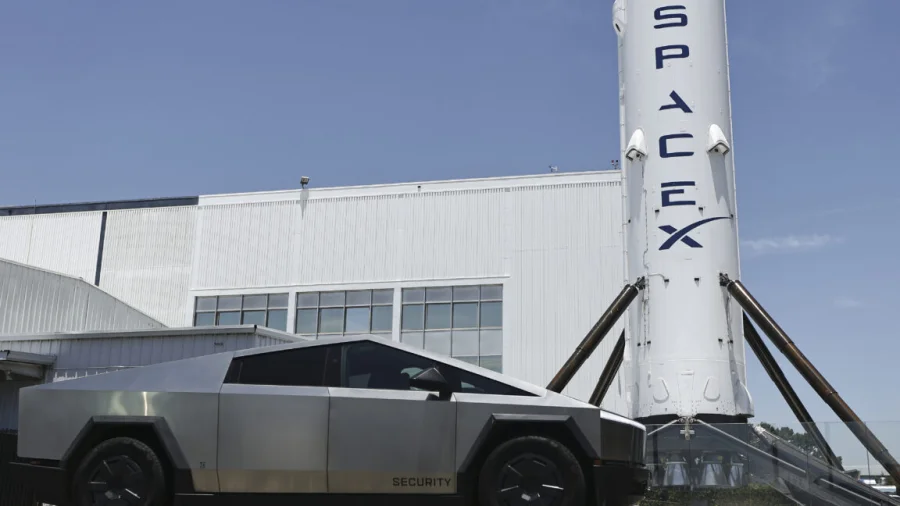
Elon Musk's SpaceX wanted a historic exception to Wall Street's most important rulebook. The S&P 500 just said no — and took OpenAI and Anthropic down with it.
S&P 500 rejects SpaceX fast entry — what changed on June 4
On June 4, 2026, S&P Dow Jones Indices — the company that manages the S&P 500 — announced it would not waive its profitability requirement for SpaceX, OpenAI, or Anthropic. The decision surprised market analysts who had speculated the index might bend rules for the most anticipated IPOs in years.
SpaceX had requested unusually swift entry into several leading stock market indexes as a condition of its historic stock market debut. The company argued its market capitalization and investor demand justified an exception. The S&P 500 disagreed.
Why the profitability rule matters for investors
The S&P 500 requires companies to show four consecutive quarters of positive earnings before inclusion. This rule exists to protect passive investors — the millions of people whose pension funds and ETFs automatically buy S&P 500 stocks.
Without this requirement, unprofitable companies could enter the index, exposing ordinary investors to higher risk. The S&P 500's decision maintains this safeguard, even for the world's most valuable private companies.
For SpaceX, OpenAI, and Anthropic, the block means they will miss out on billions of dollars in automatic purchases from passive funds. These funds are required to buy shares of every S&P 500 company, creating a massive demand boost that newly listed companies typically seek.
How the fast-track request unfolded
SpaceX's request for accelerated index entry was unusual. Typically, companies must trade on a public exchange for at least six to twelve months before index consideration. SpaceX wanted this timeline compressed significantly.
The company's argument centered on its massive market capitalization — reportedly exceeding $200 billion in private markets — and the unprecedented investor demand for its shares. OpenAI and Anthropic, both leaders in the generative AI boom, made similar cases for fast-track treatment.
S&P Dow Jones Indices rejected all three requests, stating that index rules apply equally to all companies regardless of size or industry prominence.
Who is affected by the S&P 500 rejection
Retail investors hoping to gain exposure to SpaceX, OpenAI, or Anthropic through index funds will have to wait. Passive fund managers cannot buy these stocks until they meet S&P 500 criteria.
Institutional investors who purchased shares in private markets may face longer holding periods before they can exit through index fund buying. Early employees with stock options may also see delayed liquidity events tied to index inclusion.
The decision particularly impacts investors who bet on a quick index entry as part of their IPO thesis. Without S&P 500 inclusion, these stocks may trade at lower valuations than anticipated.
S&P Dow Jones Indices defends its rules
S&P Dow Jones Indices has not publicly commented in detail on the specific requests, but the company's established policy is clear: index rules apply uniformly. The profitability requirement is designed to ensure that S&P 500 companies represent mature, financially stable businesses.
Market analysts have largely supported the decision. "Indexes are supposed to be slow-moving, precisely due to their entry requirement of sustained profitability that skews towards mature companies," one analyst noted on Hacker News. "All that an inclusion of these new companies would accomplish is a bailout of their stockholders by pension funds and ETFs where millions of regular people shoulder all the downside risk."
What the S&P 500 rejection means for SpaceX, OpenAI, and Anthropic
The decision does not prevent these companies from listing on public exchanges. SpaceX, OpenAI, and Anthropic can still pursue IPOs on the Nasdaq or New York Stock Exchange. However, they will not receive the automatic demand boost that S&P 500 inclusion provides.
The Nasdaq 100 index has different rules, including a "fast add" provision for large IPOs. This could make the Nasdaq a more appealing listing venue for these companies. However, Nasdaq 100 inclusion does not carry the same weight as S&P 500 membership for passive fund flows.
For now, SpaceX, OpenAI, and Anthropic must focus on achieving profitability — or wait for a change in S&P 500 rules that currently seems unlikely.
Confirmed facts vs what remains unclear
Confirmed: S&P Dow Jones Indices rejected fast-track entry requests from SpaceX, OpenAI, and Anthropic on June 4, 2026. The profitability requirement remains in place. The decision blocks billions in potential passive fund inflows.
Unclear: The exact timeline for when these companies might meet S&P 500 profitability criteria. Whether any company will appeal the decision or seek alternative index inclusion. The specific market capitalizations at which these companies would qualify under standard rules.
Speculation: Some analysts suggest SpaceX could achieve profitability within two to three years of its IPO. OpenAI and Anthropic face longer paths due to high AI development costs. These are projections, not confirmed facts.
Why the S&P 500's rule matters more than ever
The S&P 500 is the most widely followed stock market index in the world. Trillions of dollars in passive funds track it. Inclusion means automatic buying from pension funds, 401(k) plans, and ETFs that millions of Americans rely on for retirement.
By refusing to waive rules for high-profile companies, S&P Dow Jones Indices reinforces the principle that index membership is earned, not granted. This protects the integrity of the index and the investors who depend on it.
The decision also sends a message to other high-growth, unprofitable companies considering IPOs: don't expect special treatment from the S&P 500.
Risks and balanced view of the S&P 500 decision
Supporters argue: The rule protects ordinary investors from risky, unprofitable companies. Index funds should track stable, mature businesses. Waiving rules for high-profile companies would set a dangerous precedent.
Critics counter: The S&P 500's profitability requirement may be outdated in an era where high-growth companies prioritize market share over short-term profits. Companies like Amazon were unprofitable for years yet became dominant businesses. The rule may exclude innovative companies that could generate enormous long-term value.
Market reality: Both perspectives have merit. The S&P 500's decision prioritizes investor protection over accommodating market trends. Whether this approach serves investors best in the long run remains debatable.
Wider trend: Index rules vs high-growth IPOs
The S&P 500 rejection is part of a broader tension between traditional index rules and the modern IPO landscape. High-growth companies increasingly go public at earlier stages, often without sustained profitability.
The Nasdaq 100 has adapted with its "fast add" provision, allowing large IPOs quicker entry. The S&P 500 has chosen a more conservative path, maintaining its profitability requirement even as the market evolves.
This divergence creates a strategic choice for companies planning IPOs: list on the Nasdaq for potential fast-track index inclusion, or wait to meet S&P 500 standards for the larger passive fund flows that come with it.
What investors should do now
If you are a retail investor hoping to buy SpaceX, OpenAI, or Anthropic through index funds: wait. These companies will not enter the S&P 500 until they demonstrate sustained profitability. You can buy individual shares when they list on public exchanges, but be aware of the higher risk.
If you are an institutional investor with private market exposure: adjust your expectations. The S&P 500 rejection means a longer timeline before passive fund buying boosts valuations. Factor this into your holding period and exit strategy.
If you are a passive fund investor: the S&P 500's decision protects your interests. Your index funds will not automatically buy unprofitable companies, reducing your exposure to speculative risk.
Future outlook: What happens next for SpaceX, OpenAI, and Anthropic
SpaceX is expected to pursue its IPO in the coming months, likely on the Nasdaq. The company may qualify for Nasdaq 100 fast-add inclusion, providing some passive fund demand, though less than S&P 500 membership would.
OpenAI and Anthropic face longer paths. Both companies spend heavily on AI research and development, making near-term profitability challenging. They may need several years of public trading before meeting S&P 500 criteria.
A rule change by S&P Dow Jones Indices remains possible but unlikely in the near term. The company has shown no inclination to modify its profitability requirement, even for the most prominent companies in the world.
Our Take
The S&P 500's rejection of SpaceX, OpenAI, and Anthropic is a win for rule-based index governance. In an era where exceptions are often made for powerful companies, the S&P 500 has chosen consistency over accommodation.
This decision protects ordinary investors — the millions of people whose retirement savings are tied to index funds. It ensures that S&P 500 membership remains a mark of financial stability, not just market hype.
For SpaceX, OpenAI, and Anthropic, the message is clear: prove your business model works before you join the index. That's not an unreasonable ask for companies seeking access to trillions in passive capital.
The bigger question is whether the S&P 500's profitability rule will need updating as the economy evolves. For now, the rule stands — and three of the world's most anticipated IPOs will have to wait.
Frequently Asked Questions
Why did the S&P 500 reject SpaceX?
The S&P 500 requires companies to show four consecutive quarters of profitability before inclusion. SpaceX, like OpenAI and Anthropic, does not meet this requirement. S&P Dow Jones Indices refused to waive the rule for fast-track entry.
Can SpaceX still join the Nasdaq 100?
Yes. The Nasdaq 100 has a "fast add" provision that allows large IPOs quicker entry. SpaceX could qualify for Nasdaq 100 inclusion shortly after its IPO, though this index carries less passive fund flow than the S&P 500.
How much money will SpaceX lose from S&P 500 exclusion?
Billions of dollars. Passive funds that track the S&P 500 automatically buy shares of every index member. Without inclusion, SpaceX misses this automatic demand. The exact amount depends on the company's market capitalization at the time of listing.
Will the S&P 500 ever change its profitability rule?
Currently unlikely. S&P Dow Jones Indices has shown no inclination to modify its profitability requirement. A rule change would require significant market pressure and a formal review process that has not been announced.