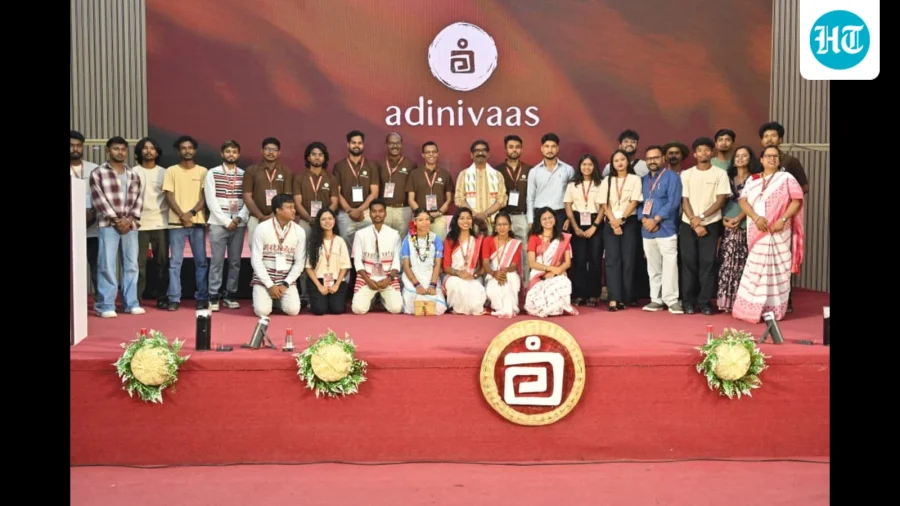
In a quiet but powerful ceremony at Audrey House in Ranchi, something historic unfolded on Monday. Jharkhand Chief Minister Hemant Soren launched 'Adiniwas' — India's first digital application built by tribals, for tribals. It wasn't just another app launch. It was a quiet declaration that tribal identity, often pushed to the margins in the rush for modernity, now has a digital home.
For millions of tribal communities across India, this isn't just a tech update. It's a lifeline to their own stories, languages, and traditions — preserved in a format the world can no longer ignore.
What Is Adiniwas? India’s First Tribal App Explained Simply
'Adiniwas' is a digital platform designed and developed by tribal communities themselves. Unlike government apps imposed from above, this one comes from within. It aims to document, showcase, and preserve tribal culture, art, language, and heritage. The app is expected to serve as a bridge between ancient traditions and the digital age — allowing tribal youth to stay connected to their roots while navigating a fast-changing world.
Speaking at the launch, CM Hemant Soren emphasized the need to adapt to changing times by bringing creativity into thoughts and ideas. He highlighted that while moving forward in a fast-paced world, preserving culture and civilisation remains a major challenge. The app, he suggested, is one answer to that challenge.
Why This Matters Right Now
India is home to over 700 tribal communities, each with its own language, art, and way of life. Yet, in the race for development, many of these traditions are fading. Younger generations, drawn to cities and smartphones, often lose touch with their cultural roots. 'Adiniwas' arrives at a moment when digital tools are both a threat and an opportunity. If tribal culture can be preserved in an app, it can travel faster, reach further, and survive longer than any museum exhibit or government archive.
This matters because cultural loss isn't just sentimental — it erases knowledge systems, languages, and ways of living that have sustained communities for centuries. An app like Adiniwas could become a digital ark for that knowledge.
How the Launch Unfolded
The launching ceremony took place at Audrey House in Ranchi, a venue with its own historical significance. CM Hemant Soren personally unveiled the app, surrounded by tribal leaders, community members, and government officials. The event was marked by a sense of quiet pride — not just in the technology, but in what it represents: tribal communities taking control of their own narrative in the digital space.
While the app's full features are still being rolled out, early indications suggest it will include sections on tribal art, music, language lessons, and community stories. The goal is to make tribal heritage accessible, interactive, and alive — not just preserved in static archives.
Who Is Affected and What Officials Are Saying
The primary beneficiaries are India's tribal communities, especially the youth who are often caught between two worlds — modern aspirations and ancestral roots. For them, Adiniwas offers a way to explore their heritage without leaving the digital spaces they already inhabit.
CM Hemant Soren, himself a tribal leader, has long championed the cause of tribal rights and cultural preservation. His government has positioned this app as a flagship initiative under the broader vision of digital inclusion. Officials at the event stressed that the app was not a top-down project but a community-driven effort, developed with input from tribal elders, artists, and language experts.
What We Know So Far — and What Remains Unclear
What we know: Adiniwas is India's first digital application built by tribals, for tribals. It was launched by CM Hemant Soren in Ranchi. The app aims to preserve tribal culture and heritage in the digital age.
What remains unclear: The full feature set, availability on app stores, and long-term sustainability. It is also not yet known how the app will handle the diversity of tribal languages — India has over 100 tribal languages, many with their own scripts. Whether Adiniwas will be a single app or a platform that grows over time is still being defined.
Risks, Concerns, and the Balanced View
While the launch is being celebrated, there are legitimate questions. Digital preservation is only as good as the infrastructure supporting it. Many tribal areas still lack reliable internet access. Will the app reach the communities it is meant to serve? There is also the risk of cultural commodification — reducing rich, living traditions to digital content that can be consumed without context.
Critics might argue that a government-backed app could become a tool for political messaging rather than genuine cultural preservation. The challenge will be to keep Adiniwas community-led, not bureaucratically controlled.
On the positive side, if executed well, this app could become a model for other states and countries with indigenous populations. It could also create economic opportunities for tribal artists and language experts who can now showcase their work digitally.
Why Similar Trends Are Growing
Across India, there is a growing recognition that digital tools can be used for cultural preservation, not just commerce. From apps that teach endangered languages to platforms that archive folk music, the trend is clear: communities are using technology to reclaim their narratives. Adiniwas fits into this larger movement, but with a crucial difference — it is built by the community itself, not by outsiders.
- Jharkhand has one of the largest tribal populations in India, with over 30 recognized tribal communities.
- The state has been at the forefront of tribal rights movements, including the historic land rights agitation.
- CM Hemant Soren's government has prioritized digital inclusion as a key policy area.
"While moving forward in a fast-paced world, preserving culture and civilisation remains a major challenge." — Hemant Soren, Chief Minister of Jharkhand
What Readers, Users, or Investors Should Know Now
For tribal communities and cultural enthusiasts: Keep an eye on app stores for the official release. If you are a tribal artist, language expert, or storyteller, this platform could be a way to share your work with a wider audience.
For policymakers and NGOs: Adiniwas could serve as a template for similar initiatives in other states. The key is to ensure community ownership and digital accessibility.
For investors and tech companies: This is a reminder that the next big digital market isn't just urban India — it's the vast, diverse, and underserved tribal communities who are eager for tools that respect their identity.
What Could Happen Next
If Adiniwas gains traction, it could expand to include more languages, more art forms, and even e-commerce features for tribal products. There is potential for partnerships with educational institutions to create curriculum content. The app could also become a platform for tribal tourism, connecting travelers with authentic experiences.
However, the biggest test will be adoption. Will tribal youth download and use it? Will elders contribute their knowledge? The answer depends on how well the app balances modernity with authenticity.
Our Take: Why This Story Matters Beyond One Incident
Adiniwas is not just an app. It is a statement that tribal communities are not relics of the past — they are active participants in shaping India's digital future. In a world where technology often erases local identities, this app does the opposite: it amplifies them. Whether it succeeds or fails, the very act of building it is a victory for cultural sovereignty.
For the rest of India, Adiniwas is a reminder that true development includes everyone — not just those who speak English, live in cities, or use the latest gadgets. It is a small but significant step toward a more inclusive digital India.
FAQs
What is Adiniwas app and who launched it?
Adiniwas is India's first digital application built by tribals, for tribals. It was launched by Jharkhand Chief Minister Hemant Soren at Audrey House in Ranchi on Monday. The app aims to preserve and promote tribal culture, language, and heritage in the digital age.
How is Adiniwas different from other government apps for tribals?
Unlike many government apps that are designed by external agencies, Adiniwas is built by tribal communities themselves. This means it reflects the actual needs, perspectives, and aspirations of tribal people, rather than being a top-down initiative. It is a community-driven platform for cultural preservation.
What features will the Adiniwas tribal app offer?
While full details are still emerging, the app is expected to include sections on tribal art, music, language lessons, community stories, and heritage documentation. It is designed to be interactive and accessible, allowing tribal youth to explore their roots while using modern digital tools.
When will Adiniwas be available for download and on which platforms?
Official availability details have not been announced yet. The app was launched in a ceremony, and its public release on app stores is expected soon. Users should monitor official Jharkhand government announcements for download links and platform availability.