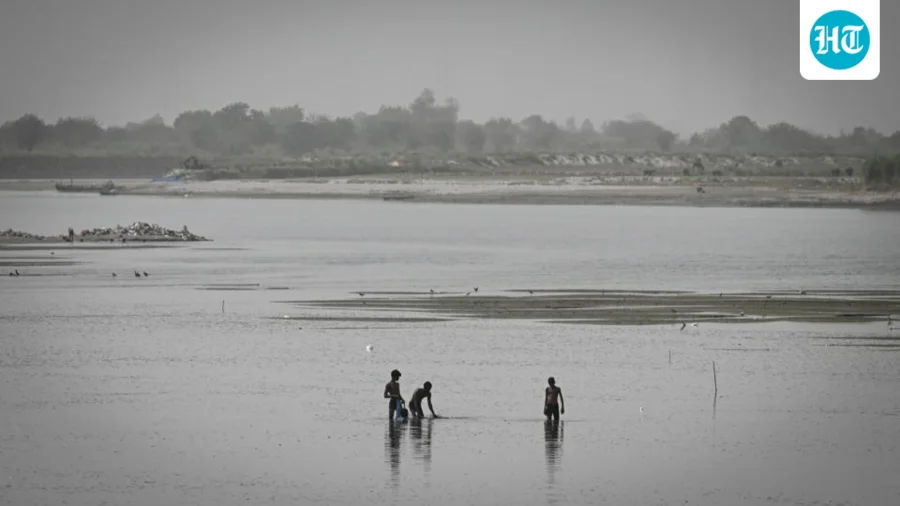
At Wazirabad in north Delhi, the Yamuna river has shrunk to a shocking state. The water level has dropped so drastically over the past week that residents living along its banks say something they never imagined: even children can now walk across the riverbed to the other side.
This isn't a seasonal fluctuation that will pass. It's a deepening crisis that is already disrupting water supply for thousands of Delhi residents, and experts warn it could get worse as summer heat intensifies.
‘Even Kids Can Cross It’ — The Scene at Wazirabad
Vikas Chaudhary, a 31-year-old resident of Jagatpur village near the Wazirabad barrage, described the alarming change. “The water level has been consistently going down over the last 7-10 days. Even kids can now cross over to the other side,” he told reporters.
What was once a flowing river is now a shallow stream with wide stretches of exposed riverbed. The sight is both startling and deeply concerning for a city that depends heavily on the Yamuna for its drinking water.
Why This Matters Right Now
This isn't just a visual shock — it has real consequences for Delhi's water supply. The Wazirabad barrage is a critical intake point for the Delhi Jal Board (DJB). When the river level drops this low, the DJB's ability to draw water is severely compromised.
Residents at the tail end of the DJB's supply network are already reporting disruptions. With May and June being the driest months for the Yamuna basin states, and a heatwave pushing water demand higher, the situation is a perfect storm of scarcity.
For millions of Delhiites, this could mean reduced water pressure, shorter supply hours, or even no water at all in the worst-hit areas.
How the Crisis Unfolded
The Yamuna's water level at Wazirabad has been dropping steadily over the past 7 to 10 days. While the river naturally runs low during the pre-monsoon summer months, the current decline appears sharper than usual.
Several factors are converging:
- Intense heatwave spells across north India, increasing evaporation and water demand
- Reduced release of water from upstream dams and barrages in Haryana and Uttar Pradesh
- Depleted groundwater levels, meaning less base flow feeding the river
- High demand from agricultural and urban users along the entire Yamuna stretch
The Wazirabad barrage, which impounds water for Delhi's supply, is now struggling to maintain adequate levels.
Who Is Affected and What Officials Are Saying
The immediate impact is being felt by residents in areas that are at the tail end of the DJB's water distribution network. These are typically areas that already face water shortages during summer. Now, the crisis is deepening.
Local residents like Vikas Chaudhary are witnessing the change firsthand. “We have never seen it this low in recent years,” he said. The concern is not just about today — it's about what happens if the level drops further in the coming weeks.
Officials from the Delhi Jal Board and the Irrigation and Flood Control Department are monitoring the situation. However, no immediate solution has been announced to address the falling water level at Wazirabad.
What We Know So Far — and What Remains Unclear
What we know:
- The Yamuna at Wazirabad has reached critically low levels
- Residents report that children can walk across the river
- Water supply disruptions have already been reported in some areas
- The situation has been developing over the past 7-10 days
What remains unclear:
- Exactly how much the water level has dropped in numerical terms
- Whether upstream water releases will be increased
- How many households are currently affected by supply cuts
- Whether this is a temporary extreme or a sign of a longer-term trend
Risks, Concerns, and the Balanced View
The immediate risk is clear: if the Yamuna level drops further, Delhi could face a severe water shortage in the middle of a heatwave. Hospitals, schools, and essential services could be impacted.
However, it's important to note that the Yamuna has historically seen low levels during pre-monsoon months. The monsoon, when it arrives, typically replenishes the river. The question is whether the monsoon will arrive in time and with sufficient intensity.
Critics also point to long-term issues: untreated sewage and industrial effluents continue to pollute the Yamuna, and over-extraction of groundwater has reduced the river's base flow. These are structural problems that won't be solved by monsoon rains alone.
Why Similar Trends Are Growing
Delhi is not alone in facing this crisis. Across north India, rivers like the Yamuna, Ganga, and their tributaries are seeing reduced flows during summer months. Climate change is making heatwaves more frequent and intense, increasing evaporation rates.
Urbanization and population growth are also driving up water demand. The Yamuna, which flows through one of the most densely populated regions in the world, is under immense pressure from agriculture, industry, and domestic use.
“May and June are the driest periods for the basin states.” — Local observation reported in media
This pattern is likely to repeat and intensify unless water management practices change significantly.
What Readers, Residents, and Officials Should Know Now
For residents in areas dependent on the Wazirabad water supply, the advice is to conserve water and prepare for possible disruptions. Storing water in advance, reducing non-essential usage, and checking with local DJB offices for updates can help.
For officials, the immediate priority is to negotiate with upstream states for increased water release and to explore alternative supply arrangements. In the longer term, investing in water recycling, rainwater harvesting, and reducing pollution in the Yamuna are essential steps.
What Could Happen Next
If the water level continues to drop, the DJB may be forced to implement rotational water supply cuts in more areas. This could lead to public protests and increased political pressure on the Delhi government and neighboring states.
The arrival of the monsoon, expected in late June or early July, could provide relief — but only if the rains are normal. A weak monsoon could prolong the crisis into the peak summer months.
There is also the possibility of legal intervention, with activists or residents approaching the National Green Tribunal or the Delhi High Court to demand action on water release and river conservation.
Our Take: Why This Story Matters Beyond One Incident
The image of children walking across the Yamuna at Wazirabad is more than a striking visual. It is a warning sign for one of India's largest cities. Delhi's water security is fragile, and the Yamuna is its lifeline.
This crisis is not just about one dry stretch of river. It is about how we manage shared water resources in a warming climate, how we balance the needs of millions of people with the health of our rivers, and how we prepare for a future where such scenes may become more common.
The story from Wazirabad should be a wake-up call — not just for Delhi, but for every city that depends on a river that is slowly running dry.
FAQs
Why is the Yamuna water level so low at Wazirabad right now?
The water level has dropped due to a combination of factors: intense heatwave increasing evaporation, reduced upstream water releases, high summer demand, and depleted groundwater. May and June are naturally the driest months for the Yamuna basin.
How is the low Yamuna level affecting Delhi's water supply?
The Wazirabad barrage is a key intake point for the Delhi Jal Board. When the river level drops, the DJB struggles to draw sufficient water. Residents at the tail end of the supply network are already reporting disruptions in water supply.
Can the Yamuna at Wazirabad really be crossed on foot by children?
Yes. Local residents, including Vikas Chaudhary of Jagatpur village, have confirmed that the water level has fallen so low that even children can walk across the riverbed to the other side. This is an unprecedented sight for many long-time residents.
What can be done to prevent the Yamuna from drying up further?
Immediate steps include negotiating with upstream states for increased water release and implementing water conservation measures. Long-term solutions involve reducing pollution, promoting rainwater harvesting, improving water recycling, and sustainable groundwater management across the Yamuna basin.