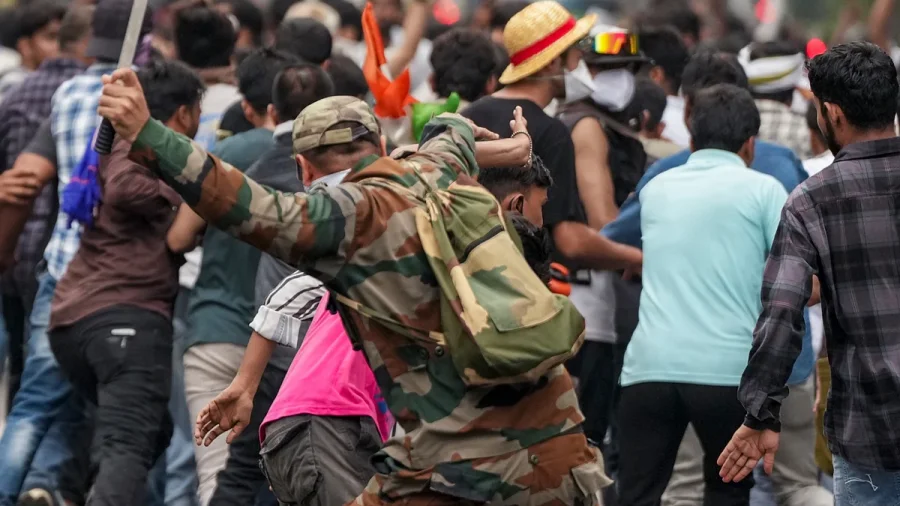
The Supreme Court on Tuesday delivered a significant interim order in the ongoing NEET paper leak protests, directing the immediate release of student protesters below 18 years of age who have no criminal antecedents. The bench also restrained authorities from taking coercive action against eligible protesters across the country.
What the Supreme Court ordered in NEET protest cases
A bench comprising Chief Justice of India Surya Kant and Justices Joymalya Bagchi and V. Mohana passed the interim directions while hearing a batch of petitions alleging police excesses during the nationwide demonstrations over the alleged NEET paper leak. The court observed that the allegations against the police prima facie warranted consideration of a fair and independent investigation.
Why this order matters for student protesters
For thousands of students who participated in peaceful protests demanding a re-examination or investigation into the alleged NEET paper leak, this order provides immediate legal protection. The court's direction to release minors and bar coercive action means eligible protesters cannot be arrested or harassed for exercising their right to protest. This is especially significant for young students whose academic futures could have been jeopardized by legal proceedings.
Timeline of the NEET protest and court intervention
The NEET paper leak allegations first surfaced after reports of irregularities in the examination process. Students across multiple states took to the streets, demanding a fair investigation and re-test. As protests escalated, several police complaints and arrests were reported. Petitions were filed in the Supreme Court alleging excessive force and arbitrary detention of student protesters. Tuesday's order marks the first major judicial intervention in these cases.
Who is protected under this order
The order specifically protects student protesters below 18 years of age who have no criminal antecedents. This means minors with clean records who participated in peaceful demonstrations cannot be detained or face coercive action. The court's direction applies to all states where protests were held, providing a uniform legal shield across jurisdictions.
What authorities have been directed to do
The bench directed all states where protests were held to preserve CCTV footage, drone recordings, body-camera footage, wireless communication records, and Police Control Room logs. This evidence preservation order is crucial for any future investigation into allegations of police excesses. The court's directive ensures that key evidence is not tampered with or destroyed.
Understanding the court's reasoning
The Supreme Court's observation that allegations against the police "prima facie warranted consideration of a fair and independent investigation" signals judicial concern over potential misuse of authority. By ordering evidence preservation and protecting minor protesters, the court has effectively put law enforcement agencies on notice that student protests must be handled within legal boundaries.
Confirmed Facts vs What Remains Unclear
Confirmed: The Supreme Court has ordered release of protesters under 18 with no criminal record. Coercive action against eligible protesters is barred. States must preserve all evidence including CCTV and body-camera footage. The bench found prima facie merit in allegations of police excesses.
Unclear: The exact number of protesters currently in custody. Whether the order applies to all pending cases or only future arrests. The timeline for the next hearing. Specific details of police excesses alleged in petitions.
Risks and Balanced View
While the order protects student protesters, concerns remain about implementation. Some states may delay compliance or interpret "coercive action" narrowly. There is also the question of protesters above 18 who may still face legal action. Critics argue that blanket protection could encourage unlawful protests, though the court has limited its order to those with no criminal antecedents. The balance between the right to protest and maintenance of public order remains a delicate one.
Wider trend of student protests and judicial intervention
This order fits into a broader pattern of Indian courts intervening to protect student rights during protests. From the JNU fee hike protests to the CAA demonstrations, the judiciary has often stepped in to balance state power with fundamental rights. The NEET case adds to this jurisprudence, particularly on the issue of minor protesters and evidence preservation.
What students and parents should know
Students who participated in NEET protests and are below 18 should ensure they have documentation of their age and clean criminal record. Parents can approach local police stations with a copy of the Supreme Court order if their child is detained. Legal aid organizations may offer assistance. Students above 18 should consult lawyers about their individual cases, as the order's protection may not extend to them.
What happens next
The Supreme Court will continue hearing the batch of petitions, likely examining the extent of police excesses and the need for a broader investigation. The preserved evidence will be crucial. The court may also consider extending protections to older protesters or setting up a monitoring mechanism. A final judgment could establish important legal precedents for student protest rights in India.
Our Take
The Supreme Court's interim order is a measured and necessary intervention. By protecting minor protesters and preserving evidence, the court has ensured that the right to peaceful protest is not crushed by state overreach. At the same time, the order is not a blanket amnesty — it carefully limits protection to those with clean records. This balance is essential in a democracy where dissent must be protected but law and order maintained. The real test will be in implementation, as state authorities must now comply with the court's directions. For the thousands of young students who took to the streets demanding accountability, this order offers both legal relief and a reaffirmation that their voices matter.
Frequently Asked Questions
Who is protected by the Supreme Court order?
The order protects student protesters below 18 years of age who have no criminal antecedents. Authorities cannot take coercive action against them.
Does this order apply to all states?
Yes, the Supreme Court's direction applies to all states where NEET protests were held. States must preserve evidence and comply with the order.
What evidence must states preserve?
States must preserve CCTV footage, drone recordings, body-camera footage, wireless communication records, and Police Control Room logs related to the protests.
Can protesters above 18 be arrested?
The order specifically bars coercive action against "eligible protesters," but its exact scope for those above 18 remains unclear. Individual cases may vary, and legal advice is recommended.