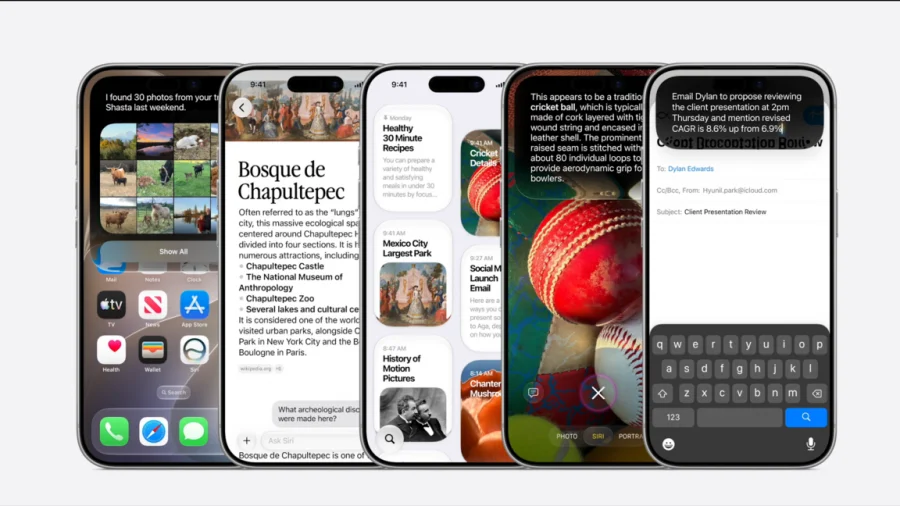
After years of anticipation and delays, Apple has finally taken the wraps off its most ambitious Siri upgrade yet. At its pre-filmed Worldwide Developers Conference (WWDC) keynote, the company introduced "Siri AI"—a voice assistant that promises to feel less like a command-line tool and more like a genuine conversation partner. For millions of iPhone, iPad, and Mac users who have long wished Siri could keep up with the likes of ChatGPT or Google Assistant, this could be the moment everything changes.
What Siri AI brings to the table
The new Siri AI is not just a minor tweak. Apple is positioning it as a fundamental rethinking of how users interact with their devices. Instead of rigid, pre-programmed responses, Siri AI will engage in more fluid, contextual conversations. It can remember the context of a previous question, follow up on a topic without needing to repeat yourself, and even handle complex, multi-step requests. For example, you could ask, "What's the weather like this weekend?" and then immediately follow up with, "And what should I pack for a trip there?"—without Siri losing the thread.
Why Apple took its time—and why it matters now
Apple's approach has been notably cautious compared to rivals like Google, Microsoft, and OpenAI. Craig Federighi, Apple's SVP of Software Engineering, made this clear during the keynote. "Unlike other companies that appear to be racing forward, seemingly pursuing AI for the sake of AI, with little regard for the people it's meant to serve," he said, "we believe that truly helpful AI must be centered around you and your needs." This message resonates with users who have grown wary of AI hallucinations, privacy concerns, and impersonal interactions. For Apple, the delay was about getting it right—not just being first.
The technology behind the conversation
Siri AI is powered by a combination of Apple's own on-device Foundation Models and a new Google-powered update to those models. This hybrid approach means that many requests can be processed locally on your device, preserving privacy and speed, while more complex queries can tap into cloud-based AI when needed. The integration of Google's technology is a significant strategic move, signaling that Apple is willing to partner with a rival to deliver a superior user experience. The result, Apple claims, is an assistant that understands natural language better than ever before.
Who will benefit most from Siri AI?
For everyday users, the upgrade means Siri will finally be useful for more than setting timers and checking the weather. Students can ask Siri to summarize a lecture recording, then quiz them on key points. Professionals can dictate an email, ask Siri to refine the tone, and then schedule a meeting—all in one conversation. For elderly or less tech-savvy users, a more natural voice interface could make technology more accessible. The promise is that Siri AI will feel less like a machine and more like a helpful companion.
Craig Federighi's vision for user-centric AI
Federighi's keynote remarks were carefully crafted to differentiate Apple from the broader AI industry. He emphasized that Apple's AI is designed to serve the user, not the other way around. "We believe that truly helpful AI must be centered around you and your needs," he said, directly contrasting with the "move fast and break things" ethos that has defined much of the AI boom. This framing is likely to appeal to Apple's core audience, which values privacy, reliability, and thoughtful design over raw capability.
What this means for the AI assistant landscape
Apple's entry into the conversational AI space is a major development. Until now, Siri has been widely seen as lagging behind competitors. With Siri AI, Apple is not just catching up—it's attempting to redefine the category by prioritizing user experience over feature count. The integration across Apple's ecosystem—iPhone, iPad, Mac, Apple Watch, and likely HomePod—means that Siri AI could become the most widely used conversational AI assistant in the world, simply by virtue of Apple's installed base.
Confirmed facts vs what remains unclear
Confirmed: Apple announced Siri AI at WWDC 2026. It will roll out with OS updates this fall. It uses Apple's on-device Foundation Models and a Google-powered update. Craig Federighi made the keynote remarks quoted above. Unclear: The exact release date for each device. Whether all Siri AI features will be available on older devices. The full extent of Google's integration. How Apple will handle privacy for cloud-based requests. Whether Siri AI will be available in all languages at launch. These details are expected to emerge closer to the fall release.
Apple's moat: ecosystem, privacy, and design
Apple's advantage in the AI assistant race is not just technology—it's the ecosystem. Siri AI will work seamlessly across Apple's hardware and software, from your iPhone to your Mac to your CarPlay system. Apple's strong stance on privacy—processing many requests on-device—is a key differentiator. And the company's design philosophy ensures that the user interface feels intuitive and polished. These factors create a moat that competitors like Google Assistant and Alexa cannot easily replicate.
Risks and balanced view
Despite the promise, there are risks. Apple's cautious approach means it may still lag behind in raw AI capabilities compared to ChatGPT or Gemini. The reliance on Google's models could raise questions about data privacy and strategic dependence. Some users may find the conversational features gimmicky if they don't work reliably. And the fall rollout means users will have to wait months to see if the promises hold up. Critics might also argue that Apple is simply catching up to what others have already achieved, rather than innovating.
A broader shift in how we interact with technology
Siri AI is part of a larger trend: the move from command-based interfaces to conversational ones. Apple's entry validates this shift and could accelerate it. As voice assistants become more natural, they may replace many of the taps and swipes we currently rely on. This has implications for everything from accessibility to productivity to how we think about computing itself.
What Apple users should do now
If you're an Apple user, there's no immediate action needed. Siri AI will arrive as part of the next major OS updates this fall. To prepare, ensure your devices are compatible with the latest software. Keep an eye on Apple's beta program if you want early access. For developers, Apple is likely to release APIs that allow third-party apps to integrate with Siri AI, so now is the time to explore those possibilities.
What happens next
The fall rollout will be closely watched. If Siri AI delivers on its promises, it could reshape the AI assistant market and give Apple a powerful new tool to retain and attract users. If it stumbles, it could reinforce the perception that Apple is still playing catch-up. Either way, the announcement marks a turning point for Siri—and for the broader conversation about what AI should be.
Our Take
Apple's Siri AI announcement is significant not because it's the most advanced AI assistant ever built, but because it represents a philosophy shift. By prioritizing user-centric design and privacy, Apple is betting that people want AI that helps without being intrusive. Whether that bet pays off depends on execution. But for now, it's a refreshing counterpoint to the "AI arms race" narrative. The real test will come this fall, when millions of users finally get to have a real conversation with their devices.
Frequently Asked Questions
What is Siri AI?
Siri AI is Apple's new conversational voice assistant, announced at WWDC 2026. It is designed to understand natural language, remember context, and handle multi-step requests, making interactions feel more like a human conversation.
When will Siri AI be available?
Siri AI is promised for OS updates rolling out "this fall" (2026). The exact date has not been announced, but it will likely coincide with the release of iOS 20, macOS 17, and other major updates.
Will Siri AI work on my current iPhone?
Apple has not yet specified which devices will support all Siri AI features. However, the company typically supports several generations of hardware. Check Apple's official compatibility list closer to the fall release.
Does Siri AI use Google's technology?
Yes. Apple announced that Siri AI will be powered by a combination of its own on-device Foundation Models and a Google-powered update to those models. This partnership allows for more advanced cloud-based processing while maintaining privacy for on-device tasks.