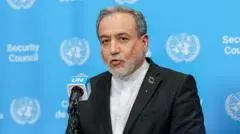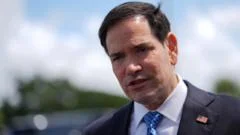
The diplomatic gloves are off. US Secretary of State Marco Rubio has publicly declared that Cuba poses a national security threat to the United States — a statement that has ignited a fierce response from Havana. Cuba’s foreign minister didn’t hold back, accusing Rubio of spreading "lies" and, more alarmingly, trying to "instigate a military aggression" against the island nation.
This isn’t just another round of political sparring. It’s a sharp escalation in rhetoric between two countries with a long, painful history. And for millions of people — from Cuban Americans in Florida to families in Havana — the stakes feel personal.
What Rubio Said — and Why It Matters
Speaking in a recent statement, Marco Rubio made it clear that his administration views the Cuban government as a direct threat to US national security. While the exact details of the threat weren’t fully spelled out in the immediate exchange, the message was unmistakable: Washington is not backing down.
Rubio, whose family roots trace back to Cuba, has long been a vocal critic of the Cuban government. His latest remarks fit into a broader pattern of强硬 rhetoric and economic pressure, including sanctions and aid restrictions. But calling Cuba a "national security threat" is a significant step — one that could open the door for tougher measures, including potential military posturing.
Why This Matters Right Now
This isn’t just a diplomatic squabble. For the US, labeling a country a national security threat can trigger a range of actions — from expanded sanctions to travel bans, and even military considerations. For Cuba, already struggling under decades of economic hardship, such a designation could deepen its isolation and worsen the daily lives of ordinary Cubans.
For the Cuban-American community in the US, this is deeply emotional. Many families have been torn apart by decades of political division. Rubio’s words resonate with those who see the Cuban government as oppressive, but they also alarm those who fear a return to the darkest days of Cold War-style confrontation.
And for the rest of the world, this is a reminder that the US-Cuba relationship — frozen for so long — is still capable of sudden, dangerous shifts.
How the Diplomatic Clash Unfolded
The timeline is still emerging, but the core of the dispute is clear. Rubio’s statement came as part of a broader US policy push against the Cuban government. In response, Cuba’s foreign minister took to the airwaves and social media, accusing Rubio of lying repeatedly and of trying to manufacture a pretext for military action.
"The reason the U.S. Secretary of State lies so repeatedly and so shamelessly is clear," the Cuban foreign minister said, according to reports. "He wants to instigate a military aggression against our country."
Havana’s accusation is serious. It suggests that the US is not just applying political pressure, but actively seeking a military confrontation. Whether that’s true or not, the accusation itself raises the temperature significantly.
Who Is Affected and What Officials Are Saying
The immediate impact is felt by the governments in Washington and Havana. But the ripple effects are wider. Cuban citizens, already facing shortages and economic strain, now face the prospect of even tighter sanctions. US businesses with interests in Cuba — limited as they are — could face new restrictions.
US officials, for their part, have not directly responded to the accusation of "military aggression." But the State Department has maintained that its policy toward Cuba is focused on promoting democracy and human rights, not military action.
In Havana, the government is rallying its base, using Rubio’s words as proof of US hostility. For many Cubans, this is familiar territory — a narrative of external threat that has been used for decades to justify internal control.
What We Know So Far — and What Remains Unclear
What we know:
- Marco Rubio has publicly stated that Cuba is a national security threat to the US.
- Cuba’s foreign minister has accused Rubio of lying and of trying to instigate military aggression.
- The exchange is part of a broader escalation in US-Cuba tensions.
What remains unclear:
- The specific evidence or intelligence behind Rubio’s "national security threat" claim.
- Whether the US is actually considering any military action against Cuba.
- How the Biden administration (or a future administration) will handle the situation going forward.
Risks, Concerns, and the Balanced View
This is a moment that demands caution. On one hand, the US has legitimate concerns about Cuba’s government, including its human rights record and its support for other authoritarian regimes. On the other hand, labeling Cuba a "national security threat" could be seen as an overreaction — especially given that Cuba’s military capabilities are minimal compared to the US.
Critics of Rubio’s approach argue that it’s more about domestic politics than genuine security. Rubio, a potential presidential candidate, has long used a tough stance on Cuba to appeal to Cuban-American voters in Florida. His latest remarks could be seen as part of that strategy.
But supporters say that the Cuban government’s actions — including its crackdown on dissent and its alliance with Venezuela and Russia — justify a strong response. They argue that calling Cuba a threat is not an exaggeration, but a realistic assessment.
The truth probably lies somewhere in between. Cuba is not a military threat to the US, but its government’s behavior is certainly a political and diplomatic irritant. The danger is that rhetoric on both sides could spiral into something more dangerous.
Why Similar Diplomatic Clashes Are Growing
This isn’t an isolated incident. The US has been increasingly confrontational with a range of countries — from China to Iran to Venezuela. The Cuba dispute fits into a broader pattern of US foreign policy that prioritizes强硬 rhetoric and sanctions over diplomacy.
At the same time, Cuba is not standing still. It has strengthened its alliances with Russia and China, and it continues to defy US pressure. The result is a cycle of escalation that benefits hardliners on both sides.
"The reason the U.S. Secretary of State lies so repeatedly and so shamelessly is clear. He wants to instigate a military aggression against our country." — Cuba’s Foreign Minister
What Readers, Investors, and Cuban Americans Should Know Now
For now, the situation is one of heightened rhetoric, not military action. But words matter in diplomacy. If you are a Cuban American with family in Cuba, this is a moment to stay informed and cautious. If you are an investor with exposure to Cuba — through tourism, remittances, or trade — expect further volatility.
For the average reader, the key takeaway is this: the US-Cuba relationship is entering another period of tension. Don’t expect any breakthroughs soon. And don’t be surprised if the rhetoric gets even sharper before it gets better.
What Could Happen Next
The most likely scenario is more of the same: more sanctions, more accusations, and more diplomatic posturing. A military confrontation is unlikely, but not impossible if either side miscalculates.
There is also the possibility of a diplomatic backchannel — perhaps through a third country like Mexico or Spain — to de-escalate. But given the current mood in both capitals, that seems a long shot.
What is certain is that this story is not going away. It will continue to dominate headlines, shape political campaigns, and affect the lives of millions of people on both sides of the Florida Straits.
Our Take: Why This Story Matters Beyond One Incident
This isn’t just about Marco Rubio or Cuba’s foreign minister. It’s about how the US chooses to engage with the world. The decision to label a small, struggling country a "national security threat" says as much about Washington’s mindset as it does about Havana’s behavior.
For decades, the US has treated Cuba as a problem to be solved through pressure and isolation. That approach has not worked. Cuba’s government is still in power. Its people still suffer. And the US is still stuck in a Cold War-era policy that benefits no one.
Rubio’s words may resonate with some voters, but they do little to solve the real problems — human rights, economic opportunity, and regional stability. Until both sides are willing to talk seriously, the cycle of accusation and counter-accusation will continue.
FAQs
Why did Marco Rubio call Cuba a national security threat?
Rubio’s statement is part of a broader US policy push against the Cuban government. He has long been a critic of Cuba’s leadership and views the country as a threat due to its human rights record and alliances with US adversaries like Russia and Venezuela.
What did Cuba’s foreign minister say in response?
Cuba’s foreign minister accused Rubio of lying repeatedly and of trying to "instigate a military aggression" against Cuba. The accusation is a serious escalation in rhetoric and reflects deep mistrust between the two governments.
Could this lead to a military conflict between the US and Cuba?
While unlikely, the risk is not zero. Both sides have a history of provocative rhetoric. However, a full-scale military conflict would be a massive escalation and is not in the interest of either country. The more likely outcome is continued diplomatic and economic pressure.
How does this affect ordinary Cubans and Cuban Americans?
For Cubans on the island, the heightened tension could lead to tighter sanctions, worsening economic conditions. For Cuban Americans, it’s an emotional issue that divides families and communities. Many fear a return to the darkest days of US-Cuba hostility.