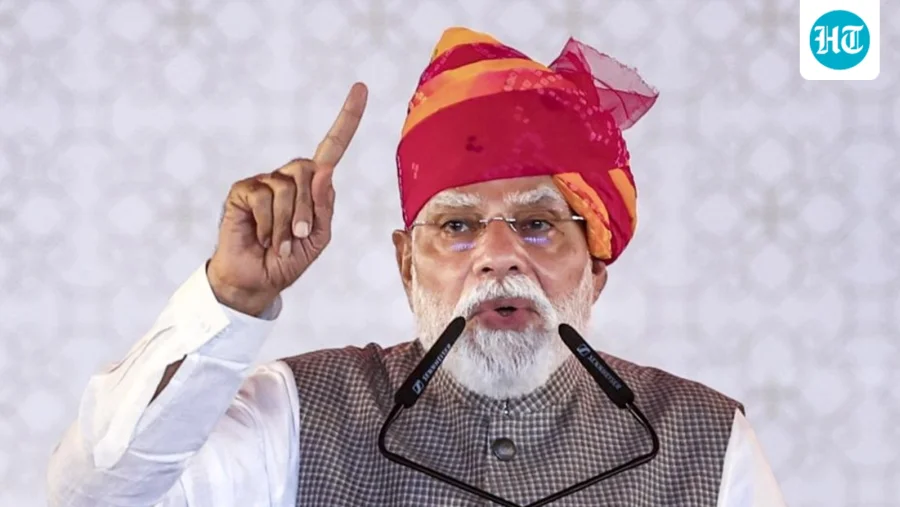
Prime Minister Narendra Modi, in his latest Mann Ki Baat address, delivered a powerful message of national unity, thanking 140 crore Indians for standing firm against what he described as deliberate attempts to destabilise the country during the severe global energy crisis triggered by the US-Iran war. The address came at a time when rising fuel prices and supply disruptions had sparked anxiety across the nation.
What PM Modi said about the energy crisis and national unity
PM Modi specifically praised citizens for their patience and cooperation during the US-Iran war-induced energy crisis, which he called one of the most challenging global energy situations in recent history. He said that despite external pressures and attempts to create instability, the people of India remained united and resilient, effectively defeating those who sought to harm the nation's interests.
Why this matters for every Indian household
The energy crisis, driven by the escalating US-Iran conflict, had direct consequences for Indian households. Fuel prices surged, impacting transportation costs, food prices, and household budgets. PM Modi's acknowledgment of the public's sacrifice and resilience is significant because it validates the hardships faced by ordinary citizens while reinforcing the message that collective national strength can overcome external challenges.
Timeline of the US-Iran war and its impact on India
The US-Iran conflict escalated sharply in recent months, disrupting global oil supplies and sending crude prices soaring. India, which imports over 80% of its crude oil, was among the most affected nations. The government had to navigate diplomatic tensions while securing alternative energy sources. PM Modi's Mann Ki Baat address marked a key moment where he directly addressed the crisis and the nation's response.
How ordinary Indians responded to the crisis
Across the country, citizens adapted to rising fuel costs by reducing discretionary travel, switching to public transport, and supporting government conservation efforts. Small businesses and daily wage earners faced the brunt of the price hikes, yet many expressed solidarity with the government's stance. PM Modi's praise for "140 crore Indians" reflects this ground-level resilience.
Government's response and diplomatic efforts
The Indian government, under PM Modi's leadership, engaged in diplomatic outreach to oil-producing nations, tapped into strategic petroleum reserves, and accelerated renewable energy projects to reduce dependence on volatile fossil fuel markets. Officials said these measures helped cushion the impact of the crisis, though challenges remain.
What the 'attempts to destabilise' really mean
PM Modi's reference to "attempts to destabilise the nation" points to external forces that may have sought to exploit the energy crisis to create economic and social unrest in India. While he did not name specific actors, analysts believe this refers to geopolitical adversaries who could benefit from India's instability. The Prime Minister's framing turns the crisis into a narrative of national defiance.
Confirmed facts vs what remains unclear
Confirmed: PM Modi delivered the Mann Ki Baat address praising citizens for unity during the US-Iran war-induced energy crisis. Confirmed: He described the period as a challenging global energy situation. Unclear: The specific nature of the destabilisation attempts and the identities of those behind them remain unspecified. Unclear: The full extent of the economic impact on India is still being assessed.
India's energy strategy: Why resilience matters
India's ability to weather the US-Iran war-induced energy crisis highlights its growing energy security framework. The government's investments in renewable energy, strategic reserves, and diversified import sources have created a buffer against global shocks. This crisis has reinforced the importance of reducing fossil fuel dependence and accelerating the green energy transition.
Risks and balanced view of the government's handling
While PM Modi's address was widely praised, critics argue that the government could have done more to shield vulnerable populations from fuel price hikes. Opposition parties pointed to the lack of immediate relief measures for low-income households. Some economists warn that the crisis could have long-term inflationary effects. The government maintains that its calibrated approach prevented a more severe economic downturn.
Wider trend: How global conflicts reshape India's energy policy
The US-Iran war is the latest in a series of global conflicts that have exposed India's energy vulnerabilities. From the Russia-Ukraine war to tensions in the Middle East, each crisis has pushed India to accelerate its energy diversification strategy. This trend is likely to continue, with greater emphasis on domestic production, renewable energy, and international partnerships.
Practical guidance for citizens amid energy uncertainty
For Indian households, experts recommend monitoring fuel consumption, exploring carpooling or public transport options, and considering energy-efficient appliances. Small businesses should review their supply chains for fuel-dependent vulnerabilities. Investors may want to track government announcements on renewable energy subsidies and oil import diversification.
Future outlook: What comes next for India's energy security
India is expected to deepen its engagement with alternative oil suppliers, including Russia and African nations, while ramping up solar and wind energy capacity. The government may also announce new measures to stabilise fuel prices if the US-Iran conflict persists. PM Modi's address signals that national unity will remain a key theme in navigating future crises.
Our Take
PM Modi's Mann Ki Baat address was more than a routine update—it was a strategic communication aimed at reinforcing national solidarity during a period of external pressure. By framing the energy crisis as a test of national resilience, the Prime Minister turned a potential source of public discontent into a moment of collective pride. While questions remain about the specific destabilisation attempts, the broader message is clear: India's strength lies in the unity of its 140 crore citizens. The coming months will test whether this unity translates into sustained policy action on energy independence.
Frequently Asked Questions
What did PM Modi say about the US-Iran war energy crisis?
PM Modi, in his Mann Ki Baat address, called the West Asia conflict a "challenging time" and thanked 140 crore Indians for standing united against attempts to destabilise the nation during the energy crisis.
How did the US-Iran war affect India's energy supply?
The US-Iran war disrupted global oil supplies, causing crude prices to surge. India, which imports over 80% of its crude oil, faced rising fuel costs and supply chain challenges.
What are the 'attempts to destabilise' that PM Modi mentioned?
PM Modi referred to external forces that may have sought to exploit the energy crisis to create economic and social unrest in India. He did not name specific actors but framed the crisis as a test of national resilience.
What steps is India taking to reduce its energy vulnerability?
India is diversifying its oil import sources, tapping into strategic petroleum reserves, accelerating renewable energy projects, and engaging in diplomatic outreach to secure stable energy supplies.