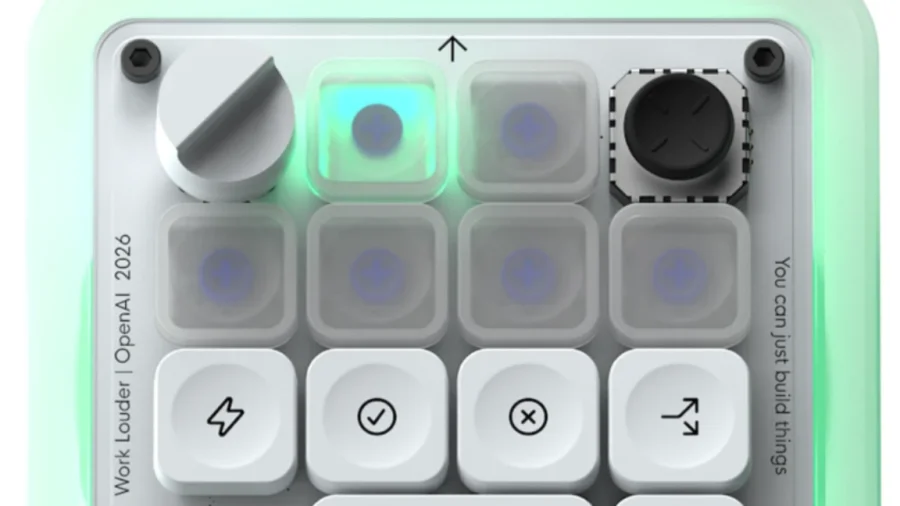
OpenAI has taken its first step into branded hardware — and it is not the futuristic smart speaker many expected. The company today announced the Codex Micro, a $230 mini-keyboard designed specifically to help users monitor and interact with multiple Codex AI agents at a glance. It is a niche, developer-focused device, not a consumer gadget.
What Is the Codex Micro Keyboard?
The Codex Micro is a compact, RGB-lit keyboard with a specialized layout. Its standout feature is six frosted keys in the top two rows, which offer color-coded live feedback on up to six Codex threads. Even when those threads are not in focus on-screen, users can see their status — active, waiting, completed, or error — through the keys’ lighting.
Why a Keyboard, Not a Smart Speaker?
Rumors have swirled about OpenAI working on a personalized smart speaker or other standalone hardware. The Codex Micro is a different bet: a practical input tool for developers and power users who already work with multiple AI agents. It prioritizes glanceability and quick interaction over voice or AI-first design. For now, OpenAI is testing hardware in a controlled, professional context.
How It Differs from Work Louder’s Existing Keyboards
The Codex Micro is described as a "limited-run collaboration" with Work Louder, a company known for its Creator Micro line of customizable square keyboards aimed at creative professionals. The Codex Micro looks very similar to those devices, but differentiates itself through the six frosted keys and their integration with OpenAI’s Codex platform. The collaboration suggests OpenAI is leveraging existing hardware expertise rather than building from scratch.
Who Is This Keyboard For?
The device is aimed at developers, AI researchers, and power users who manage multiple Codex agents simultaneously. It is not a general-purpose keyboard for everyday consumers. The $230 price point and limited-run nature reinforce that this is a niche tool, not a mass-market product. Users who rely on Codex for coding, automation, or multi-agent workflows will benefit most.
OpenAI’s Official Stance on the Device
OpenAI has positioned the Codex Micro as a "limited-run collaboration," signaling that this is an experimental foray into hardware. The company has not announced plans for broader hardware lines, though the smart speaker rumors persist. The device is available now through Work Louder’s channels, with no word on future production runs.
What This Means for OpenAI’s Hardware Ambitions
The Codex Micro is a cautious first step. By partnering with an established hardware maker, OpenAI avoids the risks of manufacturing and distribution while testing demand for branded devices. The focus on Codex agents — rather than general AI — suggests the company sees hardware as an extension of its developer ecosystem, not a consumer play. However, the smart speaker rumors indicate broader ambitions may still be in development.
Confirmed Facts vs What Remains Unclear
Confirmed: The Codex Micro is a $230 mini-keyboard with frosted keys for Codex agent monitoring, a limited collaboration with Work Louder. Unclear: Whether this is a one-off experiment or the start of a hardware line. The rumored smart speaker remains unconfirmed. No details on production volume or future availability have been shared.
Risks and Balanced View
The Codex Micro is a niche device with limited appeal. At $230, it is expensive for a keyboard that only works with Codex agents. Developers may find the same functionality through software-based monitoring tools. The limited-run nature means support and updates may be uncertain. Critics may question why OpenAI is entering hardware at all, given its core strength in software and AI models.
Wider Trend: AI Companies Moving Into Hardware
OpenAI is not alone. Google has its Pixel line, Amazon has Echo devices, and Meta has Ray-Ban smart glasses. The Codex Micro represents a different approach: hardware that enhances a specific AI workflow rather than a general-purpose assistant. It reflects a growing trend of AI companies creating branded touchpoints for their ecosystems, even if those touchpoints are small and specialized.
Practical Guidance for Developers
If you are a developer using Codex agents regularly, the Codex Micro could improve your workflow by providing at-a-glance status updates. However, consider whether the $230 price is justified for your use case. Software alternatives — like terminal notifications or browser extensions — may offer similar functionality at lower cost. The limited-run nature also means acting quickly if you want one.
Future Outlook
If the Codex Micro sells well, OpenAI may expand its hardware efforts — possibly with a consumer device like the rumored smart speaker. If it flops, the company may retreat to software-only. Either way, this launch signals that OpenAI is willing to experiment with physical products, even if the first attempt is a small, specialized keyboard.
Our Take
The Codex Micro is a smart, cautious move. It lets OpenAI test hardware without overcommitting, and it solves a real problem for developers managing multiple agents. But it is not a game-changer. The real story is what comes next: if this experiment succeeds, expect more ambitious hardware from OpenAI. If it fails, the company will likely stick to what it does best — software.
Frequently Asked Questions
What is the OpenAI Codex Micro keyboard?
It is a $230 mini-keyboard with RGB lighting and six frosted keys that provide color-coded live feedback on up to six Codex AI agent threads. It is a limited collaboration with Work Louder.
How does the Codex Micro differ from Work Louder’s Creator Micro?
The Codex Micro has six frosted keys in the top two rows that integrate with OpenAI’s Codex platform for agent monitoring. The Creator Micro is a general customizable keyboard for creative professionals without Codex-specific features.
Is the Codex Micro a consumer device?
No. It is aimed at developers, AI researchers, and power users who manage multiple Codex agents. It is a niche, limited-run tool, not a mass-market product.
Will OpenAI make more hardware after the Codex Micro?
Unclear. The company is rumored to be working on a personalized smart speaker, but no official plans have been announced. The Codex Micro is an experimental first step.