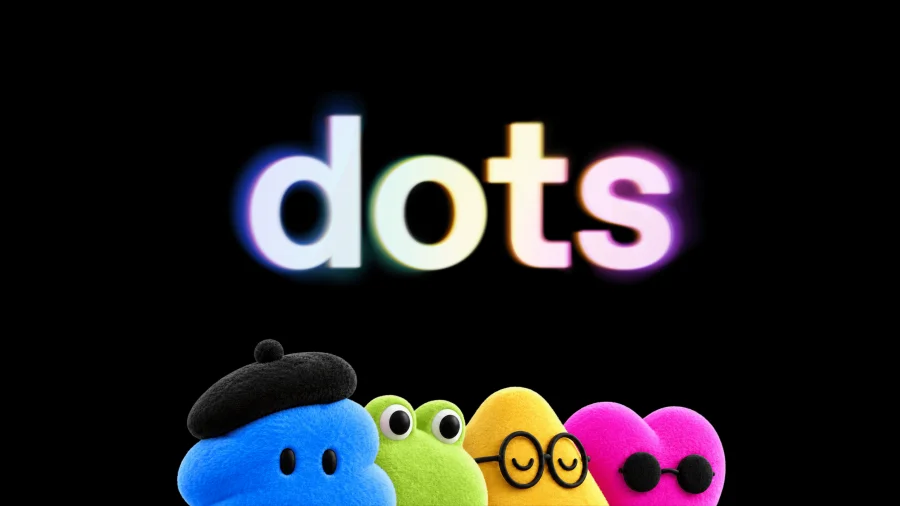
OpenAI has a new idea about what an AI assistant should be — and it looks less like a chatbot waiting for your question, and more like a small, ever-present companion that quietly works in the background. The company has introduced Dots, described as always-on AI agents designed to connect to your apps and tackle multistep tasks. It is being framed, plainly, as OpenAI's answer to Meta's Muse.
What OpenAI's Dots Actually Are
Dots are AI agents built around a simple but significant shift: they are always on. Instead of you opening an app, typing a prompt, and waiting for a reply, a Dot is meant to stay connected to the services you already use and carry out tasks that require several steps.
The word "cute" matters here. These are not presented as cold enterprise tools but as approachable characters — a design choice that hints at how OpenAI wants users to feel about something that is always listening and acting.
Why "Always-On" Changes the Stakes
A chatbot that answers when asked is a tool. An agent that stays active is closer to a digital colleague — or a digital shadow. That difference is what makes this launch more than a product update.
Multistep tasks are the real test. Booking, comparing, scheduling, following up — these are the chores current assistants handle poorly because they break the moment a task needs more than one action. If Dots genuinely close that gap, the value to users rises sharply.
The Meta Muse Connection
The headline framing is direct: Dots are OpenAI's answer to Meta's Muse. That places the two companies in the same lane — persistent, app-connected agents rather than one-shot conversational AI.
Meta's advantage has always been distribution across its own apps. OpenAI's advantage has been model quality and developer mindshare. This is where those two strengths now collide.
Who Feels This First
Ordinary users will notice it in small ways: fewer taps, fewer app switches, less manual coordination between services. The friction that disappears is the kind people rarely name but always feel.
Developers and app makers face a harder question. If an agent can operate across apps on a user's behalf, who owns the interaction — and who gets bypassed?
What Is Confirmed and What Is Not
Confirmed: OpenAI has introduced Dots, they are described as always-on AI agents, they connect to apps, they handle multistep tasks, and they are positioned against Meta's Muse.
Unclear: pricing, launch dates, supported apps, privacy safeguards, data handling, and whether "always-on" means continuous background access or something more limited. The source material does not specify these, and no verified details were available at the time of writing.
Where OpenAI's Real Advantage Sits
OpenAI's moat is not any single model — it is the combination of model capability, developer ecosystem, and now a consumer-facing agent layer. Dots, if they work, become the front door through which users touch everything else OpenAI offers.
That is a distribution play as much as a technology play, and it is exactly the kind of move that forces rivals to respond.
The Risks Nobody Should Ignore
Always-on agents raise obvious concerns: permission creep, data access, silent errors, and the uncomfortable question of what happens when an agent acts wrongly on your behalf.
There is also a trust problem. Users tolerate a chatbot that misunderstands them. They are far less forgiving of an agent that misuses their accounts. OpenAI has not yet explained how it plans to handle that gap.
The Bigger Pattern
2023 was about chat. 2024 was about reasoning. The next phase is clearly about persistence — AI that does not reset every time you close a window.
Dots and Muse are early signals of that shift. The winner will not be the company with the smartest model, but the one users trust to stay switched on.
What Readers Should Do Now
Nothing urgent. Dots are not something to sign up for today based on available information. But it is worth watching how OpenAI answers three questions: what data Dots can access, how users can switch them off, and which apps will support them first.
Those three answers will decide whether this feels like convenience or surveillance.
What Comes Next
Expect more detail on availability, integrations, and safeguards. Expect Meta to respond. And expect the phrase "always-on agent" to become the most contested term in consumer AI over the next year.
Our Take
The interesting thing about Dots is not that they are cute. It is that OpenAI is admitting the chatbot era has limits. An assistant that waits to be asked is convenient; an assistant that acts is useful. That is a harder product to build — and a much harder one to trust. Dots are OpenAI's bet that users will accept the trade. That bet is unproven, and the company has not yet shown its hand on the safeguards that would make it credible.
Frequently Asked Questions
What are OpenAI's Dots?
Dots are always-on AI agents from OpenAI designed to connect to your apps and complete multistep tasks, rather than only responding to single prompts.
How are Dots different from a normal AI chatbot?
A chatbot answers when you ask. Dots are built to stay active and carry out tasks that involve several steps across different apps.
What is Meta's Muse, and why is it being compared to Dots?
Muse is Meta's competing agent product. Dots are being positioned as OpenAI's direct answer to it, putting the two companies in the same race for persistent, app-connected AI agents.
Are Dots available to users right now?
No verified availability, pricing, or rollout details were included in the source material. Readers should wait for official confirmation from OpenAI before expecting access.