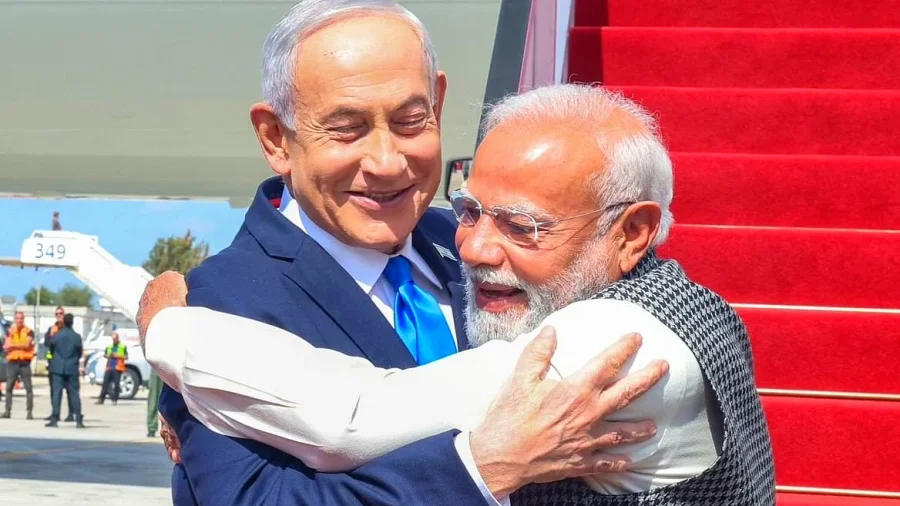
The Congress party on Monday launched its most direct attack yet on Prime Minister Narendra Modi over his government’s stance on the Israel-Gaza conflict, accusing him of abandoning India’s moral and civilisational values through a “stony silence” that is “simply unconscionable.”
Congress leader calls out Netanyahu’s claim on India
The attack came after Israeli Prime Minister Benjamin Netanyahu publicly listed India among Israel’s strongest supporters, a claim Congress general secretary Jairam Ramesh forcefully rejected. “Mr Netanyahu is wrong. Undoubtedly, Israel is embedded in the Modani empire and Mr Narendra Modi is blindly devoted to him. But crores of Indians condemn Israel’s genocide in Gaza that has not spared women, children, or the elderly,” Ramesh said in a statement.
Why this silence matters for India’s global image
Ramesh’s remarks highlight a growing discomfort within India’s political class over the government’s refusal to publicly criticise Israel’s military campaign in Gaza, which has killed tens of thousands of civilians. For a nation that once championed the Palestinian cause and non-alignment, the silence is seen by critics as a sharp departure from decades of foreign policy tradition. “This silence is a betrayal of India’s civilisational ethos and values,” Ramesh asserted.
Timeline of India’s shifting stance on Israel
India historically maintained a pro-Palestinian position, voting against Israel at the UN for decades. That began shifting under the Modi government, which has deepened defence, technology, and diplomatic ties with Israel. Modi became the first Indian PM to visit Israel in 2017, and the two countries have since collaborated on everything from agriculture to cybersecurity. However, the current conflict in Gaza — which began after the October 7 Hamas attack and Israel’s subsequent military response — has tested that relationship.
Who is affected by this political divide
The Congress attack is not just about foreign policy — it reflects a deeper domestic battle over India’s identity. For millions of Indian Muslims and left-leaning voters, the government’s silence feels like a betrayal of India’s pluralistic values. For the government’s supporters, the deepening ties with Israel are a pragmatic move that strengthens India’s strategic autonomy. The divide is now playing out in Parliament, on social media, and in diplomatic circles.
What the government has said — and not said
So far, the Modi government has issued carefully worded statements calling for “restraint” and “dialogue” without directly condemning Israel. External Affairs Minister S. Jaishankar has emphasised India’s “consistent position” on a two-state solution, but critics say the government has avoided naming Israel in its criticism. Ramesh’s charge is that this silence is deliberate — a result of Modi’s personal closeness to Netanyahu.
What this attack reveals about India’s foreign policy debate
The Congress’s sharp language — using terms like “genocide” and “unconscionable” — signals a calculated political strategy. By framing the issue as a moral and civilisational one, the party is trying to reclaim the moral high ground on foreign policy, a domain where the Modi government has often been seen as assertive and successful. It also puts the government on the defensive, forcing it to explain its silence to a domestic audience that is increasingly aware of the Gaza crisis through social media and news coverage.
Confirmed facts vs what remains unclear
Confirmed: Jairam Ramesh issued a statement calling Modi’s silence “unconscionable” and accusing the government of abandoning India’s values. Confirmed: Netanyahu listed India as a strong supporter of Israel. Confirmed: The Modi government has not publicly condemned Israel’s military actions in Gaza. Unclear: Whether the government will respond to the Congress attack or change its stance. Unclear: How much domestic pressure will influence India’s foreign policy going forward.
Risks and balanced view
Critics of the Congress’s position argue that India’s relationship with Israel is strategically important — especially for defence technology and counter-terrorism cooperation. They say the government’s silence is a diplomatic calculation, not a moral failure. Others point out that India has historically balanced its ties with both Israel and Palestine, and that the current government’s tilt toward Israel risks alienating key allies in the Arab world. The Congress’s attack also risks being seen as opportunistic, given that the party itself maintained ties with Israel while in power.
Wider trend: India’s foreign policy under Modi
This episode is part of a broader pattern under the Modi government: a move away from the non-alignment and moral posturing of the past toward a more transactional, realpolitik-driven foreign policy. From the Quad to the Abraham Accords, India has been building partnerships based on shared interests rather than historical positions. The Israel-Gaza conflict is the most emotionally charged test of that approach so far.
What readers should understand
For Indian voters, this is not just a foreign policy debate — it is a question of what values India projects on the world stage. For students and young professionals following the news, the key takeaway is that India’s stance on Israel is no longer a settled issue. It is a live political fault line that could shape election debates and diplomatic engagements for years to come.
Future outlook
The Congress attack is unlikely to force an immediate shift in government policy, but it could increase domestic pressure on the Modi government to clarify its position. If the Gaza conflict intensifies or if civilian casualties rise further, the government may find it harder to maintain its silence. The opposition will continue to use this issue to question the government’s moral authority, especially in the run-up to the next general election.
Our Take
The Congress’s attack on Modi over Israel is significant not because it will change policy overnight, but because it exposes a growing gap between the government’s foreign policy and the sentiments of a significant section of the Indian public. In a democracy, foreign policy cannot be insulated from domestic politics forever. The Modi government’s silence on Gaza may be diplomatically convenient, but it is becoming politically costly. Whether that cost will force a change remains to be seen — but the debate itself is a healthy sign for Indian democracy.
Frequently Asked Questions
Why did Congress attack PM Modi over Israel?
Congress leader Jairam Ramesh accused PM Modi of staying silent on Israel’s military actions in Gaza, calling it a betrayal of India’s civilisational values. The attack came after Israeli PM Netanyahu listed India as a strong supporter of Israel.
What did Jairam Ramesh say about Netanyahu’s claim?
Ramesh said Netanyahu was wrong to claim India stands firmly with Israel. He argued that while the Modi government supports Tel Aviv, millions of Indians condemn Israel’s actions in Gaza.
Has the Modi government condemned Israel’s actions in Gaza?
No. The Modi government has called for restraint and dialogue but has not directly condemned Israel’s military campaign in Gaza. This silence is what the Congress is criticising.
What is India’s historical position on Israel and Palestine?
India historically supported the Palestinian cause and voted against Israel at the UN for decades. Under PM Modi, India has deepened ties with Israel while maintaining rhetorical support for a two-state solution.