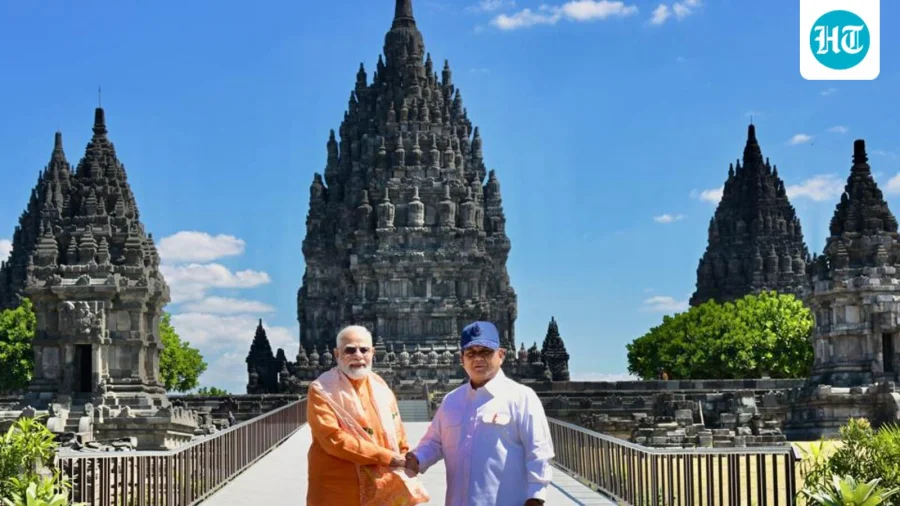
In a moment that bridged centuries and civilizations, Prime Minister Narendra Modi and Indonesian President Prabowo Subianto stood together at the foot of the 1,000-year-old Prambanan Temple in Yogyakarta on Tuesday, formally inaugurating a restoration project led by India’s Archaeological Survey of India. The image of the two leaders before the towering Shiva sanctuary was not just a diplomatic photo-op — it was a reaffirmation of a civilizational link that predates modern borders.
What the ASI-led Prambanan restoration project entails
The Archaeological Survey of India will now lead conservation and restoration work at the UNESCO-listed Prambanan Temple compound, one of Southeast Asia’s most significant Hindu architectural marvels. The project, agreed upon during President Prabowo’s state visit to India earlier this year, will see Indian experts collaborate with Indonesian authorities to preserve the 9th-century complex. The scope includes structural assessment, stone conservation, drainage management, and documentation of the temple’s intricate reliefs.
Why this matters for India-Indonesia cultural diplomacy
For millions of Indians and Indonesians, this project is more than a technical collaboration. It is a recognition of shared heritage. Prambanan, dedicated to the Hindu Trimurti, stands as a testament to the spread of Indian cultural and religious influence across maritime Southeast Asia. By entrusting its restoration to the ASI, Indonesia has signaled deep trust in India’s expertise — and both governments are betting that cultural ties can strengthen strategic partnership in the Indo-Pacific region.
How the Prambanan restoration agreement came about
The groundwork for this project was laid during President Prabowo’s official visit to India in early 2025. During bilateral talks, both sides identified cultural heritage as a key pillar of cooperation. The ASI, which has successfully restored temples in Cambodia (Angkor Wat) and other countries, was a natural choice. The formal announcement was made in a joint statement, and Tuesday’s inauguration in Yogyakarta marked the project’s operational launch.
Who benefits from the Prambanan Temple conservation
For local communities in Yogyakarta, the temple is both a spiritual site and a major tourist attraction. The restoration is expected to boost sustainable tourism, create local employment in conservation-related work, and enhance the site’s resilience against environmental wear. For Indian heritage professionals, it offers an opportunity to showcase expertise on a global stage. For the broader public in both countries, it is a reminder of a shared past that can inform a cooperative future.
Official response from both governments
PM Modi described the project as a “symbol of the deep civilizational connect between India and Indonesia.” President Prabowo called it a “historic moment” and thanked India for its commitment to preserving Indonesia’s heritage. The Indonesian Ministry of Education and Culture confirmed that the ASI team would work alongside local archaeologists and conservators. The Indian Ministry of External Affairs stated that the project reflects India’s “Act East” policy in action.
What makes Prambanan a unique conservation challenge
Built in the 9th century during the Sanjaya dynasty, Prambanan is Indonesia’s largest Hindu temple complex. Its central shrine rises 47 meters, surrounded by hundreds of smaller temples. The site was damaged by earthquakes in the 16th century and again in 2006. Restoration requires balancing structural stability with preservation of original stone carvings. The ASI’s experience with similar challenges at Indian temple sites — including those affected by seismic activity — is expected to be valuable.
Confirmed facts vs what remains unclear about the restoration timeline
Confirmed: The ASI will lead the project; the inauguration took place on July 8, 2025; the agreement was signed during Prabowo’s India visit; the site is UNESCO-listed. Unclear: The exact budget and duration of the project have not been publicly disclosed. The specific phases of work and whether foreign funding is involved remain to be clarified. Officials have not yet announced a completion date.
Why the ASI was chosen for this international project
The Archaeological Survey of India has built a reputation for temple conservation both domestically and abroad. It has worked on restoration projects in Cambodia (Angkor Wat), Afghanistan (Bamiyan Buddhas), and Myanmar (Bagan). Its expertise in structural conservation, stone chemistry, and documentation of heritage sites makes it a preferred partner for UNESCO-listed properties. For Prambanan, the ASI brings specific knowledge of Hindu temple architecture that few other agencies can match.
Risks and challenges ahead for the conservation project
Conservation of a 1,000-year-old structure is never straightforward. The temple faces threats from tropical weather, seismic activity, and tourism pressure. Differences in conservation philosophy — between “restoration” and “preservation as found” — can sometimes create friction between international and local teams. There is also the question of long-term maintenance after the ASI’s formal involvement ends. Experts have called for a clear sustainability plan beyond the project’s initial phase.
How this fits into India’s broader cultural outreach in Southeast Asia
The Prambanan project is part of a larger pattern. India has been actively restoring heritage sites across Southeast Asia — from Angkor Wat in Cambodia to Vat Phou in Laos. These efforts are often described as “cultural diplomacy” or “heritage diplomacy,” aimed at strengthening ties with ASEAN nations. For India, it is a soft power tool that complements economic and security cooperation. For host countries, it is access to world-class conservation expertise at no or minimal cost.
What Indians and Indonesians should know about visiting Prambanan
For Indian travelers, Prambanan is easily accessible from Yogyakarta, a city well-connected by air from Jakarta and Bali. The temple complex is open daily, and guided tours are available. During the restoration, some areas may be cordoned off, but the main shrines remain accessible. Visitors are advised to check the official website for updates on closures. For Indonesian visitors, the project offers a chance to learn about shared heritage — and to see Indian conservation techniques in action.
What happens next for the Prambanan restoration project
With the inauguration complete, the ASI team is expected to begin preliminary surveys and documentation. A detailed conservation plan will be submitted to Indonesian authorities for approval. Work will likely proceed in phases, starting with the most vulnerable structures. Both governments have expressed hope that the project will be completed within a few years, though no firm deadline has been set. The success of this project could pave the way for similar collaborations at other heritage sites in the region.
Our Take
The Prambanan restoration is a rare example of cultural diplomacy that feels genuinely meaningful — not just a photo opportunity. It acknowledges that India and Indonesia share more than strategic interests; they share a deep civilizational history that predates colonialism and modern statehood. For the ASI, this is an opportunity to demonstrate that Indian expertise in heritage conservation is world-class. For Indonesia, it is a gesture of trust. The real test, however, will be in execution: whether the project is completed on time, within budget, and with sensitivity to local needs. If it succeeds, it could become a model for heritage cooperation across Asia.
Frequently Asked Questions
What is the Prambanan Temple restoration project?
It is a conservation project led by the Archaeological Survey of India at the 9th-century UNESCO World Heritage Prambanan Temple in Yogyakarta, Indonesia. The project was inaugurated by PM Modi and President Prabowo on July 8, 2025.
Why is the ASI restoring a temple in Indonesia?
The ASI was chosen for its expertise in Hindu temple conservation and its successful track record at sites like Angkor Wat in Cambodia. The project is part of India’s cultural diplomacy with Southeast Asian nations.
When was the Prambanan restoration agreement signed?
The agreement was reached during Indonesian President Prabowo Subianto’s state visit to India earlier in 2025. The formal inauguration took place on July 8, 2025, in Yogyakarta.
Will the Prambanan Temple remain open to visitors during restoration?
Yes, the main shrines are expected to remain accessible, though some areas may be cordoned off during active conservation work. Visitors should check official updates before planning a trip.