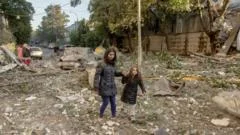
The sound of explosions shattered the early morning calm across Ukraine’s major cities, leaving behind scenes of devastation that no family should ever witness. In Kyiv, rescue workers pulled an eight-year-old boy and a woman from the rubble of a collapsed apartment block. They were among at least 16 people killed in what officials are calling one of the most intense Russian attacks this year.
More than 100 others were wounded as missiles and drones rained down on residential areas in Kyiv, Odesa, and Dnipro. The attack, which began late Wednesday night and continued into Thursday morning, has left entire neighborhoods in shock and grief.
Why This Attack Feels Different for Ukrainians
This was not a strike on a military base or an industrial site. These were homes. Ordinary apartment buildings where families were sleeping. The death of a young child has struck a particularly raw nerve across the country, reigniting painful memories of previous attacks that have taken the lives of the youngest and most vulnerable.
For many Ukrainians, this attack is a brutal reminder that the war is far from over, and that no city is truly safe. The emotional toll is immense, and the psychological impact on survivors who lost neighbors, friends, or family members will last for years.
How the Attack Unfolded: A Night of Terror
According to Ukrainian officials, the assault began just after midnight with a wave of drones, followed by cruise missiles launched from Russian aircraft and ships. Air raid sirens wailed across the country, but despite the warnings, many of the projectiles reached their targets.
In Kyiv, Mayor Vitali Klitschko confirmed that four people died in the capital, including the eight-year-old boy. The apartment block where the child lived was hit directly, collapsing several floors. Emergency crews worked through the night, using floodlights and heavy equipment to search for survivors.
Odesa, the southern port city, suffered the highest death toll. At least nine people were killed there, with strikes hitting residential buildings and a warehouse. In Dnipro, two more deaths were reported after a missile struck a multi-story apartment complex.
What Officials Are Saying About the Attack
President Volodymyr Zelenskyy condemned the attack in a statement, calling it a "deliberate act of terror against civilians." He reiterated Ukraine’s need for more advanced air defense systems from its Western allies, warning that without them, such attacks would continue.
"Every missile that hits a home is a missile that should have been intercepted," Zelenskyy said. "We need the means to protect our people."
Ukrainian air force officials reported that they managed to shoot down several drones and missiles, but the sheer volume of the assault overwhelmed some defenses. The attack involved a mix of Shahed drones and Kh-101 cruise missiles, a combination that has become increasingly common in recent months.
What We Know So Far — and What Remains Unclear
Here is what has been confirmed by Ukrainian authorities:
- At least 16 people have been killed across Kyiv, Odesa, and Dnipro.
- More than 100 people have been injured, many of them seriously.
- An eight-year-old boy and a woman were pulled from rubble in Kyiv.
- Residential buildings were the primary targets in all three cities.
What remains unclear is the full extent of the damage. Rescue operations are still ongoing, and the death toll could rise as crews clear debris. It is also not yet known whether any military infrastructure was hit, as Russian officials have claimed in the past.
Risks, Concerns, and the Growing Danger for Civilians
This attack highlights a deeply troubling pattern: Russian forces appear to be intensifying strikes on urban centers, with little regard for civilian casualties. The use of drones and missiles in combination makes it harder for air defenses to respond effectively, increasing the risk to ordinary people.
For residents of Kyiv, Odesa, and Dnipro, the psychological toll is severe. Many are now questioning whether their homes are safe, even in cities that have not seen heavy fighting in months. The attack also raises concerns about Ukraine's ability to protect its population as winter approaches and energy infrastructure becomes a potential target again.
International observers have condemned the attack, but there is growing frustration among Ukrainians that words have not translated into enough concrete military aid. The demand for more Patriot systems and other advanced interceptors has become a central issue in Ukraine's diplomatic efforts.
Why Similar Attacks Are Becoming More Frequent
This is not an isolated incident. Over the past several weeks, Russia has launched a series of large-scale aerial assaults on Ukrainian cities. Analysts believe this strategy is designed to break Ukrainian morale, deplete air defense ammunition, and force Kyiv to divert resources away from the front lines.
The timing of this attack is also significant. It comes as Ukraine awaits new shipments of Western military aid, and as diplomatic efforts to negotiate a ceasefire remain stalled. Some experts believe Russia is trying to maximize pressure before any potential pause in fighting.
What Ukrainians Should Know and Do Now
For those living in major cities, the advice from Ukrainian authorities remains the same: heed air raid warnings, know the location of the nearest shelter, and avoid windows during alerts. Emergency services have urged residents to stay clear of damaged buildings and to report any unexploded ordnance immediately.
For the international community, the message from Kyiv is clear: air defense systems save lives. Every delay in delivering promised aid means more families will suffer the same fate as those in Kyiv, Odesa, and Dnipro.
What Could Happen Next
Ukrainian officials expect more attacks in the coming days and weeks. The pattern suggests that Russia is preparing for a sustained campaign of aerial bombardment, possibly targeting energy infrastructure as winter approaches. The coming months could be the most dangerous for civilians since the early days of the full-scale invasion.
Diplomatically, this attack is likely to intensify calls for more Western military support. It may also complicate any potential peace talks, as Ukraine’s leadership will be under pressure to demand stronger security guarantees before agreeing to any ceasefire.
Our Take: Why This Story Matters Beyond the Headlines
Every number in a news report represents a life. The eight-year-old boy killed in Kyiv was someone’s son, someone’s friend, someone’s future. The woman pulled from the rubble was someone’s mother, someone’s wife, someone’s anchor. This attack is not just a statistic in a long war; it is a reminder that the cost of this conflict is measured in human lives, not just territory or military gains.
For the world, this attack should serve as a wake-up call. The war in Ukraine is not frozen. It is not fading. It is escalating, and civilians are paying the highest price. The question now is whether the international community will respond with the urgency that this moment demands.
FAQs
How many people were killed in the Russian attack on Ukraine?
At least 16 people were killed, including an eight-year-old boy in Kyiv. The death toll may rise as rescue operations continue.
Which Ukrainian cities were hit in the missile and drone attack?
The attack targeted Kyiv, Odesa, and Dnipro. Residential buildings were hit in all three cities, causing widespread damage and casualties.
Why is Russia launching more attacks on Ukrainian cities?
Analysts believe Russia is trying to break Ukrainian morale, deplete air defense resources, and increase pressure before any potential diplomatic negotiations. The attacks also aim to disrupt daily life and damage critical infrastructure.
What can Ukraine do to protect its cities from such attacks?
Ukraine has repeatedly called for more advanced air defense systems, such as Patriot batteries, to intercept missiles and drones. Better early warning systems and more shelters also help, but the most effective protection is a robust, well-supplied air defense network.