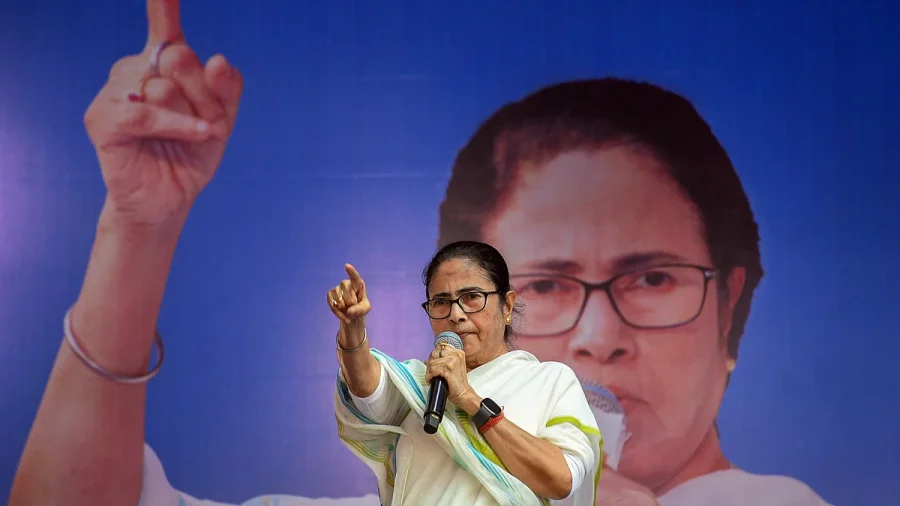
The battle for the soul of the Trinamool Congress has reached a critical juncture. Mamata Banerjee, the party's founder and chairperson, has formally asked the Election Commission to stop the clock on delays and deliver a final verdict on who controls the party's name, symbol, and future.
Letter to EC: No more extensions, says Mamata
In a letter to Election Commission Secretary Ashwani Kumar Mohal on Wednesday, Banerjee argued that the rival faction led by Ritabrata Banerjee has been given ample time to respond. Despite multiple extensions, the camp has failed to submit its reply, she said.
"The rival camp has failed to submit its response despite being granted multiple extensions," Banerjee wrote, urging the poll panel to conclude the proceedings "as early as possible."
What is at stake in the TMC dispute?
At the heart of the matter is a question of legitimacy. The Election Commission's decision will determine which faction is recognised as the "real" All India Trinamool Congress. The winner will retain the party's name, its iconic 'Jora Ghas Phool' election symbol, its organisational structure, and its financial assets.
For Mamata Banerjee, this is not just a legal formality. It is about control over a political machine that has dominated West Bengal politics for over a decade. Losing the symbol could disrupt the party's electoral machinery ahead of future polls.
How the dispute reached this point
The internal rift within the Trinamool Congress first became public when a faction led by Ritabrata Banerjee, a former party leader, challenged Mamata Banerjee's authority. The group approached the Election Commission, claiming to represent the true interests of the party.
The EC, as per its standard procedure, initiated proceedings to determine which faction holds legitimate control. Both sides were asked to submit evidence, including membership records, organisational minutes, and financial documents. The process has dragged on for months.
Why this matters for West Bengal politics
For millions of TMC supporters and voters across West Bengal, the outcome will shape the political landscape. The party's symbol — two green leaves and a flower — is instantly recognisable in rural and urban booths alike. A change could confuse voters and weaken the party's grassroots presence.
Beyond symbols, the dispute also affects party workers who have built their careers around the TMC banner. Uncertainty over leadership and recognition can demoralise cadres and embolden opposition parties like the BJP and the Left.
Election Commission's role and response
The Election Commission has not yet publicly commented on Mamata Banerjee's latest letter. However, the poll panel has a history of handling intra-party disputes with caution, often seeking to balance legal procedure with political realities.
Officials are expected to review the submissions from both sides before issuing an order. The timeline for a decision remains unclear, but Mamata's letter signals her impatience with the pace of proceedings.
What the rival camp says
The Ritabrata Banerjee faction has not yet responded to Mamata's latest move. In earlier statements, the group has claimed that it represents the original vision of the party and that Mamata Banerjee has deviated from its founding principles.
It remains to be seen whether the rival camp will now file its response or seek further time. The EC's decision on whether to grant another extension will be closely watched.
Confirmed facts vs what remains unclear
What is confirmed: Mamata Banerjee has written to the EC opposing further extensions. The rival camp has not submitted its response despite multiple deadlines. The EC is yet to rule on the dispute.
What remains unclear: Whether the EC will grant another extension. What specific evidence each faction has submitted. The exact timeline for a final decision.
Wider trend: Intra-party disputes and the EC
The TMC dispute is part of a larger pattern in Indian politics. The Election Commission frequently adjudicates factional fights over party symbols and names. Recent examples include disputes within the Shiv Sena, the Nationalist Congress Party, and the AIADMK.
In each case, the EC's ruling has had significant political consequences, often determining which faction survives as a viable political force. The TMC case could set a precedent for how the commission handles disputes involving regional heavyweights.
What should party workers and voters do now?
For TMC workers, the immediate priority is to remain united and await the EC's verdict. Party discipline and organisational loyalty will be tested in the coming weeks.
For voters, the dispute is a reminder of the importance of internal democracy within political parties. The outcome will affect not just the TMC but the broader political balance in West Bengal.
Future outlook: What could happen next
The Election Commission could rule in favour of Mamata Banerjee, recognising her faction as the legitimate TMC. Alternatively, it could order a fresh election within the party to resolve the dispute. A third possibility is that the commission grants another extension, prolonging the uncertainty.
If Mamata's faction wins, the party will continue as before. If the rival camp gains recognition, it could trigger a legal battle and a prolonged political crisis.
Our Take
Mamata Banerjee's letter is a calculated move to force the EC's hand. By framing the issue as one of delay and obstruction, she is putting the poll panel on notice. The dispute, however, is not just about symbols and names. It is about who controls one of India's most powerful regional parties. The EC's decision will have consequences far beyond the courtroom.
Frequently Asked Questions
Why is Mamata Banerjee opposing more time for the rival TMC faction?
Mamata Banerjee argues that the rival camp has already been given multiple extensions to submit its response but has failed to do so. She wants the Election Commission to conclude the proceedings swiftly to end uncertainty over the party's name and symbol.
What will the Election Commission decide in the TMC dispute?
The EC will determine which faction is the legitimate All India Trinamool Congress. The winning faction will retain the party name, election symbol, organisational structure, and financial assets.
Who is leading the rival TMC faction?
The rival faction is led by Ritabrata Banerjee, a former party leader who has challenged Mamata Banerjee's control over the Trinamool Congress.
What happens if the rival faction wins the EC case?
If the rival faction is recognised, it could gain control of the party's name and symbol, potentially disrupting Mamata Banerjee's political machinery. This could lead to legal challenges and a prolonged political battle.