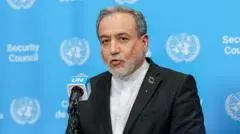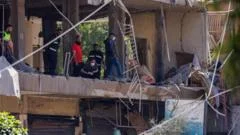
The fragile calm in Lebanon shattered on Sunday as an Israeli airstrike tore through a residential building in Beirut's southern suburbs, killing at least three people and wounding 15 others, according to Lebanon's state news agency NNA. The strike, which targeted the Dahiyeh district — a densely populated area and a stronghold of the Iran-backed Hezbollah — has drawn immediate condemnation from Tehran, which warned the attack could derail a potential US-Iran deal to end the broader conflict.
What happened in the Dahiyeh strike
The Israeli military confirmed it carried out the strike, stating it specifically targeted Hezbollah operatives and infrastructure. The attack hit an apartment in the heart of Dahiyeh, a southern suburb of Beirut that has been a frequent flashpoint in the long-running shadow war between Israel and Hezbollah. Lebanon's NNA reported that rescue teams were still searching through the rubble for additional victims as of Sunday evening.
Why this strike matters for the region
This is not just another exchange of fire. The strike comes at a critical juncture in diplomatic efforts between the United States and Iran, with negotiations reportedly underway to broker a ceasefire or a broader de-escalation agreement. Tehran's warning that the Israeli action could "derail" the US-Iran deal signals that the attack is seen as a direct challenge to those talks. For ordinary Lebanese, the strike is a grim reminder that their country remains a battleground for regional powers, with civilian lives caught in the crossfire.
Timeline of escalation: How we got here
The strike on Dahiyeh is the latest in a series of escalating exchanges between Israel and Hezbollah. Over the past weeks, Hezbollah has launched projectiles towards northern Israel, and Israel has responded with airstrikes deep into Lebanese territory. The conflict has already displaced thousands in southern Lebanon, with Israel issuing forced displacement orders for 29 towns in the region just days before this strike. The current cycle of violence began after the October 7, 2023, Hamas attack on Israel, which triggered a wider regional conflict involving Hezbollah, Iran, and other proxies.
Who is affected: Civilians in the crossfire
The victims of Sunday's strike are residents of a densely populated urban area. Dahiyeh is not a military zone; it is a residential and commercial district where families live, work, and go to school. The three killed and 15 wounded are not just numbers — they represent the human cost of a conflict that shows no signs of abating. For the people of Beirut, the sound of explosions in their neighbourhoods is a traumatic echo of the 2006 war and the 2020 port explosion. The psychological toll is immense, and the sense of security is shattered.
Official responses: Condemnation and warnings
Lebanon's government condemned the strike, calling it a violation of its sovereignty. Iran's foreign ministry issued a strong statement, warning that the attack could "derail the ongoing diplomatic process" between Washington and Tehran. The US has not yet officially commented on the strike, but the timing is particularly sensitive as American mediators have been shuttling between regional capitals to secure a deal. Israel's position remains unchanged: it will continue to target Hezbollah wherever it operates, including in civilian areas, which it claims the group uses as shields.
Analysis: A calculated provocation or a necessary strike?
The Israeli strike appears to be a calculated move. By hitting Dahiyeh, Israel is sending a message to Hezbollah that no part of Lebanon is safe for its operations. However, the timing — during sensitive US-Iran talks — suggests Israel may also be trying to scuttle any deal that it views as too lenient on Iran or its proxies. For Hezbollah, the strike is a test of its deterrence capability. If it does not retaliate forcefully, it risks appearing weak. If it does, it could trigger a full-scale war that neither side wants. The coming days will be critical in determining whether this is a one-off escalation or the beginning of a broader conflict.
Confirmed facts vs what remains unclear
Confirmed: Three people killed, 15 wounded in an Israeli airstrike on Dahiyeh, Beirut's southern suburbs. Israel says it targeted Hezbollah. Iran has warned the strike could derail US-Iran talks. The strike occurred on Sunday, June 14, 2026.
Unclear: The exact identity of the three killed (whether they were Hezbollah members or civilians). The full extent of damage to the building. Whether Hezbollah will retaliate and in what form. The status of the US-Iran deal negotiations. Whether the US will publicly condemn or support the Israeli action.
Hezbollah's strategic position: Why this group matters
Hezbollah is not just a militia; it is a deeply embedded political and military force in Lebanon, with significant influence over the state. It has a vast arsenal of rockets and precision-guided missiles, and it has proven its ability to strike deep into Israeli territory. The group's "moat" lies in its grassroots support among Shia communities, its sophisticated military capabilities, and its strategic alliance with Iran. Any strike on Hezbollah's home turf in Dahiyeh is a direct challenge to its core identity and power base.
Risks and balanced view: The dangers of escalation
The immediate risk is a spiral of retaliation. Hezbollah has vowed to respond, and Israel has warned of further strikes. This could lead to a full-scale war that devastates Lebanon and strains Israel's military resources. Critics of the Israeli strike argue that it undermines US diplomatic efforts and could push Iran to harden its position. Supporters of Israel's action say that Hezbollah must be deterred from launching attacks, and that diplomacy without military pressure is ineffective. The civilian cost remains the most troubling aspect, with innocent lives lost in a conflict they did not choose.
Wider pattern: The regional proxy war heats up
This strike is part of a broader pattern of escalation across the Middle East since October 2023. Iran has used its network of proxies — Hezbollah in Lebanon, Houthis in Yemen, and militias in Iraq and Syria — to pressure Israel and the US. Israel has responded with targeted assassinations and strikes on Iranian-linked targets. The US has tried to contain the conflict through diplomacy, but the violence keeps spilling over. The Beirut strike is a reminder that the region is a tinderbox, and one spark can ignite a wider war.
What you should know: Practical guidance for readers
For those in Lebanon, especially in Beirut and southern regions, stay informed through official channels like the Lebanese Red Cross and NNA. Avoid areas of known tension. For international readers, this story underscores the fragility of the region and the human cost of geopolitical rivalries. If you are following the US-Iran deal, this strike is a major variable that could either derail or reshape negotiations. For investors and businesses with exposure to the region, expect increased volatility in energy markets and regional currencies.
Future outlook: What could happen next
The next 48 hours are critical. Hezbollah is likely to retaliate, possibly with rocket fire into northern Israel. Israel may respond with more strikes on Beirut or southern Lebanon. The US will likely try to de-escalate behind the scenes, but its leverage is limited if Israel and Hezbollah are determined to fight. The US-Iran deal could be delayed or abandoned if Tehran views the strike as a sign of bad faith. A full-scale war remains a possibility, but both sides have shown restraint in the past. The most likely scenario is a limited exchange followed by a return to the status quo, but the risk of miscalculation is high.
Our Take
This strike is a stark illustration of how the Middle East conflict is not just about borders or ideologies — it is about human lives caught in a cycle of violence that serves geopolitical interests. The timing, during sensitive US-Iran talks, suggests that military action and diplomacy are not separate tracks but deeply intertwined. For Lebanon, the tragedy is that it remains a pawn in a larger game. For the world, the question is whether the US can salvage a deal that prevents further bloodshed, or whether the region is sliding into another devastating war. The three lives lost in Dahiyeh are a reminder that the cost of failure is measured in human terms.
Frequently Asked Questions
How many people were killed in the Israeli strike on Beirut?
Lebanon's state news agency NNA reported three people were killed and 15 others wounded in the airstrike on the Dahiyeh district of Beirut's southern suburbs.
Why did Israel strike Beirut's southern suburbs?
Israel said the strike targeted the Iran-backed Hezbollah group, which has a strong presence in the Dahiyeh area. The Israeli military stated it was targeting Hezbollah operatives and infrastructure.
How does this strike affect the US-Iran deal?
Iran warned that the strike could derail the ongoing US-Iran diplomatic efforts to end the fighting. The timing of the attack during sensitive negotiations has raised concerns about the viability of a potential deal.
What is Dahiyeh and why is it significant?
Dahiyeh is a densely populated southern suburb of Beirut and a known stronghold of Hezbollah. It has been a frequent target of Israeli airstrikes during past conflicts, including the 2006 Lebanon War.