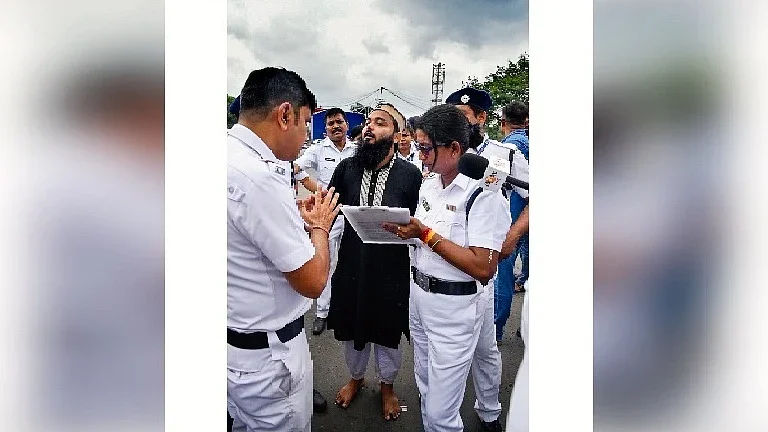
Five men arrested in connection with the violence during last week's NEET protest in Kolkata were paraded barefoot and wearing shorts through Esplanade (Dharmatala) on Monday, 27 July — a public reconstruction of the alleged crime scene that directly contradicts repeated judicial warnings against humiliating accused persons.
Court warnings ignored in public parade
The incident comes despite clear directives from both the Supreme Court and the Calcutta High Court that accused persons cannot be subjected to public shaming merely because they have been arrested. Advocate Swadesh Taral, who has been tracking the case, pointed to a June 2026 Calcutta High Court order in which the court reportedly said: "You may arrest them, you may prosecute them, but you cannot humiliate them."
Why this matters for constitutional protections
The barefoot parade raises fundamental questions about police compliance with constitutional safeguards. Article 21 of the Constitution guarantees the right to life and personal liberty, which courts have repeatedly interpreted to include the right to dignity — even for those accused of crimes. Public humiliation of arrestees, legal experts argue, undermines the presumption of innocence and violates basic human rights.
Timeline of judicial warnings on accused dignity
The Supreme Court has issued multiple observations over the years against parading accused persons in public. In 2020, the court warned that "handcuffing and parading an accused before the media or public is a violation of human dignity." The Calcutta High Court's June 2026 directive was the latest in a series of such warnings specifically addressed to West Bengal police. Monday's parade suggests these warnings have had limited impact on ground-level policing.
Human impact on the accused and their families
For the five men arrested, the public parade means lasting social stigma. Being displayed barefoot and in shorts — a traditional marker of humiliation in Indian society — in a busy commercial area like Esplanade exposes them to public ridicule and potential retaliation. Their families, who may have been watching or learned about the incident through social media, face additional trauma. Legal experts say such actions can also prejudice their right to a fair trial by influencing potential witnesses or jurors.
Calcutta High Court's June 2026 directive cited
Advocate Swadesh Taral specifically referenced the June 2026 Calcutta High Court order that warned against humiliating arrestees. The court's language was unambiguous: arrest and prosecution are permissible, but humiliation is not. The Monday parade appears to be a direct violation of that directive. It remains unclear whether the police officers involved were aware of the court order or chose to disregard it.
What the barefoot parade reveals about policing culture
The incident reflects a deeper issue within policing practices in India — the tendency to use public shaming as a tool of deterrence or punishment before trial. Legal scholars argue that such actions blur the line between investigation and extrajudicial punishment. The accused are presumed innocent until proven guilty, and subjecting them to public humiliation before trial undermines that foundational principle of criminal justice.
Confirmed facts vs what remains unclear
Confirmed: Five men arrested in the NEET protest violence were escorted barefoot and in shorts through Esplanade on 27 July. The Calcutta High Court issued a directive in June 2026 against humiliating accused persons. Advocate Swadesh Taral has publicly cited the court order.
Unclear: Whether the police officers received specific instructions to parade the accused this way. Whether any senior police official authorized the action. Whether the accused were given an opportunity to wear footwear or proper clothing. No official statement from Kolkata Police has been released as of this report.
Legal remedies available to the accused
The five men can approach the Calcutta High Court or Supreme Court through a contempt petition, arguing that the police action violated the June 2026 court directive. They may also file a complaint with the West Bengal Human Rights Commission or seek damages for violation of their fundamental rights. Legal aid organizations may offer pro bono representation given the constitutional significance of the case.
Risks and concerns for police accountability
The incident raises concerns about accountability within the Kolkata Police force. If no action is taken against the officers involved, it could signal that court directives on accused dignity are routinely ignored. Critics argue that without consequences, such practices will continue. Supporters of the police may argue that the parade was necessary for crime scene reconstruction or public safety, though legal experts counter that such objectives can be achieved without public humiliation.
Wider pattern of accused humiliation in India
Monday's incident is not an isolated case. Across India, accused persons have been paraded, handcuffed publicly, or subjected to media trials. The Supreme Court has repeatedly condemned such practices, but enforcement remains weak. The gap between judicial pronouncements and ground-level policing is a persistent challenge in India's criminal justice system.
What citizens should know about their rights
If you or someone you know is arrested, remember: police cannot publicly humiliate you. You have the right to dignity under Article 21. If you witness such a parade, you can report it to the National Human Rights Commission or file a complaint with the local magistrate. Legal aid is available through state legal services authorities.
What happens next
Legal experts expect petitions to be filed before the Calcutta High Court or Supreme Court in the coming days. The court may issue a show-cause notice to Kolkata Police and seek an explanation. If the court finds the police in contempt, it could impose penalties or direct departmental action against the officers involved. The incident may also prompt renewed calls for police training on constitutional rights.
Our Take
The barefoot parade of the NEET protest accused is more than a procedural lapse — it is a direct challenge to the rule of law. When courts repeatedly warn against public humiliation, and police continue the practice, it erodes public trust in both institutions. The accused may be guilty or innocent — that is for the courts to decide. But their dignity, guaranteed by the Constitution, is not negotiable. This incident should serve as a reminder that policing must respect constitutional boundaries, not override them.
Frequently Asked Questions
Is it legal for police to parade accused persons barefoot?
No. The Supreme Court and Calcutta High Court have repeatedly held that parading accused persons in public — especially in a humiliating manner — violates their fundamental right to dignity under Article 21 of the Constitution.
What did the Calcutta High Court say in June 2026?
The court reportedly stated: "You may arrest them, you may prosecute them, but you cannot humiliate them." This directive specifically warned against public shaming of arrested persons.
Can the accused take legal action against the police?
Yes. They can file a contempt petition in the Calcutta High Court or Supreme Court, or approach the National Human Rights Commission. They may also seek damages for violation of their fundamental rights.
Why do police sometimes parade accused persons?
Police may claim it is for crime scene reconstruction, public safety, or deterrence. However, courts have ruled that such objectives can be achieved without public humiliation, and that the practice violates constitutional protections.