The fragile calm that had settled over the Israel-Lebanon border just two days ago was shattered on Wednesday. Israeli airstrikes killed at least nine people in southern Lebanon, and in a swift and dangerous response, Hezbollah fired rockets back over the border. The violence is a stark reminder of how quickly the region can tip back into chaos, and it raises urgent questions about whether the partial ceasefire agreed on Monday can survive.
Ceasefire Strain After Deadly Airstrikes in Southern Lebanon
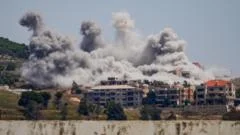
According to reports from the region, the Israeli military conducted a series of airstrikes on targets in southern Lebanon. Local authorities confirmed that at least nine people were killed in the strikes. The exact nature of the targets and the identities of those killed are still emerging, but the incident represents the most serious breach of the truce since it was announced.
Why This Escalation Matters Right Now
This is not just another skirmish. The Monday ceasefire was seen as a critical step to de-escalate months of cross-border fire that had displaced thousands and raised fears of a full-scale war. Wednesday's violence directly challenges that agreement. For residents on both sides of the border, the renewed attacks mean a return to fear and uncertainty. For the region, it signals that the underlying tensions remain dangerously unresolved.
How the Violence Unfolded
The sequence of events began with Israeli airstrikes on Wednesday. The strikes targeted what Israel described as Hezbollah military infrastructure in southern Lebanon. Within hours, Hezbollah confirmed it had launched rockets into northern Israel in retaliation. The exchange of fire marks a significant escalation, as both sides had largely held their fire since the Monday truce took effect.
Who Is Affected and What Officials Are Saying
The immediate human impact is being felt in southern Lebanon, where families are mourning the dead and communities are on edge. In northern Israel, residents are once again rushing to shelters as rocket sirens wail. Israeli officials have stated that the strikes were a necessary response to Hezbollah violations of the ceasefire. Hezbollah, for its part, has framed its rocket fire as a legitimate act of self-defense against Israeli aggression. International observers have expressed deep concern, urging both sides to return to the ceasefire terms.
What We Know So Far — and What Remains Unclear
What is confirmed is that nine people have been killed in southern Lebanon by Israeli airstrikes, and that Hezbollah has fired rockets into Israel. What remains unclear is the full extent of the damage on both sides, whether there are additional casualties, and crucially, whether this is a temporary spike in violence or the beginning of a broader collapse of the ceasefire. The specific trigger for the Israeli strikes also requires further clarification.
Risks, Concerns, and the Fragile Truce
The primary risk is a full-blown return to the cycle of attack and retaliation that defined the months before the ceasefire. Each side accuses the other of provocation, and without a robust mechanism for de-escalation, the situation could spiral. The partial nature of the ceasefire itself is a concern—it was never a comprehensive peace deal, but a pause. Wednesday's events show how easily such a pause can be broken. The international community now faces a critical test of its diplomatic influence.
Why Border Tensions Remain a Volatile Flashpoint
The Israel-Lebanon border has been a flashpoint for decades, rooted in deep political and ideological conflicts. Hezbollah, an Iran-backed armed group, maintains a significant military presence in southern Lebanon, which Israel views as a direct threat. The recent months of cross-border fire were among the most intense in years. This latest violence is not an isolated incident but part of a long and painful pattern of escalation that has repeatedly defied efforts at lasting peace.
"The situation is extremely dangerous. Any miscalculation could lead to a wider conflict that nobody wants." — Regional analyst, speaking to BBC
What Residents and Observers Should Know Now
For those living in the affected areas, the immediate priority is safety. Authorities on both sides have issued security alerts. For the wider public, this is a moment to watch closely. The next 48 hours will be critical in determining whether diplomatic channels can reassert control or if the region slides back into sustained conflict. It is a stark reminder that ceasefires are fragile and that the underlying causes of the conflict remain unaddressed.
What Could Happen Next
The immediate future is uncertain. There are two main paths: either international pressure leads to a renewed commitment to the ceasefire, or the cycle of retaliation continues, potentially drawing in other actors and escalating into a larger confrontation. The response from the United Nations and key regional powers will be crucial. Without swift intervention, the Monday truce may become a footnote in a longer, more devastating chapter of conflict.
Our Take: Why This Story Goes Beyond One Border Incident
This is more than a military update. It is a story about the fragility of peace, the human cost of political failure, and the ever-present risk of escalation in one of the world's most volatile regions. The nine lives lost on Wednesday are a tragic reminder that behind every headline are real people, families, and communities. The international community must recognize that a partial truce is not a solution—it is a temporary bandage on a deep wound that requires genuine, sustained diplomacy to heal.
FAQs
What happened between Israel and Hezbollah on Wednesday?
Israeli airstrikes killed nine people in southern Lebanon. In response, Hezbollah fired rockets over the border into northern Israel, severely straining a ceasefire that had been agreed upon just two days earlier.
Why is the ceasefire between Israel and Hezbollah at risk?
The ceasefire, agreed on Monday, was a partial truce. Wednesday's deadly airstrikes and the subsequent rocket fire represent the most serious violation of that truce, raising fears of a return to full-scale conflict.
How many people were killed in the Israeli strikes on Lebanon?
Local authorities in southern Lebanon have confirmed that at least nine people were killed in the Israeli airstrikes on Wednesday.
What does this mean for the future of the Israel-Lebanon border?
The immediate future is highly uncertain. The violence could be a temporary spike, or it could lead to a broader collapse of the ceasefire and a renewed cycle of attacks. International diplomatic efforts are now under intense pressure to prevent further escalation.