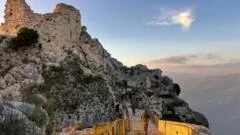
For the first time in more than a quarter of a century, Israeli ground forces have pushed deep into southern Lebanon, capturing a strategic medieval fortress that has long symbolized control over the region. The seizure of Beaufort Castle near the city of Nabatiyeh is not just a military gain — it is a powerful statement of intent. Prime Minister Benjamin Netanyahu has described the operation as a "decisive shift" in the campaign against Hezbollah, raising urgent questions about how far this offensive will go and what it means for the people living in the crossfire.
Israel Captures Historic Beaufort Castle in Southern Lebanon
Israeli forces have captured the historic Beaufort Castle in southern Lebanon, according to multiple reports. The castle, built during the Crusader era and later used as a strategic military position, sits on a hilltop about nine miles from the Israeli border. Its capture came after days of intense fighting, marking Israel's deepest ground incursion into Lebanon since its 2006 war with Hezbollah. Officials say the operation was launched because Hezbollah was using the area to launch attacks on northern Israeli communities.
Why This Matters Right Now
This is not a routine military maneuver. The capture of Beaufort Castle represents a significant escalation in a conflict that has already displaced thousands on both sides of the border. For Israeli residents in the north, the offensive raises hopes of security but also fears of a prolonged war. For Lebanese civilians in the south, it brings the terrifying reality of ground battles returning to their doorstep. The international community is watching closely, as any expansion of the ground offensive risks drawing in regional powers and deepening a humanitarian crisis that is already severe.
How the Capture of Beaufort Castle Unfolded
The operation to seize Beaufort Castle was not sudden. According to reports, Israeli forces had been advancing slowly through southern Lebanon over several days, engaging Hezbollah fighters in a series of clashes. The castle, which sits on a strategic ridge overlooking the Litani River valley, had been a key observation post and staging area for Hezbollah operations. Israeli troops moved in after heavy aerial bombardment softened defenses, then secured the fortress in close-quarters fighting. The capture was confirmed by Israeli officials, who released footage of soldiers inside the ancient stone walls.
Who Is Affected and What Officials Are Saying
The immediate impact is being felt by civilians in southern Lebanon. Thousands have already fled their homes as the ground offensive expanded, seeking shelter in schools and makeshift camps further north. In Israel, communities near the border have been under rocket fire for months, with many residents evacuated. Prime Minister Netanyahu, in a televised statement, called the capture of the castle a "decisive shift" in the campaign, vowing to continue operations until Hezbollah is pushed back from the border. Hezbollah has not officially commented on the loss of the castle but has continued to launch rockets into northern Israel, signaling that the fight is far from over.
What We Know So Far — and What Remains Unclear
What is confirmed: Israeli forces have captured Beaufort Castle. The operation is part of a broader ground offensive that has seen troops advance several kilometers into Lebanese territory. Netanyahu has framed this as a necessary step to protect Israeli civilians. What remains unclear is the full scale of the offensive. Will Israeli forces push further north toward the Litani River, or will this be a limited incursion? The number of casualties on both sides is also not fully known, and the long-term strategic goal — whether it is to create a buffer zone or to degrade Hezbollah's military capabilities — has not been explicitly stated.
Risks, Concerns, and the Balanced View
The risks of this operation are substantial. A deeper ground war in southern Lebanon could lead to high casualties among both soldiers and civilians. Hezbollah, which is battle-hardened from years of fighting in Syria, has a vast arsenal of rockets and anti-tank missiles. The group has already demonstrated its ability to strike deep into Israeli territory. There is also the risk of the conflict drawing in Iran, Hezbollah's primary backer, or triggering a broader regional war. On the other hand, Israeli officials argue that the status quo — with Hezbollah positioned directly on the border — was unsustainable and that a decisive military action was necessary to restore deterrence and security.
Why Similar Military Operations Are Becoming More Common
The capture of Beaufort Castle is part of a broader pattern of escalating military operations in the region. Over the past year, cross-border attacks between Israel and Hezbollah have intensified, with both sides carrying out strikes deeper into each other's territory. The current ground offensive is the most significant since 2006, reflecting a shift in Israeli military doctrine toward more proactive, preemptive operations. This trend is not unique to Lebanon; similar dynamics are playing out in Gaza and the West Bank, where Israeli forces have conducted repeated raids and incursions. The underlying driver is a security dilemma: each side's actions to protect itself are perceived as threats by the other, fueling an endless cycle of escalation.
- Beaufort Castle was originally built by Crusaders in the 12th century and later used by Muslim forces, the French, and Lebanese militias.
- The castle was a key stronghold for the Palestine Liberation Organization (PLO) in the 1970s and 1980s before being captured by Israel in 1982.
- Israel withdrew from southern Lebanon in 2000, but Hezbollah subsequently used the castle area as a base.
"This is a decisive shift in our campaign to restore security to the north. We will not allow Hezbollah to threaten our citizens from any position." — Prime Minister Benjamin Netanyahu
What Readers, Users, or Investors Should Know Now
For those following the conflict, the capture of Beaufort Castle is a clear signal that Israel is prepared to escalate militarily. Anyone with family in southern Lebanon or northern Israel should be aware that the situation remains highly volatile. Travel to the region is strongly discouraged. For investors, the conflict adds to regional instability, potentially affecting energy markets, defense stocks, and the broader Middle East risk premium. It is important to rely on verified information from official sources and avoid speculation, as misinformation spreads quickly during active conflicts.
What Could Happen Next
The immediate future depends on several factors. If Israel's goal is limited to pushing Hezbollah away from the border, the operation may conclude within weeks. However, if the objective is to destroy Hezbollah's military infrastructure, the campaign could be prolonged and bloody. Hezbollah is likely to respond with increased rocket fire into Israel, potentially targeting cities like Haifa and Tel Aviv. Diplomatic efforts, led by the United States and France, are underway to negotiate a ceasefire, but both sides appear committed to military action for now. The capture of Beaufort Castle may be a turning point — but whether it leads to de-escalation or further escalation remains uncertain.
Our Take: Why This Story Matters Beyond One Incident
The seizure of a medieval castle might seem like a footnote in a modern war, but it is deeply symbolic. Beaufort Castle has changed hands many times over centuries, each time marking a shift in power. Its capture by Israeli forces today is a reminder that the conflict between Israel and Hezbollah is not just about territory — it is about control, deterrence, and the ability to project force. This story matters because it shows how quickly a simmering conflict can escalate into a full-scale ground war, with devastating consequences for civilians. It also highlights the fragility of the current security order in the Middle East, where a single military operation can reshape the strategic landscape overnight.
FAQs
Why did Israel capture Beaufort Castle in Lebanon?
Israel says it captured the castle because Hezbollah was using the area to launch attacks on northern Israeli communities. The operation is part of a broader ground offensive aimed at pushing Hezbollah away from the border and restoring security to Israeli civilians.
What is the significance of Beaufort Castle?
Beaufort Castle is a historic Crusader-era fortress that sits on a strategic hilltop overlooking southern Lebanon. It has been used as a military observation post and staging area by various forces throughout history, including the PLO and Hezbollah. Its capture is both a tactical gain and a powerful symbolic victory.
How deep into Lebanon have Israeli forces advanced?
Israeli forces have advanced several kilometers into southern Lebanon, with the capture of Beaufort Castle near Nabatiyeh marking the deepest incursion since the 2006 war. The exact extent of the advance is not fully known, but it represents a significant escalation in the conflict.
What are the risks of Israel's ground offensive in Lebanon?
The risks include high casualties on both sides, a prolonged military campaign, and the potential for the conflict to draw in regional powers like Iran. There is also a severe humanitarian risk for Lebanese civilians, many of whom have already been displaced by the fighting.