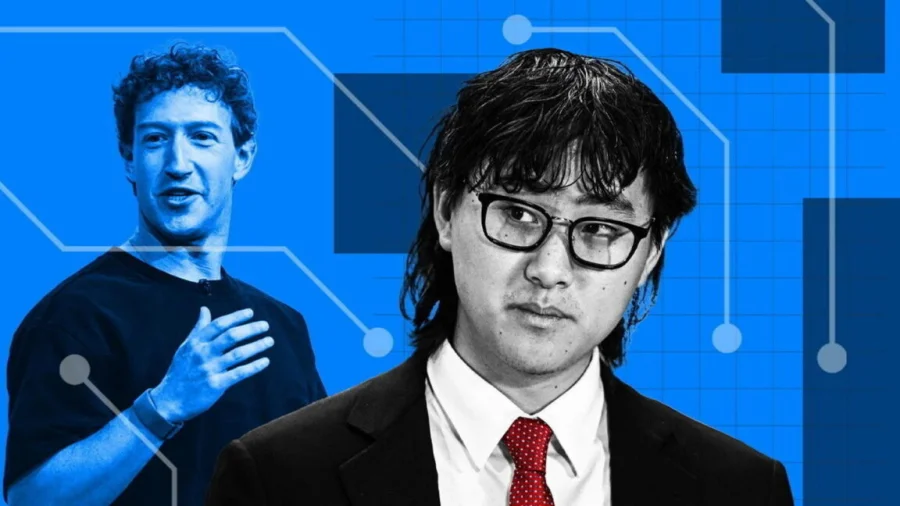
It was a bet that stunned Silicon Valley. Mark Zuckerberg, facing the very real possibility that Meta was being left behind in the artificial intelligence race, didn’t turn to a veteran researcher or a seasoned executive. Instead, he handed the keys to a 28-year-old startup founder named Alexandr Wang.
The message was clear: Meta’s old way of doing AI wasn’t working. The company needed a shock to the system. It needed wartime urgency.
A year later, that gamble appears to be paying off — but not without significant friction, internal skepticism, and a few early stumbles along the way.
Why Meta’s AI Revival Was Handed to an Outsider
For more than a year, Meta has been engaged in a massive project to whip its AI infrastructure into shape. While the company has publicly touted its investments, internally, there was a growing sense of panic. Rivals like OpenAI and Google were pulling ahead, releasing models that captured the world’s imagination and, more importantly, set the agenda for the future of technology.
Zuckerberg’s decision to install Wang was a direct response to this crisis. By bypassing the company’s established AI organization, he was signaling that incremental progress was no longer acceptable. He needed a disruptor, someone who could move fast, break things, and inject a startup’s sense of urgency into a $1.5 trillion behemoth.
The Wunderkind’s Mandate: Speed Over Pedigree
Alexandr Wang wasn’t a typical choice. He was a billionaire wunderkind, known for building a successful AI startup, but he had no experience navigating the esoteric internal politics of a Big Tech company. He was an outsider, and that was precisely the point.
According to interviews with current and former Meta employees, as well as associates of Wang, his mandate was simple: produce results, and fast. He was given significant autonomy and resources, but he also faced intense scrutiny. Many inside Meta questioned whether a young founder without a deep research background could truly lead the company’s AI charge.
Muse Spark: Meta’s Most Credible AI Model Yet
The result of this high-pressure experiment is “Muse Spark,” Meta’s most credible AI model to date. While the company has released other models, Muse Spark represents a genuine leap forward. It is seen internally and by some external analysts as a sign that Meta is finally closing the gap.
The model’s development was not without its challenges. Early research efforts faced hurdles, and Wang had to navigate the complex web of internal politics that can stifle innovation at a company of Meta’s size. But the final product has given the company a much-needed win.
Navigating Criticism and Internal Politics
Wang’s tenure has not been smooth. He has had to navigate criticism over his experience, with some researchers questioning his technical depth. The internal politics of Meta, where established teams have their own ways of working and their own power bases, have also been a significant challenge.
“He was brought in to break things, but breaking things at a company like Meta is a political minefield,” one former employee told Reuters. “You have to get results, but you also have to manage egos and alliances. It’s a delicate balance.”
What We Know So Far — and What Remains Unclear
What We Know:
- Mark Zuckerberg personally installed Alexandr Wang to lead Meta’s AI revival.
- Wang was given a mandate to inject urgency and speed into the company’s AI efforts.
- Meta has produced “Muse Spark,” its most credible AI model to date, under Wang’s leadership.
- Wang has faced internal criticism and navigated complex company politics.
What Remains Unclear:
- Whether Muse Spark can truly compete with the leading models from OpenAI and Google.
- How Wang’s long-term strategy will evolve within Meta’s broader structure.
- Whether the internal friction will ultimately hinder or accelerate progress.
Risks, Concerns, and the Balanced View
The gamble on an outsider carries significant risks. While Wang has produced results, the model is still unproven at scale. The internal friction could lead to talent loss or a slowdown in innovation. There is also the risk that the “wartime” mentality could burn out teams and lead to unsustainable practices.
On the other hand, the bet on urgency and disruption may be exactly what Meta needed. The company has a history of playing catch-up and then surging ahead. If Wang can maintain momentum, Meta could become a serious contender in the AI race.
Why This Story Matters Beyond One Company
Meta’s struggle to catch up in AI is a microcosm of a larger battle. The AI race is not just about technology; it’s about talent, culture, and the ability to adapt. Zuckerberg’s decision to bet on an outsider is a case study in how even the most powerful companies must sometimes tear down their own structures to survive.
For investors, employees, and tech enthusiasts, the question is no longer whether Meta can catch up, but whether its unorthodox strategy will ultimately pay off.
What Could Happen Next
If Wang continues to deliver, he could become one of the most influential figures in AI. If he stumbles, it could set Meta back years. The next few quarters will be critical. The company is expected to release more details about Muse Spark and its broader AI strategy in the coming months.
Our Take: Why This Story Signals a Deeper Shift
This is more than a story about one company or one young executive. It’s a signal that the old rules of innovation are being rewritten. In the race for AI dominance, speed and urgency are now valued as highly as experience and pedigree. Meta’s bet on Alexandr Wang may be risky, but it may also be the only way to win.
FAQs
Why did Mark Zuckerberg hire a 28-year-old to lead Meta’s AI?
Zuckerberg believed that an outsider’s urgency and ambition could succeed where Meta’s established AI organization had struggled. He wanted to inject a startup-like speed into the company’s efforts to catch up with rivals like OpenAI and Google.
What is Muse Spark, and why is it important for Meta?
Muse Spark is Meta’s most credible AI model to date. It represents a significant step forward in the company’s ability to compete in the AI race and is seen as a validation of Zuckerberg’s decision to bring in an outside leader.
What challenges did Alexandr Wang face at Meta?
Wang faced internal skepticism over his experience, early research hurdles, and the complex politics of working within a large organization like Meta. He had to balance the need for speed with the need to manage internal relationships.
Can Meta really catch up in the AI race?
While Meta has made significant progress with Muse Spark, it still faces a gap with leaders like OpenAI and Google. The company’s success will depend on its ability to maintain momentum, retain talent, and execute its long-term strategy effectively.