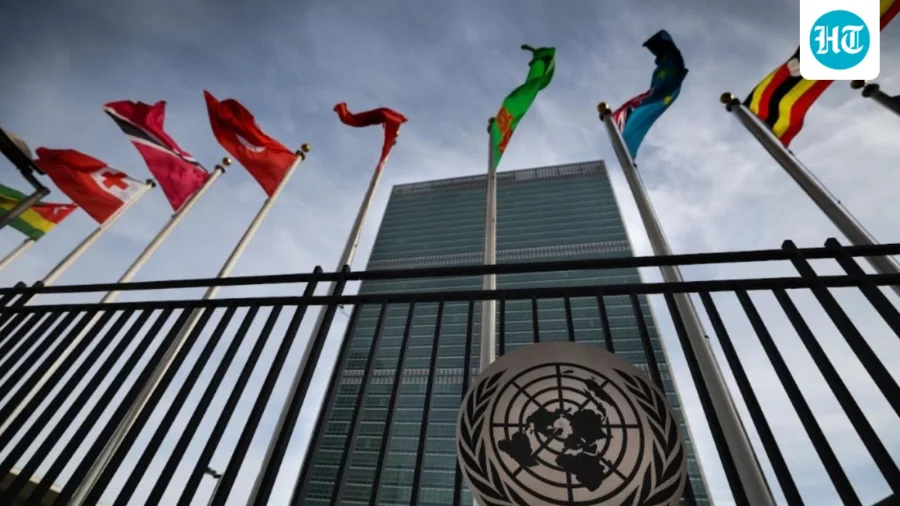
Eight times India has sat at the UN Security Council's horseshoe table — and eight times it has left. The seat is temporary. The ambition is not. Since 1994, when New Delhi formally staked its claim during the 49th General Assembly, the demand for a permanent seat has moved from a quiet diplomatic note to one of India's loudest multilateral asks.
From 1950 to 2022: India's Eight Rotations at the Council
India's first term as a non-permanent member came in 1950, just as the Cold War was hardening. Since then, it has returned in 1967, 1972, 1977, 1984, 1991, 2011, and most recently in 2021–22. Each term lasts two years. Each exit renews the same question: why does a country of over 1.4 billion people keep renting a seat it believes it has earned outright?
The 1994 candidature was the formal turning point. It was the first time India publicly declared that the Council's 1945 composition no longer reflected the world it was meant to govern.
Why the 1945 Blueprint No Longer Fits 2025
The Security Council was designed by the victors of World War II. Five nations — the United States, United Kingdom, France, Russia, and China — hold permanent seats and veto power. Africa, Latin America, and South Asia have no permanent representation at all.
India's argument is structural, not sentimental. It is the world's most populous country, a nuclear power, the fifth-largest economy by nominal GDP, and among the largest contributors of troops to UN peacekeeping missions. None of that is reflected in the Council's permanent bench.
The G4 Strategy: Strength in Numbers
India does not push alone. Along with Brazil, Germany, and Japan — together known as the G4 — it has campaigned for expansion in both permanent and non-permanent categories. The four countries formally back each other's bids.
The counterweight is the Uniting for Consensus group, led by Italy, Pakistan, South Korea, and others, which opposes new permanent seats and prefers more elected, rotating members. That split has kept the Intergovernmental Negotiations process largely deadlocked for years.
What a Permanent Seat Would Actually Change
A permanent seat is not just prestige. It means veto power — the ability to block any substantive Council resolution. It means permanent agenda-setting influence over sanctions, peacekeeping mandates, and conflict mediation.
For India, it would also mean no longer having to campaign every few years for a two-year term, and a stronger platform to shape global rules on terrorism, climate finance, and maritime security — issues where New Delhi has clear stakes.
The Veto Problem Nobody Wants to Solve
The single biggest obstacle is the veto itself. Any Charter amendment needs two-thirds of the General Assembly and ratification by two-thirds of member states — including all five current P5 nations. Each of them would have to voluntarily dilute its own power.
China has publicly opposed India's bid. The United States, UK, and France have voiced support in principle, but none has tabled a concrete reform proposal that would pass. Russia has historically been ambiguous.
Confirmed Facts vs What Remains Unclear
Confirmed: India has served eight non-permanent terms; it formally declared its candidature in 1994; the G4 coalition exists and coordinates on reform.
Unclear: Whether any P5 nation will formally sponsor a text expanding permanent membership; whether the IGN process will produce a negotiating document; and whether India's bid would be considered alongside or separately from other G4 candidates.
India's Diplomatic Moat: Why It Keeps Getting Elected
India's repeated election to the Council — often with overwhelming vote counts — reflects a wide diplomatic network across Africa, Latin America, and the Global South. That network is its real leverage. It is also why India frames UNSC reform as a Global South demand, not a self-serving one.
Risks and the Case Against Expansion
Critics argue that adding permanent members could make the Council even more unwieldy. Pakistan opposes India's bid outright. Some smaller nations worry that new permanent seats would simply create a new tier of privileged states.
There is also the risk of overpromising. Every Indian government since the 1990s has raised the issue; none has delivered a seat. That gap between rhetoric and outcome is a political liability.
A Wider Pattern: Multilateral Reform in a Multipolar World
India's push is part of a broader demand — from the African Union's Ezulwini Consensus to Brazil's long-standing campaign — for institutions that reflect 21st-century power, not 1945's. The UN's 80th anniversary has amplified those calls.
What This Means for India — and for Readers Following the Story
For students of international relations, the UNSC bid is a case study in how multilateral reform actually works: slowly, coalition by coalition, with no guaranteed endpoint. For Indian citizens, it is a reminder that global influence is built through decades of consistent diplomacy, not a single summit.
Future Outlook
No breakthrough is imminent. The realistic path runs through incremental pressure — more elected terms, stronger G4 coordination, and bilateral persuasion of P5 capitals. A formal negotiating text, if it ever emerges, would be the first real signal of movement.
Our Take
India's case for a permanent seat is strong on demographics, economics, and peacekeeping record. But strength of case has never been the deciding factor at the UN — power is. Until a P5 member sees reform as serving its own interest, India's eight terms will likely become nine, ten, and eleven before they become permanent.
Frequently Asked Questions
How many times has India been on the UN Security Council?
India has served eight terms as a non-permanent member: 1950–51, 1967–68, 1972–73, 1977–78, 1984–85, 1991–92, 2011–12, and 2021–22.
When did India first ask for a permanent UNSC seat?
India formally put forward its candidature for a permanent seat during the 49th UN General Assembly session in 1994.
What is the G4 and why does it matter for India?
The G4 is a coalition of Brazil, Germany, India, and Japan that jointly campaigns for permanent UNSC seats. It gives India collective weight in reform negotiations.
Can India get a permanent seat without P5 approval?
No. Any expansion of permanent membership requires a UN Charter amendment, which needs approval from two-thirds of the General Assembly and ratification by two-thirds of member states — including all five current permanent members.