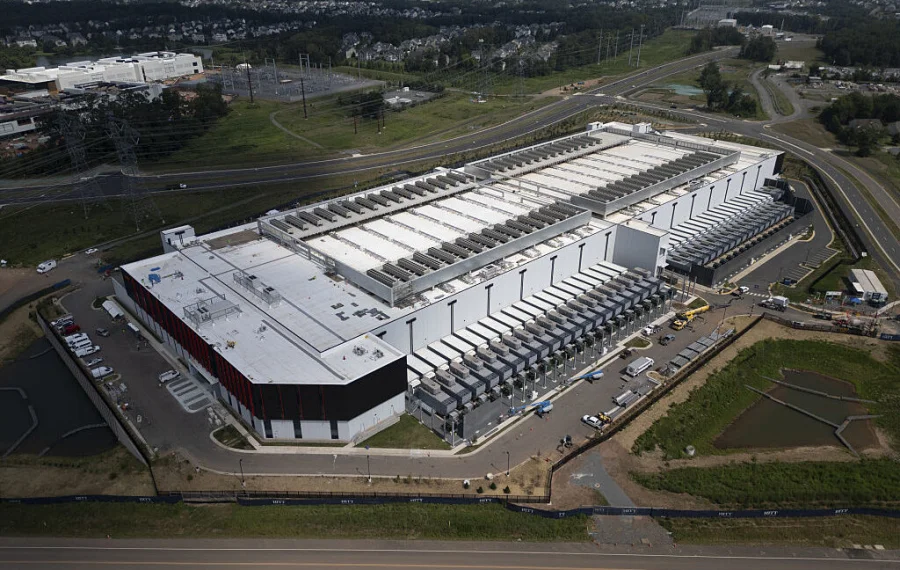
The AI boom is thirsty. As data centers multiply to power the next generation of artificial intelligence, a new resource war is brewing—not over energy, but over water. And the industry is scrambling to prove it can change its ways before the taps run dry.
The Cooling Conundrum: Why Data Centers Need So Much Water
Data centers generate immense heat. For years, the standard solution has been evaporative cooling—essentially, giant humidifiers that use water to lower temperatures. A single large facility can consume millions of gallons of water annually, rivaling the usage of a small town. This technique, while effective, is increasingly untenable in drought-prone regions where water is a precious and contested resource.
Public Backlash Forces a Reckoning
The pressure isn't just environmental; it's political. A recent Gallup poll revealed a staggering statistic: seven out of ten Americans now oppose data center development in their communities. Water scarcity was cited as the top resource concern, outpacing even energy use. This public resistance is translating into permitting delays and legal battles, forcing companies to treat water conservation as a core business imperative, not just a green initiative.
Tech Giants Abandon Evaporative Cooling
In a significant pivot, some of the biggest names in tech are drawing a line in the sand. According to reports, Microsoft, OpenAI, and Oracle have made public statements indicating they are moving away from evaporative cooling entirely. This is not a future goal—it is a current strategy. For instance, OpenAI and Oracle's massive Stargate expansion, which spans multiple states including a water-stressed region of Texas, is being built with a commitment to waterless cooling technologies.
What Replaces the Water? The Rise of Liquid and Air Cooling
The industry is coalescing around two primary alternatives. The first is direct-to-chip liquid cooling, where a non-conductive fluid is circulated directly over hot components. This is far more efficient than air and uses virtually no water. The second is advanced air cooling, which uses high-efficiency fans and heat exchangers to reject heat without evaporation. Both systems are closed-loop, meaning they recycle the same coolant or air, dramatically reducing water withdrawal.
SpaceX Warning Highlights Systemic Risk
The concern has reached the highest levels of corporate risk assessment. SpaceX recently amended its initial public offering to explicitly state that water conditions—including scarcity, regulations, and drought—could constrain data center development. This is a clear signal that water is no longer a secondary environmental issue but a primary financial and operational risk for the entire tech sector.
Confirmed Facts vs What Remains Unclear
Confirmed: Microsoft, OpenAI, and Oracle have publicly committed to phasing out evaporative cooling. The Gallup poll showing 70% opposition to data centers is verified. SpaceX’s IPO filing includes water risk language. Unclear: The exact timeline for retrofitting existing data centers remains unspecified. The long-term cost comparison between waterless and evaporative cooling at scale is still being calculated. The specific waterless technology being used for the Stargate project has not been fully detailed.
Why This Matters for the AI Industry's Future
Water is a local resource. A data center in Oregon faces different constraints than one in Arizona. This means that the ability to deploy water-efficient cooling is not just a technical challenge but a geographic one. Companies that can master low-water cooling will have a strategic advantage in siting new facilities, potentially unlocking access to land and power that competitors cannot use. This is becoming a key differentiator in the race to build AI infrastructure.
Risks and Balanced View
Critics argue that the industry's shift is reactive, not proactive, and that the pace of change is too slow. Retrofitting the thousands of existing data centers is a monumental and expensive task. Furthermore, some waterless cooling systems require more electricity, potentially increasing carbon emissions if the grid is not green. There is also skepticism about whether public commitments will hold up under the pressure of rapid expansion. The true test will be in the execution, not the announcement.
Wider Trend: The Resource Cost of AI
This story is part of a larger awakening about the physical footprint of artificial intelligence. Beyond water, the AI boom is driving massive demand for electricity, rare earth minerals for chips, and land for facilities. The industry is being forced to confront its material reality. How it manages these resources will determine not only its environmental impact but its social license to operate in communities around the world.
What This Means for Local Communities
For residents in areas targeted for new data centers, this shift is a double-edged sword. Waterless cooling reduces the strain on local water supplies, which is a major win. However, it may increase electricity demand, which could impact local grids and utility rates. Communities should now ask developers specific questions: What is the water usage effectiveness (WUE) target? Is the cooling system closed-loop? What is the backup plan during a drought?
Future Outlook: A Race to Water Neutrality
The next frontier is "water positive" data centers—facilities that return more water to the local watershed than they consume. This could involve on-site water treatment, rainwater harvesting, and aquifer recharge projects. While still nascent, the pressure from investors, regulators, and the public will likely accelerate this trend. The data center of the future may not just be carbon neutral; it will need to be water neutral as well.
Our Take
The data center industry is at a critical inflection point. The shift away from evaporative cooling is a necessary and welcome step, but it is only the beginning. The real challenge is not building new, efficient facilities—it is the legacy of millions of gallons of water already consumed and the inertia of existing infrastructure. The companies that treat water as a strategic asset, rather than a free utility, will be the ones that thrive in the coming decade. This is not just an environmental story; it is a story about the physical limits of a digital world.
Frequently Asked Questions
Why do data centers use so much water?
Data centers use water primarily for cooling the massive amount of heat generated by server racks. The most common method, evaporative cooling, works like a large humidifier and consumes millions of gallons per facility per year.
What is replacing evaporative cooling in data centers?
Companies are shifting to closed-loop liquid cooling, which circulates a non-conductive fluid directly over hot components, and advanced air cooling systems that use high-efficiency fans and heat exchangers. Both methods use little to no water.
Is water scarcity a real threat to the AI industry?
Yes. SpaceX’s IPO filing explicitly warns that water scarcity and regulations could constrain data center development. Public opposition is also high, with 70% of Americans opposing new data centers due to water concerns, making it a significant business risk.
How can I find out if a proposed data center in my area will use a lot of water?
Ask the developer for their Water Usage Effectiveness (WUE) target. A WUE of 0.0 L/kWh indicates a waterless cooling system. Also, ask if the cooling system is closed-loop and what their drought contingency plan is.