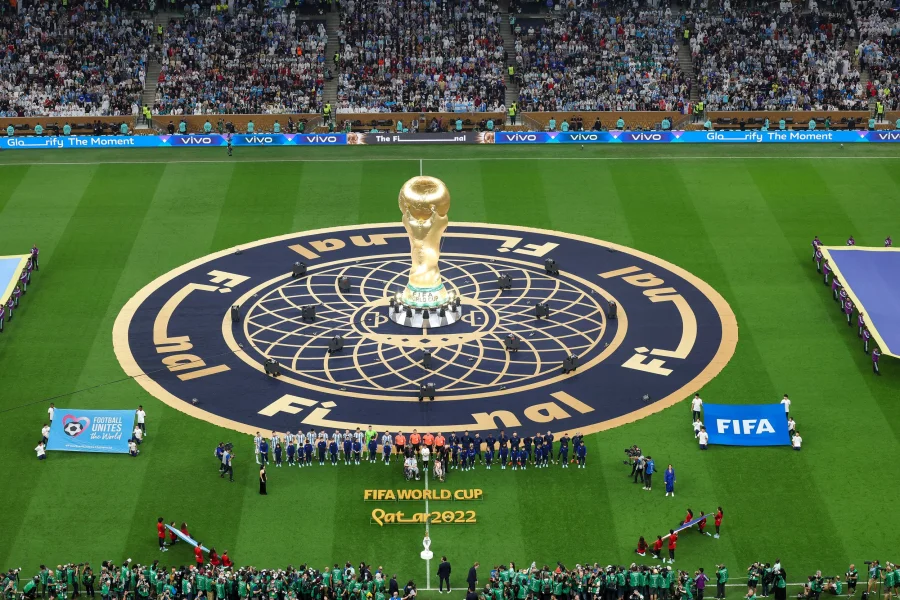
When you think of the World Cup in Qatar, you might picture the 2022 tournament's air-conditioned stadiums and Lionel Messi lifting the trophy. But there's a quieter, more transformative story unfolding in the Gulf nation: Qatar has become FIFA's technology test lab, where the next generation of football innovation is being trialed. The results are already visible across this year's U-17 World Cup, and they could change how the game is officiated forever.
What FIFA Tested at the U-17 World Cup in Qatar
FIFA used the 2025 U-17 World Cup in Qatar to test video support, a simplified review system designed for tournaments operating with fewer resources. Unlike full VAR, which requires multiple cameras, dedicated referees, and expensive infrastructure, video support is a stripped-down version. It allows referees to review key incidents—like goals, penalties, and red cards—using a single monitor on the sideline. The system is faster, cheaper, and easier to implement, making it ideal for competitions that can't afford the full VAR setup.
Why Qatar Became the Testing Ground
Qatar's role as FIFA's tech lab didn't happen by accident. The nation invested heavily in football infrastructure for the 2022 World Cup, building state-of-the-art stadiums with advanced camera systems and connectivity. This existing infrastructure made it a natural choice for FIFA to trial new technologies. "Not every competition has the infrastructure required to support full VAR," FIFA acknowledged, recognizing that Qatar's facilities could handle the testing without major upgrades. The U-17 World Cup, a youth tournament with lower stakes, provided a low-risk environment to experiment.
The Technology Behind Video Support
Video support works differently from full VAR. Instead of a remote team of officials analyzing multiple angles, the on-field referee initiates a review by signaling to a sideline monitor. They then watch the footage and make a decision within 30 seconds. This reduces delays and keeps the game flowing. The system uses fewer cameras—typically four to six—compared to VAR's 12 or more. For smaller tournaments, this is a game-changer. It brings video review to leagues and competitions that previously couldn't afford it, from African qualifiers to Asian club tournaments.
How This Affects Players and Fans
For players, video support means more accurate decisions without the long pauses that frustrate fans. For fans, it means fewer controversial calls and a fairer game. But there's a trade-off: the system is less precise than full VAR. It can't catch every offside or handball, and the referee's judgment still plays a big role. Still, for tournaments where the alternative is no video review at all, it's a significant upgrade. The U-17 World Cup in Qatar showed that even young players benefit from fairer officiating, with fewer disputes and more focus on the game.
FIFA's Official Position on the Experiment
FIFA has been cautious but optimistic about video support. "Recognizing that reality, FIFA used the 2025 FIFA U-17 World Cup in Qatar to test video support," the organization stated. The feedback from referees, players, and coaches has been positive, with many praising the system's simplicity. FIFA's technology chief, who oversaw the trial, noted that the results would inform future decisions. The organization is now considering whether to roll out video support for other youth tournaments and even senior competitions in regions with limited resources.
What This Means for Football's Future
The implications go beyond the U-17 World Cup. If video support proves successful, it could democratize fair play in football. Smaller nations, which often feel disadvantaged by the lack of VAR, could finally have access to technology that levels the playing field. This is especially important for FIFA's goal of making football truly global. The experiment in Qatar is a proof of concept: if it works here, it can work anywhere. But there are challenges. The system needs trained referees, reliable equipment, and consistent implementation. FIFA will need to invest in training and support to make it work on a larger scale.
Confirmed Facts vs What Remains Unclear
What's confirmed: FIFA tested video support at the 2025 U-17 World Cup in Qatar. The system is a simplified version of VAR designed for tournaments with fewer resources. The trial was successful, with positive feedback from participants. What remains unclear: whether FIFA will expand video support to other tournaments, how much it will cost to implement globally, and whether it will replace full VAR in some competitions. Also unclear is how the system handles controversial decisions, like offside calls, which require precise camera angles. These questions will only be answered as FIFA continues its experiments.
Why Qatar's Infrastructure Matters
Qatar's role as a tech lab is built on its unique infrastructure. The stadiums built for the 2022 World Cup are equipped with high-speed internet, multiple camera positions, and centralized control rooms. This made it easy for FIFA to set up video support without building new systems from scratch. The nation's willingness to host experimental tournaments also played a role. Qatar has positioned itself as a hub for football innovation, hosting everything from the 2022 World Cup to the 2025 U-17 World Cup. This strategy aligns with its broader goal of becoming a global sports destination, but it also serves FIFA's need for a reliable testing ground.
Risks and Concerns Emerging
Not everyone is convinced. Critics argue that video support could create a two-tier system: rich tournaments get full VAR, while poorer ones get a cheaper version. This could widen the gap between elite and grassroots football. There are also concerns about consistency. If referees in different tournaments use different technology, decisions could vary wildly, confusing players and fans. Some worry that video support might be a step backward, replacing the human element of refereeing with a system that's still imperfect. FIFA has acknowledged these concerns, but insists that video support is better than no review at all.
The Broader Trend: FIFA's Push for Accessible Technology
This experiment is part of a larger trend in football. FIFA has been pushing for technology that's accessible to all, not just the rich. From goal-line technology to semi-automated offside, the organization wants to ensure that every match, from the World Cup final to a local derby in a developing country, benefits from fair officiating. Video support is the latest step in this journey. It reflects a shift in thinking: technology doesn't have to be expensive to be effective. By testing in Qatar, FIFA is proving that innovation can happen anywhere, as long as the infrastructure is right.
What This Means for Indian Football Fans
For Indian football fans, this development is particularly relevant. The Indian Super League (ISL) and I-League have struggled with officiating controversies, and full VAR is often too expensive for the leagues. Video support could be a practical solution. If FIFA rolls out the system globally, Indian tournaments could adopt it, improving the quality of officiating without breaking the bank. This could also benefit the national team, which often plays in tournaments without VAR. For fans, it means fewer frustrating calls and a more credible competition. The experiment in Qatar is a glimpse of what's possible for Indian football.
Future Outlook: What Happens Next
FIFA is expected to review the results of the U-17 World Cup trial in the coming months. If successful, video support could be approved for use in other FIFA tournaments, including the Women's World Cup and youth competitions. The organization may also develop guidelines for national associations to implement the system. In the long term, video support could become the standard for tournaments that can't afford full VAR. But the timeline is uncertain. FIFA moves slowly when it comes to rule changes, and the technology needs to be tested thoroughly before it's adopted widely. For now, Qatar remains the lab, and the world is watching.
Our Take
Qatar's role as FIFA's technology test lab is a smart move for both parties. For FIFA, it's a low-risk way to experiment with new systems. For Qatar, it's a chance to cement its reputation as a football innovator. But the real winner is the game itself. Video support has the potential to make football fairer and more accessible, especially for smaller nations. The challenge will be ensuring that the system is implemented consistently and that it doesn't create new inequalities. If FIFA gets this right, the experiment in Qatar could be remembered as a turning point in football history.
Frequently Asked Questions
What is video support technology in football?
Video support is a simplified version of VAR that allows referees to review key incidents using a sideline monitor. It uses fewer cameras and is designed for tournaments with limited resources.
Why did FIFA test video support in Qatar?
FIFA tested video support at the 2025 U-17 World Cup in Qatar because the nation has advanced football infrastructure built for the 2022 World Cup, making it an ideal low-risk testing ground.
How is video support different from full VAR?
Video support uses fewer cameras (4-6 vs 12+), has a faster review process (30 seconds), and relies on the on-field referee rather than a remote team. It's cheaper and simpler to implement.
Will video support replace VAR in major tournaments?
No, video support is designed for tournaments that can't afford full VAR. Major tournaments like the World Cup will continue using full VAR. Video support is an alternative, not a replacement.