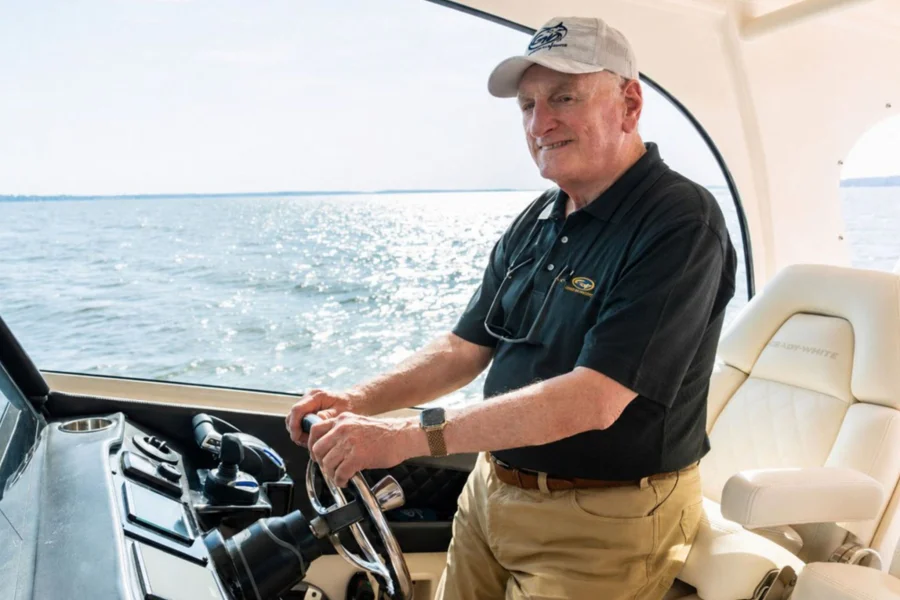
In an era where billion-dollar exits and personal fortunes dominate headlines, one 83-year-old boat builder has chosen a different legacy. Eddie Smith Jr. spent 58 years turning a nearly bankrupt North Carolina boat manufacturer into a powerhouse—and then gave it all away.
The 100-hour weeks that saved a sinking company
When Eddie Smith Jr. took over Grady-White Boats in the 1960s, the company was on the verge of collapse. He worked 100-hour weeks, gave up golf for decades, and poured every dollar of his life savings into keeping the business afloat. “I just think that those of us that are fortunate enough to be in a position to help others…It’s really a gift to me to be able to do what I do,” Smith told Fortune.
Why he turned down $400 million
Over the years, Smith received multiple buyout offers for his company—each one “way north” of $400 million. But instead of cashing out, he decided to step away on his own terms. Earlier this month, Smith transferred ownership of Grady-White Boats to a perpetual purpose trust. The trust will ensure that all future profits from the company go to charity, not to his personal bank account.
The man behind the decision
Smith’s story is not just about money—it’s about purpose. At 83, he could have retired in luxury. Instead, he chose to create a lasting impact. “It’s really a gift to me,” he said, reflecting on his ability to help others. His decision echoes a growing trend among business owners who prioritize legacy over liquidity.
How the perpetual purpose trust works
A perpetual purpose trust is a legal structure that allows a company to operate indefinitely while directing its profits toward a specific mission—in this case, charitable giving. Unlike a traditional sale, the trust ensures that Smith’s vision for the company continues long after he’s gone. The trust will manage operations, while profits flow to causes Smith has supported throughout his life.
What this means for Grady-White Boats
For employees, customers, and the North Carolina community, the transition is designed to be seamless. The company will continue building boats under the same brand, with the same commitment to quality. The only difference: every dollar of profit will now serve a charitable purpose.
Confirmed facts vs what remains unclear
It is confirmed that Smith transferred ownership to a perpetual purpose trust and rejected offers over $400 million. His quote to Fortune is verified. What remains unclear: the specific charities that will benefit, the exact valuation of the company, and the timeline for the trust’s full implementation. No further details have been released.
Why this story resonates beyond business
Smith’s decision challenges the conventional narrative of success. In a world where wealth accumulation is often the ultimate goal, he chose generosity. His story is a reminder that true wealth isn’t measured in dollars—it’s measured in the lives you touch.
Risks and balanced view
While Smith’s decision is widely praised, some may question whether a perpetual trust is the most efficient way to give. Critics of such structures argue that they can lack transparency and accountability. However, Smith’s long track record of integrity and his personal involvement in the company suggest a genuine commitment to philanthropy.
Wider trend: business owners choosing legacy over sale
Smith is not alone. A growing number of entrepreneurs are opting for purpose trusts, employee ownership, or charitable foundations instead of selling to the highest bidder. This shift reflects a deeper cultural change—one that values impact over income.
Practical reader guidance
For business owners considering a similar path: consult with legal and financial advisors experienced in purpose trusts. Understand that this model requires a long-term commitment to both operations and charitable goals. For readers inspired by Smith’s story, consider supporting local businesses that prioritize community over profit.
Future outlook
Grady-White Boats will continue operating under the trust, with profits directed to charity. Smith’s legacy will live on through the causes he supports. The company’s future remains bright, driven by the same values that saved it decades ago.
Our Take
Eddie Smith Jr.’s story is a rare and powerful example of what happens when success is redefined. He didn’t just build a company—he built a model for how wealth can serve humanity. In an age of billion-dollar IPOs and flashy exits, his quiet generosity speaks louder than any check.
Frequently Asked Questions
What is a perpetual purpose trust?
A perpetual purpose trust is a legal structure that allows a company to operate indefinitely while directing its profits toward a specific mission, such as charitable giving. It ensures the founder’s vision continues without a sale.
Why did Eddie Smith Jr. turn down $400 million?
Smith chose to donate the company’s future profits to charity instead of selling. He told Fortune that helping others is “a gift to me.” He prioritized legacy and philanthropy over personal wealth.
Will Grady-White Boats continue to operate?
Yes. The company will continue building boats under the same brand and management. The only change is that all future profits will go to charity through the perpetual purpose trust.
How can I learn more about Eddie Smith Jr.’s decision?
The primary source is Smith’s interview with Fortune. No additional public statements have been made. For updates, follow Grady-White Boats’ official channels.