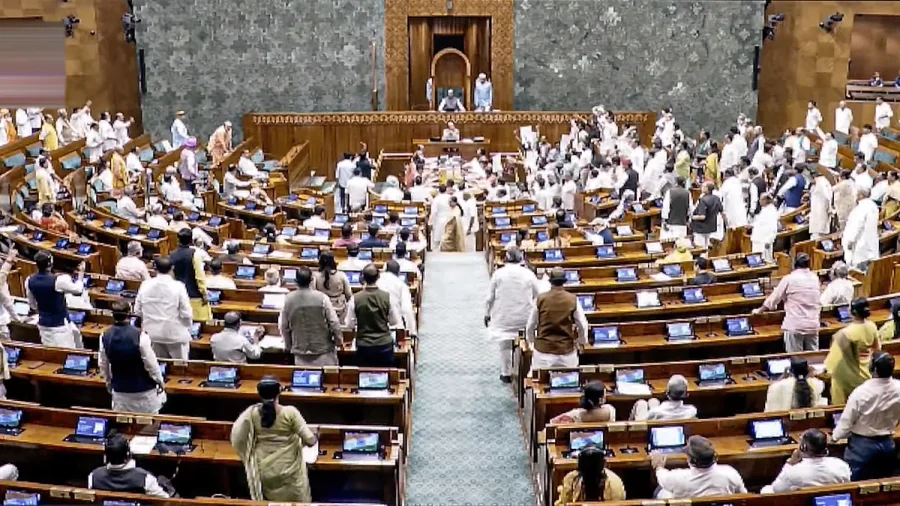
In December 2025, the Lok Sabha devoted 10 hours to a special debate on the 150th anniversary of Vande Mataram — the extended version of the poem the government wanted to adopt as the national song. Earlier in the year, 12 hours were set aside for the Waqf Bill. But when it comes to the NEET-UG paper leaks — a crisis that has sparked youth unrest, raised questions about exam integrity, and left thousands of medical aspirants in limbo — the government is offering barely two hours.
The 10-hour Vande Mataram debate vs the 2-hour NEET offer
The contrast is stark. The Vande Mataram debate was a special, extended session. The Waqf Bill debate stretched over 12 hours. But for the NEET-UG paper leaks, Parliamentary Affairs Minister Kiren Rijiju has said the government is ready for a discussion — with a catch. It wants the debate held under Rule 176, which allows a short-duration discussion of just two to two-and-a-half hours. The Opposition is demanding a debate under Rule 267, which suspends all other business and allows an unlimited, focused discussion.
Why the rule matters: Rule 176 vs Rule 267
Rule 176 is designed for brief, time-bound discussions. It does not require a formal motion or vote. Rule 267, on the other hand, is a powerful tool that allows the House to set aside its scheduled business to take up an urgent matter. By insisting on Rule 176, the government effectively limits the scope and depth of the debate on the NEET leaks — a crisis that has affected lakhs of students, triggered protests across states, and raised serious questions about the National Testing Agency (NTA) and exam security.
The human cost: Youth unrest and a crisis of trust
For students who spent months preparing for NEET-UG, the paper leaks were a devastating blow. Many saw their hard work undermined by a system that failed to protect the integrity of the exam. Protests erupted in cities like Patna, Jaipur, and Delhi, with students demanding a CBI investigation and a re-exam. The crisis has also eroded trust in the NTA, which conducts the exam. For these young aspirants, a two-hour debate in Parliament feels like an insult — a sign that their concerns are not being taken seriously.
Government's stance: Ready to discuss, but on our terms
Minister Kiren Rijiju has maintained that the government is not avoiding a debate. "We are ready for a discussion," he said, but added that the government wants to decide under which rule the debate will be held. The Opposition sees this as a tactic to limit scrutiny. "They gave 10 hours for Vande Mataram and 12 for the Waqf Bill, but for the NEET leaks, they want to rush through a two-hour discussion," said a senior Opposition leader. "This shows where their priorities lie."
What the numbers reveal: A pattern of prioritisation
The allocation of parliamentary time is a political signal. The 10-hour Vande Mataram debate was a symbolic exercise — a celebration of a poem. The 12-hour Waqf Bill debate was a legislative priority. The NEET-UG paper leaks, by contrast, are a crisis of governance and trust. By offering only a short debate, the government signals that it does not consider the issue as urgent as the Opposition claims. Critics argue this is a miscalculation, given the scale of youth unrest and the potential political fallout.
Confirmed facts vs what remains unclear
Confirmed: The government allocated 10 hours for the Vande Mataram debate in December 2025. The Lok Sabha also spent 12 hours on the Waqf Bill. The government has agreed to a debate on NEET-UG paper leaks but only under Rule 176 (2–2.5 hours). The Opposition is demanding a debate under Rule 267. Minister Kiren Rijiju has confirmed the government's stance.
Unclear: Whether the government will eventually agree to a Rule 267 debate. The exact date of the proposed debate has not been announced. The full scope of the NEET-UG paper leaks — including how many students were affected and the exact nature of the breach — remains under investigation.
Risks and balanced view
The government's position is not without logic. Rule 176 debates are common for issues that require discussion but not a formal vote. The government may argue that a longer debate under Rule 267 would disrupt other legislative business. However, the Opposition's point is equally valid: the NEET leaks are not a routine matter. They involve the future of lakhs of students, the credibility of a national exam, and the government's handling of a crisis. A two-hour discussion may not be enough to address these complexities.
Wider trend: The politics of parliamentary time
This is not the first time the government has been accused of using procedural rules to limit debate. Critics say the ruling party has increasingly relied on Rule 176 and other mechanisms to control the narrative and avoid prolonged scrutiny. The NEET leaks debate is the latest flashpoint in a broader tussle between the government and the Opposition over parliamentary accountability.
What students and parents should know
For students affected by the NEET-UG paper leaks, the parliamentary debate is just one part of a larger fight. The CBI is investigating the leaks, and the Supreme Court has also taken up petitions. Students should stay updated on court orders and any announcements from the NTA about re-exams or compensation. For now, the political logjam in Parliament means that a full airing of the crisis may take time.
Future outlook: What happens next
The Opposition is likely to continue pressing for a Rule 267 debate. If the government refuses, the issue could lead to disruptions in Parliament, with Opposition MPs forcing adjournments. The government may eventually relent, or the debate may be held under Rule 176 with the Opposition using the limited time to make its case. Either way, the NEET leaks crisis is far from over — and the parliamentary debate is just one chapter in a story that has already shaken the confidence of millions of students.
Our Take
The contrast between 10 hours for Vande Mataram and 2 hours for NEET leaks is not just a procedural dispute — it is a statement of priorities. Symbolic debates have their place, but when a crisis directly affects the lives and futures of lakhs of young Indians, Parliament must rise to the occasion. A two-hour discussion on a matter of this magnitude risks being seen as a dismissal of youth concerns. The government would do well to remember that the students who took to the streets are also voters — and they are watching.
Frequently Asked Questions
Why is the government offering only a 2-hour debate on NEET leaks?
The government wants the debate held under Rule 176, which limits discussion to 2–2.5 hours. It says it is ready for a debate but wants to decide the rule. The Opposition sees this as a tactic to limit scrutiny.
What is the difference between Rule 176 and Rule 267?
Rule 176 allows a short-duration discussion without a formal motion or vote. Rule 267 suspends all other business to take up an urgent matter, allowing an unlimited debate. The Opposition wants Rule 267 for the NEET leaks.
How much time did Parliament spend on Vande Mataram and the Waqf Bill?
The Lok Sabha spent 10 hours on a special debate on Vande Mataram in December 2025, and 12 hours on the Waqf Bill earlier in the year.
What is the NEET-UG paper leaks crisis?
The NEET-UG exam paper was leaked in multiple states, affecting lakhs of students. Protests erupted demanding a CBI investigation and a re-exam. The crisis has raised questions about the National Testing Agency's ability to conduct secure exams.