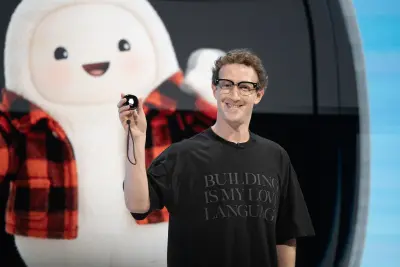
When a former OpenAI product chief who helped shape Instagram, Twitter, and Facebook joins a rocket startup’s board, it’s not just a personnel move — it’s a signal. Kevin Weil, who spent over two decades building some of the most influential tech products in the world, is now betting on reusable rockets. And Silicon Valley is watching closely.
Who is Kevin Weil and why does his Stoke Space board seat matter?
Weil is not a typical aerospace executive. His career spans product leadership at OpenAI (where he was Senior Vice President of Product), Planet Labs (a satellite imagery company), Facebook, Instagram, and Twitter. At each stop, he helped scale platforms from niche tools to global infrastructure. Now, he brings that product-first mindset to Stoke Space, a Washington-based startup building Nova — a fully reusable, medium-lift launch vehicle.
What is Stoke Space building — and why reusability is the key
Stoke Space is one of a handful of companies chasing full rocket reusability, a goal that SpaceX has partially achieved with its Falcon 9. But Stoke’s approach is different: Nova is designed to be completely reusable — both the first and second stages — with rapid turnaround between flights. If successful, this could dramatically lower the cost per launch and open up new commercial and scientific opportunities in low-Earth orbit.
How Weil’s appointment fits a broader Silicon Valley space pivot
Weil’s move is part of a larger trend. Tech executives who cut their teeth in software, AI, and consumer internet are increasingly moving into aerospace. The logic: space is becoming a software-defined industry, where rapid iteration, product thinking, and user-centric design matter as much as rocket science. Weil’s experience scaling Planet Labs — a company that operates a constellation of Earth-imaging satellites — gives him direct domain knowledge in the space sector.
What Weil brings to Stoke Space’s board
According to the company’s announcement, Weil’s role will focus on product leadership and strategic guidance. Stoke Space CEO Andy Lapsa said Weil’s “deep product leadership experience” will be invaluable as the company moves from development to operations. For Weil, the opportunity is about applying software-era principles to hardware: “Stoke Space is reimagining what a launch vehicle can be,” he said in the release.
Confirmed facts vs what remains unclear
Confirmed: Weil has joined the board. Confirmed: Stoke Space is developing Nova, a fully reusable medium-lift rocket. Confirmed: Weil previously held senior roles at OpenAI, Planet Labs, Facebook, Instagram, and Twitter. Unclear: The exact timeline for Nova’s first orbital test flight. Unclear: The financial terms of Weil’s board appointment. Unclear: Whether Weil’s role signals a future investment round or strategic partnership.
Why Stoke Space’s moat matters in the launch market
Stoke Space’s competitive advantage lies in its full-stack reusability approach. While SpaceX has proven first-stage reusability, Stoke aims to recover and reuse the entire vehicle. The company has also developed a novel engine design and a unique heat shield technology. If it succeeds, Stoke could offer launch prices significantly below current market rates, challenging both SpaceX and emerging competitors like Rocket Lab and Relativity Space.
Risks and balanced view: The hard road to orbit
Reusable rockets are notoriously difficult and expensive to develop. Multiple startups have failed or been acquired before reaching orbit. Stoke Space has raised significant venture funding — including a $100 million Series B in 2023 — but faces technical hurdles in engine performance, thermal protection, and rapid reuse. Critics note that no fully reusable second stage has ever flown successfully. Weil’s product expertise does not guarantee engineering breakthroughs.
Wider trend: AI and space convergence
Weil’s appointment also reflects a growing intersection between AI and space. At OpenAI, he worked on products like ChatGPT and DALL-E. At Stoke, AI could play a role in autonomous flight systems, predictive maintenance, and launch scheduling. The broader narrative: the same product thinking that made AI mainstream is now being applied to making space accessible.
What this means for investors and space enthusiasts
For investors, Weil’s board seat is a credibility signal. It suggests Stoke Space is serious about product-market fit and commercial viability. For space enthusiasts, it adds another high-profile name to the reusable rocket race. For students and professionals in tech and aerospace, it underscores that the skills that built the internet are now being recruited to build the space economy.
Future outlook: What could happen next
Stoke Space is expected to conduct a series of test flights over the next 12–18 months. If Nova reaches orbit, the company could become a major player in the small-to-medium launch market. Weil’s presence on the board may also attract additional talent and capital. However, the path is uncertain — and the space industry has a long history of delays and cost overruns.
Our Take
Kevin Weil’s move to Stoke Space is more than a board appointment — it’s a vote of confidence in the idea that space is becoming a software business. His track record suggests he understands how to take complex technology and make it accessible, scalable, and commercially viable. But rockets are not apps. The real test will be whether product thinking can overcome the physics and funding challenges that have grounded so many before. For now, the signal is clear: Silicon Valley’s best product minds are looking up.
Frequently Asked Questions
Who is Kevin Weil?
Kevin Weil is a technology executive who served as Senior Vice President of Product at OpenAI, and previously held senior product roles at Planet Labs, Facebook, Instagram, and Twitter. He has over 20 years of experience building and scaling digital platforms.
What is Stoke Space?
Stoke Space is a private aerospace company based in Washington state, developing Nova — a fully reusable, medium-lift launch vehicle designed to reduce the cost and increase the frequency of space launches.
Why did Kevin Weil join Stoke Space’s board?
Weil joined to provide product leadership and strategic guidance as Stoke Space moves from development to commercial operations. His experience scaling technology companies is expected to help the startup navigate the transition from engineering to market.
Is Stoke Space a competitor to SpaceX?
Stoke Space aims to compete in the reusable launch market, but it is at an earlier stage than SpaceX. Its fully reusable design could offer cost advantages if successful, but it faces significant technical and financial hurdles before it can challenge established players.