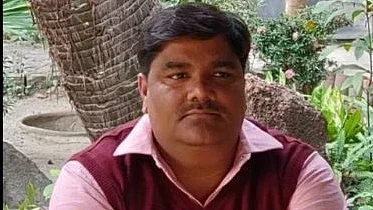
More than five years after communal violence tore through northeast Delhi, a city court on Monday delivered a long-awaited verdict: former Aam Aadmi Party (AAP) councillor Tahir Hussain was convicted for the murder of Intelligence Bureau (IB) officer Ankit Sharma. The judgment marks one of the most significant legal outcomes from the February 2020 riots, which left 53 dead and hundreds injured.
Who Was Convicted and What Were the Charges?
Additional Sessions Judge Praveen Singh convicted Hussain along with four others — Nazim, Kazim, Javed, and Anas — on charges including murder, rioting, promoting enmity between groups, and assault. The court was hearing proceedings against 11 accused in total. Six others were acquitted, the court citing insufficient evidence against them.
The Murder That Shocked the Nation
Ankit Sharma, a 26-year-old IB officer, was killed on February 26, 2020, during the worst communal violence Delhi had seen in decades. His body was recovered from a drain in the riot-hit area. The brutality of the killing — his body bore multiple stab wounds — sparked national outrage and became a symbol of the breakdown of law and order during those days.
How the Case Reached Court
The FIR was registered at Dayalpur police station on the complaint of Sharma’s father, Ravinder Kumar. The investigation, handled by Delhi Police’s Crime Branch, led to charges against 11 individuals. Hussain, then a local AAP leader, was arrested in March 2020 and had been in custody since. The trial proceeded through multiple hearings, with the prosecution relying on eyewitness accounts, forensic evidence, and mobile phone data.
What This Verdict Means for the Victims’ Families
For Ravinder Kumar, the conviction brings a measure of closure after years of waiting. “We have faith in the judiciary,” he had said earlier. The verdict is also seen as a signal that accountability for the 2020 riots is possible, even as many other cases remain pending. Families of other victims are watching closely, hoping for similar outcomes.
Official Response and Legal Reactions
Delhi Police prosecutors argued that the evidence against Hussain and the others was “overwhelming,” including CCTV footage and witness testimonies placing them at the scene. Defence lawyers maintained that the accused were falsely implicated and that the investigation was biased. The court, after examining the evidence, found the prosecution’s case proven against five of the 11 accused.
Why This Case Matters Beyond One Conviction
The 2020 Delhi riots were the worst communal violence in the capital since 1984. Over 50 people died, hundreds were injured, and property worth crores was destroyed. The violence was triggered by clashes over the Citizenship Amendment Act (CAA) protests. The conviction of a political figure like Hussain — a former AAP councillor — carries weight because it challenges the narrative that the violence was entirely spontaneous or one-sided. It also raises questions about the role of local leaders in inflaming tensions.
Confirmed Facts vs What Remains Unclear
Confirmed: Tahir Hussain and four others were convicted for the murder of Ankit Sharma. Six accused were acquitted. The court found Hussain guilty under multiple IPC sections including murder and rioting. The victim was an IB officer killed during the February 2020 riots.
Unclear: The exact role of each convicted individual in the killing remains subject to the detailed judgment. The motive — whether political, communal, or personal — has not been fully established in public. The acquittal of six others leaves questions about whether all perpetrators have been brought to justice.
Risks and Concerns Emerging from the Verdict
While the conviction is a legal victory, concerns remain. The acquittal of six accused highlights the difficulty of securing convictions in riot cases, where evidence can be contaminated or witnesses intimidated. Critics argue that the broader investigation into the 2020 riots has been slow and uneven, with many cases still pending. There are also fears that the verdict could deepen political polarization, with supporters and opponents of Hussain using it to score points.
The Wider Pattern of Accountability in Riot Cases
India has a troubled history of prosecuting communal violence. From the 1984 anti-Sikh riots to the 2002 Gujarat riots, convictions have been rare and often come after years of legal battles. The Hussain verdict is an exception, not the rule. It shows that when evidence is strong and the victim’s family pursues the case relentlessly, justice can be achieved. But it also underscores how much depends on the quality of investigation and the resilience of the legal system.
What Should Citizens and Communities Take Away?
For ordinary citizens, the verdict is a reminder that communal violence has lasting consequences — not just in lives lost, but in the long, painful pursuit of justice. Communities affected by the 2020 riots should note that legal recourse is possible, but it requires patience, evidence, and faith in the judiciary. For political leaders, the case serves as a warning: incitement or participation in violence can lead to accountability, even years later.
What Happens Next?
The convicted individuals are expected to be sentenced in the coming days. The prosecution will likely seek maximum punishment, including life imprisonment or the death penalty, given the gravity of the crime. The acquitted six may walk free unless the prosecution appeals. Meanwhile, other riot-related cases — including those involving larger conspiracy charges — continue to move through the courts.
Our Take
The conviction of Tahir Hussain is a significant moment for justice in the 2020 Delhi riots. It demonstrates that the legal system can hold even politically connected individuals accountable for violence. But it is also a sobering reminder of how long justice takes — five years for a single case — and how many victims are still waiting. The verdict should not be seen as the end of the story, but as a step toward a fuller reckoning with the events of February 2020. For Ankit Sharma’s family, it is a measure of closure. For the rest of us, it is a call to ensure that such violence never happens again — and that when it does, no one is above the law.
Frequently Asked Questions
Who is Tahir Hussain?
Tahir Hussain is a former Aam Aadmi Party (AAP) councillor from Delhi’s Mustafabad area. He was arrested in March 2020 for his alleged role in the murder of IB officer Ankit Sharma during the northeast Delhi riots.
What was Ankit Sharma’s role?
Ankit Sharma was a 26-year-old officer with the Intelligence Bureau (IB). He was killed on February 26, 2020, during communal violence in northeast Delhi. His body was found with multiple stab wounds in a drain.
How many people were convicted in this case?
Five people were convicted: Tahir Hussain, Nazim, Kazim, Javed, and Anas. Six other accused were acquitted by the court due to lack of evidence.
What punishment could Tahir Hussain face?
The sentencing hearing is pending. Given the charges — including murder under IPC Section 302 — Hussain could face life imprisonment or the death penalty. The court will decide after hearing arguments from both sides.