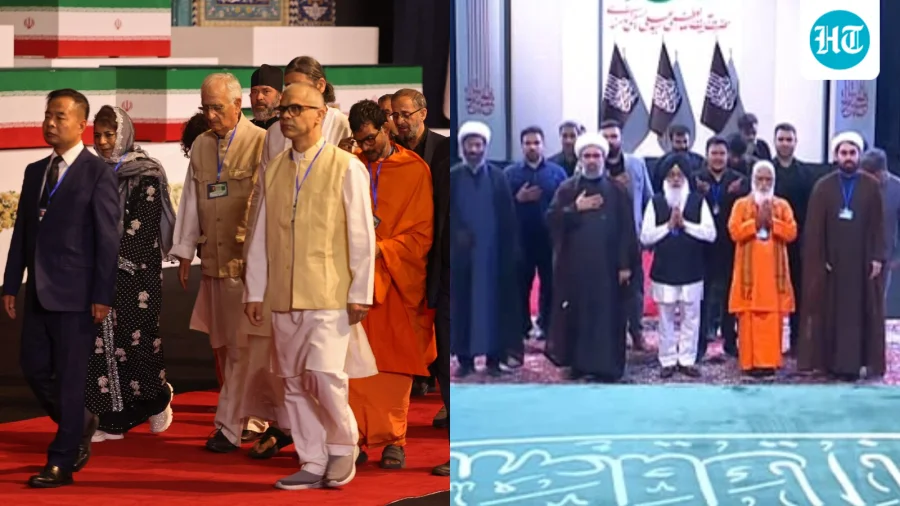
The first visuals from Ayatollah Ali Khamenei's funeral in Tehran have emerged, showing Indian political leaders Mehbooba Mufti and Salman Khurshid among the attendees paying homage. The images, circulating on social media and news platforms, mark a significant diplomatic moment as India sends political representation to the funeral of Iran's supreme leader.
Who attended from India at Khamenei's funeral
Former Jammu and Kashmir Chief Minister Mehbooba Mufti and former Union Minister Salman Khurshid were seen at the funeral ceremony in Tehran. Both leaders are part of an Indian delegation that travelled to Iran to pay respects. Visuals show them at the funeral venue, standing among other international dignitaries.
Why the Indian presence at the funeral matters
The attendance of Indian political figures at Khamenei's funeral carries diplomatic weight. Iran is a key regional player in West Asia, and India has historically maintained balanced ties with Tehran. The presence of leaders from different political backgrounds — Mufti from the PDP and Khurshid from the Congress — signals a broad-based Indian engagement.
How the funeral unfolded after Khamenei's death
Iranian authorities announced a three-day public funeral on June 3 following Khamenei's death. The supreme leader was killed in US and Israeli strikes during the opening day of the war, according to reports. The funeral has drawn attendees from multiple countries, with India sending a political delegation.
Who is affected by this diplomatic gesture
For Indian citizens, especially those in Kashmir and communities with cultural ties to Iran, the delegation's presence reflects India's continued diplomatic outreach. For the Indian diaspora in West Asia, the move signals stability in India-Iran relations despite regional turbulence.
Official response from Indian and Iranian authorities
Iranian authorities have confirmed the funeral arrangements and international participation. The Indian government has not issued an official statement on the delegation. However, the presence of former ministers and regional leaders suggests coordination at some level.
What this means for India-Iran relations
The attendance at Khamenei's funeral is being viewed as a diplomatic signal. India has longstanding ties with Iran, including energy cooperation and the Chabahar port project. Sending political representation to a funeral of this stature reinforces continuity in bilateral engagement, even as regional alignments shift.
Confirmed facts vs what remains unclear
Confirmed: Mehbooba Mufti and Salman Khurshid attended Khamenei's funeral in Tehran. Visuals of their presence have been verified by multiple news outlets. Unclear: Whether the Indian government formally deputed the delegation or if the leaders attended in personal capacity. The full list of Indian attendees and any official statement from New Delhi remain pending.
Risks and balanced view on the delegation
The Indian delegation's presence at Khamenei's funeral may draw scrutiny given the sensitive nature of the supreme leader's death in US-Israeli strikes. Critics may question India's positioning. Supporters argue that attending state funerals is standard diplomatic practice. The move balances India's ties with Iran, the US, and Israel — a delicate act in West Asian diplomacy.
Wider pattern in India's West Asia diplomacy
India has consistently maintained engagement with all major players in West Asia, including Iran, Saudi Arabia, Israel, and the UAE. Sending political representatives to key events — including funerals — is part of this strategy. The Khamenei funeral attendance fits into India's broader approach of strategic autonomy in the region.
Practical guidance for readers following the story
For those tracking India-Iran relations, watch for any official statement from the Ministry of External Affairs. For readers interested in regional geopolitics, the funeral and its attendee list offer clues about shifting alliances. Follow verified news sources for updates on further funeral events and India's diplomatic moves.
What could happen next in India-Iran ties
Further funeral ceremonies are expected in Iran. India's next steps — including any official message from the government or future high-level visits — will signal the trajectory of bilateral ties. The succession in Iran's leadership will also shape how India engages with Tehran going forward.
Our Take
The presence of Indian political leaders at Khamenei's funeral is more than a ceremonial gesture. It reflects India's careful diplomacy in a volatile region. By sending representatives from different political backgrounds, India signals continuity and balance. The story matters because it shows how nations navigate grief, power, and diplomacy simultaneously — and where India positions itself in that complex landscape.
Frequently Asked Questions
Who attended Khamenei's funeral from India?
Former Jammu and Kashmir Chief Minister Mehbooba Mufti and former Union Minister Salman Khurshid were among the Indian attendees at Ayatollah Ali Khamenei's funeral in Tehran.
Why did Indian leaders attend Khamenei's funeral?
The attendance is seen as a diplomatic gesture to maintain India's ties with Iran, a key regional player. Sending political representatives to state funerals is standard diplomatic practice.
What was the official Indian government response?
The Indian government has not issued an official statement on the delegation. The leaders may have attended in personal or coordinated capacity.
How did Khamenei die?
Ayatollah Ali Khamenei was killed in US and Israeli strikes during the opening day of the war, according to reports. Iranian authorities announced a three-day public funeral on June 3.