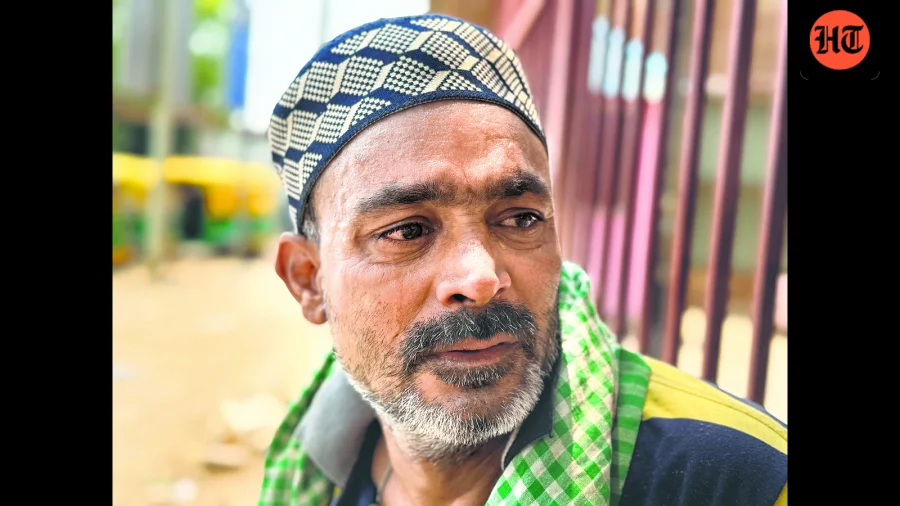
He came to Delhi when he was 12 years old, a boy from Jharkhand with nothing but the hope of work. His first job was washing dishes in a small eatery. For years, that was his life — hands in soapy water, earning just enough to survive. As his body grew stronger, he switched to pulling a rickshaw. For a while, it felt like progress.
The accident that changed everything
Then came the accident. Asghar lost his leg. The details remain unclear — how it happened, who was responsible, whether he received any compensation. What is clear is that his life fractured in that moment. The rickshaw was gone. The strength was gone. The work was gone.
From worker to beggar: a survival shift
Without a leg, Asghar could no longer pull a rickshaw or wash dishes standing for hours. He turned to begging on Delhi’s streets. It was not a choice, but a necessity. For a man who had worked since childhood, this shift carried a deep humiliation. Yet survival demanded it.
A life on the margins of the capital
Today, Asghar sits on a Delhi footpath, his disability visible to every passerby. The city that once gave him work now gives him spare change. He is one of thousands of disabled migrants in India’s capital — invisible to most, surviving on the edges of a city that moves too fast to notice.
The dream that keeps him going
Despite everything, Asghar holds onto one hope: to return to Jharkhand and start a small shop. It is a modest dream — a few shelves, some daily goods, a place to sit and earn honestly. But for a man who has lost his leg and his livelihood, it feels like a mountain. He saves whatever he can from begging, coin by coin.
What remains unknown about his journey
Many details of Asghar’s story remain unclear. How exactly did the accident happen? Did he receive any medical or legal help? Is his family still in Jharkhand? Does he have any contact with them? These gaps are common in the lives of Delhi’s street-dwellers — people who exist outside official records, their stories told only in fragments.
Confirmed facts vs unanswered questions
Confirmed: Asghar came to Delhi at age 12, worked as a dishwasher and rickshaw puller, lost his leg in an accident, and now begs. He hopes to return home and open a small shop.
Unclear: The exact cause of the accident, any medical or legal follow-up, his family’s whereabouts, and how much he has saved.
The wider pattern: disabled migrants in Indian cities
Asghar’s story is not unique. Across Indian cities, thousands of disabled migrants — many from rural Bihar, Jharkhand, Uttar Pradesh — live on streets, begging or doing informal work. They fall through every safety net: no disability pension, no healthcare access, no legal aid, no family support. The city uses their labour when they are able, and forgets them when they are not.
What can be done: a practical look
For readers who want to help, the options are limited but real. Donating to verified NGOs working with street-dwellers and disabled migrants in Delhi can make a difference. Organizations like Ashraya or Karuna Trust sometimes run outreach programmes. Directly giving money to a beggar is a personal choice, but systemic change requires policy attention — disability pensions, accessible healthcare, and rehabilitation services for migrant workers.
What lies ahead for Asghar
Asghar’s future depends on how much he can save, and whether any help reaches him. Without intervention, he will likely remain on Delhi’s streets, begging until his body gives out further. But his dream of a small shop in Jharkhand is not impossible — it just needs a bridge between his present reality and that hope.
Our Take
Asghar’s biography is a quiet indictment of a system that fails its most vulnerable. He worked from age 12, contributed to the city’s economy, and was discarded when his body broke. His story is not just about one man — it is about millions of invisible workers who power India’s cities and are forgotten when they can no longer serve. His dream of a small shop is modest, but it represents dignity, independence, and a return to a life he once knew. That should not be impossible.
Frequently Asked Questions
Who is Asghar in the Delhiwale story?
Asghar is a disabled man from Jharkhand who came to Delhi at age 12. He worked as a dishwasher and rickshaw puller before losing his leg in an accident. He now begs on Delhi’s streets and hopes to return home to start a small shop.
What happened to Asghar’s leg?
Asghar lost his leg in an accident. The exact details of the accident — how it happened, who was involved, and whether he received medical help — remain unclear.
What is Asghar’s dream?
Asghar dreams of returning to Jharkhand and opening a small shop. He saves whatever he can from begging to make this possible.
How can I help people like Asghar in Delhi?
You can donate to verified NGOs working with street-dwellers and disabled migrants in Delhi. Direct help to individuals is a personal choice, but systemic change requires policy attention to disability pensions, healthcare, and rehabilitation for migrant workers.