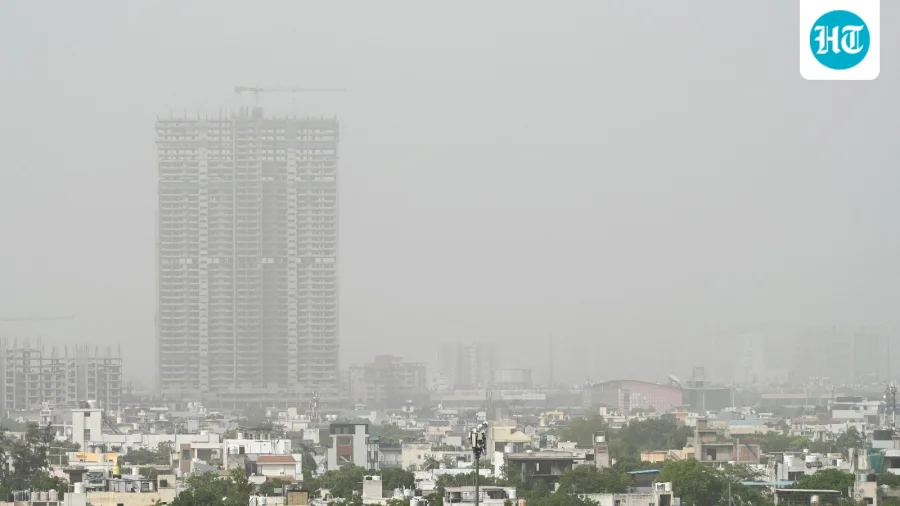
For the first time in nearly three months, Delhi's air has turned 'poor' — and the timing couldn't be more concerning for its 20 million residents. On Thursday, the city's 24-hour average Air Quality Index (AQI) slipped past the 200 mark, touching levels not seen since mid-July. The deterioration, which marks the worst air quality in 85 days, has put authorities on alert even as the Graded Response Action Plan (GRAP) Stage 1 remains on hold.
What the AQI reading means for Delhi residents
The 'poor' category, defined by an AQI between 201 and 300, signals that prolonged exposure can cause breathing discomfort for most people, especially those with asthma, heart disease, or other respiratory conditions. For Delhi's children, elderly, and outdoor workers, this is a clear warning sign. The dip from 'moderate' to 'poor' happened swiftly over the past 48 hours, driven by a combination of falling temperatures, calm winds, and increased local emissions.
Why GRAP-1 hasn't been activated yet — and what's being done instead
Despite the worsening air, the Commission for Air Quality Management (CAQM) has not yet enforced Stage 1 of GRAP, which typically kicks in when AQI crosses 200. Officials say the decision is based on forecasts that suggest a possible improvement in the coming days. However, the Delhi Pollution Control Committee (DPCC) has been directed to immediately ramp up dust control measures — including water sprinkling on roads, stricter monitoring of construction sites, and enforcement of anti-pollution norms at hotspots.
How the situation unfolded over 85 days
Delhi's air quality had remained in the 'satisfactory' to 'moderate' range through the monsoon and early autumn, thanks to seasonal rains and higher wind speeds. The last time the city recorded a 'poor' AQI was in mid-July, during a brief pre-monsoon spike. Since then, cleaner air had been a relief for residents. But as October progresses, meteorological conditions are shifting — lower temperatures trap pollutants closer to the ground, and stubble burning in neighbouring states is expected to add to the burden in the coming weeks.
Who is most affected by the air quality dip
For Delhi's schoolchildren, auto-rickshaw drivers, street vendors, and daily wage labourers, the 'poor' air is more than a statistic. It means more coughs, more hospital visits, and fewer days of safe outdoor activity. Hospitals in the capital have already reported a slight uptick in patients with respiratory complaints. For the city's middle class, it's a reminder to check air purifiers and stock up on N95 masks — a seasonal ritual that has become all too familiar.
What the DPCC and authorities are saying
The DPCC has issued an advisory to all municipal corporations and construction agencies to intensify dust mitigation efforts. "We have been asked to ensure compliance with all anti-dust norms, especially at large construction sites and roads," a DPCC official told PTI. The Delhi government has also urged citizens to report any violations through the Green Delhi app. However, no emergency measures like odd-even vehicle restrictions or school closures have been announced yet.
Why Delhi's air is turning poor — the science behind the dip
The primary drivers are meteorological. As night temperatures drop, the inversion layer — a blanket of warm air that traps cooler air near the ground — becomes shallower. This prevents pollutants from dispersing upward. Combined with low wind speeds and increased vehicular emissions during morning and evening rush hours, the concentration of PM2.5 and PM10 particles rises sharply. Stubble burning in Punjab and Haryana, though not yet at its peak, is beginning to add to the regional pollution load.
Confirmed facts vs what remains unclear
Confirmed: Delhi's AQI crossed 200 on Thursday, marking the worst level in 85 days. The DPCC has been directed to intensify dust control measures. GRAP Stage 1 has not been implemented. Unclear: Whether the AQI will worsen further or improve in the coming days. The exact contribution of stubble burning to this spike is not yet quantified. It is also unclear if the CAQM will activate GRAP Stage 1 if the AQI remains 'poor' for several consecutive days.
Risks and concerns for Delhi's residents
The immediate risk is health-related. Prolonged exposure to 'poor' air can aggravate asthma, bronchitis, and cardiovascular conditions. For children, it can impair lung development. There is also an economic cost — reduced productivity, increased healthcare spending, and potential disruptions to outdoor work. Critics argue that the delay in implementing GRAP Stage 1 sends a confusing signal, as the threshold has already been crossed. Environmental activists have called for preemptive action rather than reactive measures.
The broader pollution pattern in north India
Delhi's air quality dip is part of a larger seasonal pattern across the Indo-Gangetic plain. Cities like Ghaziabad, Noida, Faridabad, and Gurugram are also reporting deteriorating AQI. The onset of winter traditionally marks the beginning of the 'pollution season' in northern India, when a combination of crop burning, vehicle emissions, industrial smoke, and weather conditions creates a toxic cocktail. This year, the early arrival of 'poor' air has raised concerns that the peak pollution months of November and December could be even worse.
What Delhi residents should do now
For those with respiratory conditions, doctors recommend limiting outdoor activity during early morning and late evening hours when pollution levels are highest. Using N95 or N99 masks, keeping windows closed, and running air purifiers indoors can help reduce exposure. Citizens can also report dust violations or open burning through the Green Delhi app. For schools, it may be wise to monitor AQI levels and consider moving outdoor sports indoors if conditions worsen.
What could happen next
If the AQI remains in the 'poor' category for more than 48 hours, the CAQM is likely to activate GRAP Stage 1, which includes stricter enforcement of dust control, a ban on diesel generator sets in certain areas, and enhanced mechanical sweeping of roads. If conditions deteriorate further to 'very poor' (AQI 301-400), Stage 2 could be triggered, potentially bringing restrictions on the use of coal and firewood, and increased frequency of public transport. The next few days will be critical in determining the trajectory.
Our Take
Delhi's air quality slipping to 'poor' after 85 days is not just a seasonal inevitability — it is a reminder of the structural challenges the city faces. While the DPCC's directive to intensify dust control is a necessary step, the absence of GRAP Stage 1 activation raises questions about whether authorities are acting with sufficient urgency. The health of millions cannot wait for forecasts to improve. A more proactive, rather than reactive, approach — especially before the peak pollution months — would serve the city better. For now, residents are left to brace for what could be a long, hazardous winter.
Frequently Asked Questions
What does 'poor' AQI mean for my health?
An AQI between 201 and 300 is classified as 'poor'. Prolonged exposure can cause breathing discomfort for most people, especially those with asthma, heart disease, or other respiratory conditions. Children, elderly, and outdoor workers are most vulnerable.
Why hasn't GRAP Stage 1 been implemented yet?
The CAQM has not activated GRAP Stage 1 because forecasts suggest a possible improvement in air quality in the coming days. However, the DPCC has been directed to intensify dust control measures on the ground as a precaution.
What can I do to protect myself from poor air quality?
Limit outdoor activity during early morning and evening, wear N95 or N99 masks, keep windows closed, and use air purifiers indoors. Report any dust violations or open burning through the Green Delhi app.
Will schools be closed if air quality worsens?
No school closures have been announced yet. If the AQI deteriorates to 'very poor' or 'severe' categories, authorities may consider temporary measures, including restrictions on outdoor activities for children.