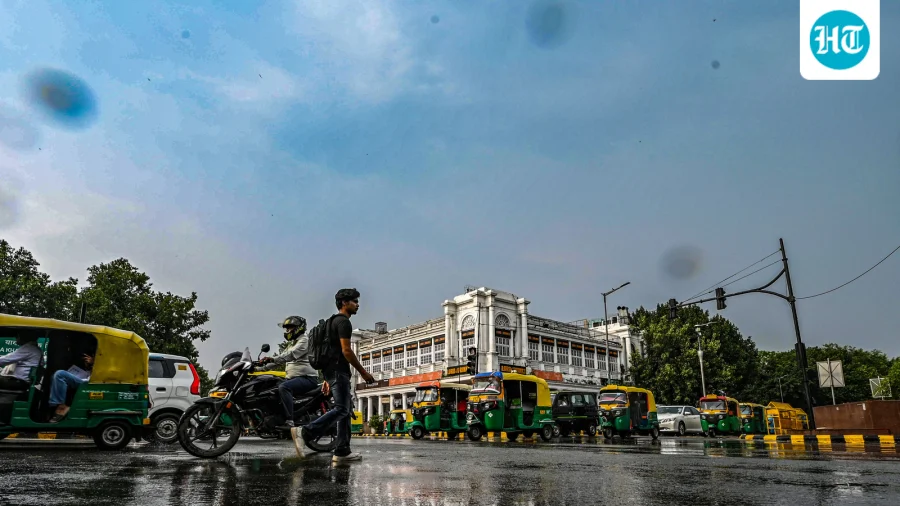
The idea of walking through Connaught Place without dodging cars sounds appealing — until you remember you have to get there first. That tension is now at the heart of a fresh debate after the New Delhi Municipal Council (NDMC) hinted at making CP's Inner Circle vehicle-free. The remark, which included a blunt reminder that "CP is not a hill station," has drawn sharply divided reactions from those who live, work, and shop in the area.
What NDMC said about the vehicle-free Inner Circle plan
The NDMC's suggestion to restrict vehicles from the Inner Circle of Connaught Place has reignited a long-standing conversation about pedestrianisation in central Delhi. Officials appear to acknowledge that CP is not a leisure destination like a hill station — it is a working commercial hub where thousands depend on vehicles for daily business.
While the exact contours of the proposal remain unclear, the statement signals that the civic body is at least exploring the idea of prioritising pedestrians over private cars in the iconic circular market.
Why the CP vehicle ban debate matters for daily commuters
Connaught Place is not just a shopping destination — it is a transit node, an office district, and a cultural landmark rolled into one. The Inner Circle is ringed by showrooms, banks, restaurants, and heritage buildings, and it connects directly to the Rajiv Chowk metro station.
Making the Inner Circle vehicle-free would affect office-goers, delivery services, cab drivers, and shoppers who rely on quick drop-offs. At the same time, residents and urban planners have long pointed out that the area's wide walkways and central park make it an ideal candidate for a car-free zone — if the logistics are handled properly.
How the Connaught Place pedestrianisation debate evolved
This is not the first time the idea has surfaced. Over the years, civic authorities and urban design experts have floated proposals to reduce vehicular congestion around CP, citing examples of pedestrian-friendly zones in cities like Vienna, Barcelona, and even parts of New Delhi.
The challenge has always been the same: how do you balance the need for cleaner, safer public spaces with the commercial reality of a market that depends on footfall — much of which arrives by car or taxi?
Who supports and who opposes the vehicle-free Inner Circle
Supporters of the proposal argue that reducing cars in the Inner Circle would cut pollution, ease congestion on the Outer Circle, and make the heritage precinct more walkable. Pedestrian advocacy groups have long called for CP to be treated as a public square rather than a traffic roundabout.
Opponents, including many traders and daily commuters, worry about the practical fallout. Shop owners fear a drop in customer access, cab and auto drivers are concerned about losing pickup points, and office-goers question where vehicles will park or drop passengers if the Inner Circle is closed to traffic.
NDMC's balancing act: heritage, commerce, and clean air
The NDMC's own remark — that CP is not a hill station — suggests the civic body is aware that a simple ban will not work. Any vehicle-free plan would need to be paired with robust alternatives: better parking on the Outer Circle, designated drop-off zones, improved last-mile connectivity, and possibly shuttle services.
Officials have not yet detailed how these concerns would be addressed, leaving room for both hope and scepticism among stakeholders.
What the 'not a hill station' comment reveals about the plan's chances
The phrasing itself is telling. By acknowledging that CP cannot be treated like a leisure-only destination, NDMC appears to be signalling a cautious, phased approach rather than an abrupt ban. This could mean pilot projects, time-bound restrictions, or partial closures — but nothing has been confirmed.
For now, the statement reads more like an opening gambit in a conversation than a final decision.
Confirmed facts vs what remains unclear in the NDMC proposal
What is confirmed: NDMC has publicly floated the idea of making the Inner Circle vehicle-free, and the remark has drawn mixed public reactions.
What remains unclear: the timeline, the scope of restrictions, exemptions for commercial vehicles, parking arrangements, and whether the proposal will actually be implemented or remain a suggestion. No official notification or detailed plan has been released so far.
Why Connaught Place's design makes it a natural pedestrian zone
Connaught Place was originally designed in the 1930s as a grand commercial circle with wide verandas and a central park. Its geometry — a perfect ring with radial roads — makes it structurally suited for pedestrian-first planning. The Inner Circle's walkways are already among the widest in Delhi, and the central lawn offers a natural gathering space.
Urban designers have often noted that CP's biggest problem is not its layout but the dominance of parked and moving vehicles in spaces meant for people.
Risks and concerns: what could go wrong with a vehicle ban
The most immediate risk is economic disruption. CP's Inner Circle houses some of the city's most premium retail and office spaces, and many businesses depend on easy vehicular access for clients and deliveries. A poorly planned ban could push commercial activity toward other markets.
There is also the question of enforcement. Delhi has seen pedestrianisation efforts before — including the famous Chandni Chowk revamp — where success depended heavily on consistent policing and public cooperation. Without clear rules and alternatives, a CP vehicle ban could create chaos rather than calm.
The bigger pattern: Delhi's slow shift toward walkable spaces
The CP proposal fits into a wider trend across Indian cities — from Chandni Chowk to Bengaluru's commercial streets — where civic bodies are experimenting with car-free zones to improve air quality and public health. These efforts have had mixed results, but they reflect a growing recognition that cities must be designed for people, not just vehicles.
Delhi's pollution crisis has added urgency to such conversations, even as practical challenges remain.
What should commuters, traders, and visitors do now
For now, there is no immediate change to how you drive, park, or shop at Connaught Place. The proposal is at a discussion stage, and no official order has been issued.
Traders and resident welfare groups may want to engage with NDMC early to ensure their concerns are heard. Commuters should watch for any pilot projects or trial runs, which would likely be announced in advance. Visitors can continue to use the metro — which remains the most convenient way to reach CP regardless of future traffic rules.
What happens next with the NDMC vehicle-free plan
The coming weeks are likely to see more clarity — either through formal consultations, a detailed proposal, or a quiet shelving of the idea. Public reaction will play a significant role, as will the logistical feasibility of alternative parking and drop-off arrangements.
If NDMC moves forward, it will likely start with a limited trial rather than a full ban. If it backs off, the conversation may shift to smaller interventions like restricted timings or designated no-car hours.
Our Take
The "CP not a hill station" remark is a rare moment of honesty from a civic body — an admission that pedestrianisation cannot be a romantic ideal but must be a practical exercise. Connaught Place deserves cleaner air and safer walkways, but it also needs a plan that respects the thousands of people who move through it every day for work and business.
The real test for NDMC is not whether it can announce a vehicle-free Inner Circle, but whether it can build the supporting infrastructure — parking, public transport links, and enforcement — to make such a move work. Until then, the debate remains exactly that: a debate.
Frequently Asked Questions
Is Connaught Place Inner Circle going to be vehicle-free?
Not yet. NDMC has hinted at the proposal, but no official order or implementation timeline has been announced. It is currently at a discussion stage.
Why did NDMC say 'CP is not a hill station'?
The remark was a way of acknowledging that Connaught Place is a busy commercial hub, not a leisure destination — meaning any vehicle-free plan must account for daily business and commuter needs.
What are the main concerns about making CP Inner Circle vehicle-free?
Traders worry about losing customer access, commuters are concerned about parking and drop-off points, and there are questions about enforcement and alternative transport arrangements.
How can I reach Connaught Place if vehicles are banned from the Inner Circle?
The Rajiv Chowk metro station is directly connected to CP, and the Outer Circle would likely remain accessible for drop-offs and parking. No changes are currently in effect.