The political battle over the Great Nicobar Island Project has entered a new phase, with the Congress accusing the Union government of trying to silence legal scrutiny. The party on Wednesday described the Centre's move to seek a Supreme Court stay on Calcutta High Court proceedings as an "astonishing U-turn," reigniting a debate that pits ambitious infrastructure goals against tribal rights and ecological preservation.
Congress Calls Out a 'Contradictory' Legal Strategy
At the heart of the controversy is a petition concerning the Forest Rights Act, 2006, which was scheduled for a final hearing in the Calcutta High Court on 25–26 November. According to Congress general secretary Jairam Ramesh, the Centre had previously agreed to this timeline. The party now alleges the government is attempting to halt the proceedings entirely.
"The Modi Govt... had agreed to a November hearing... but is now seeking to halt the proceedings," Ramesh said, framing the move as a contradiction of the government's earlier stance.
Why the Great Nicobar Project Is a Flashpoint
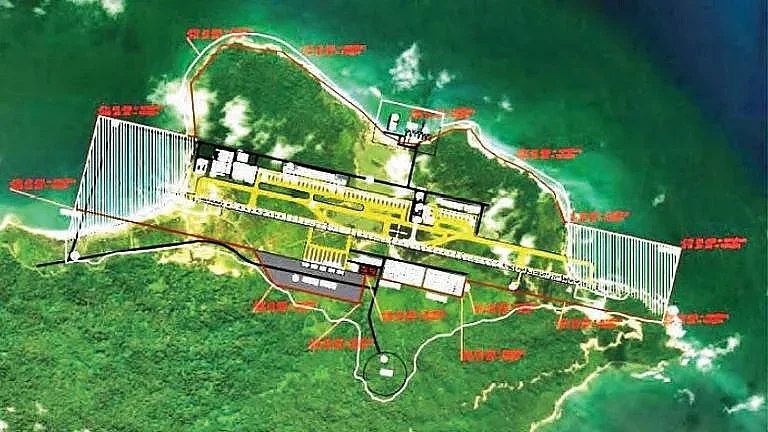
The Great Nicobar Island Project is one of India's most ambitious and controversial infrastructure plans. It includes a transshipment port, an international airport, a township, and a power plant. For its proponents, it is a strategic leap for India's maritime presence in the Indian Ocean. For its critics, it represents an unprecedented threat to one of the world's most fragile ecosystems and the indigenous tribes who call it home.
The island is part of the Nicobar archipelago and is home to the Shompen and Nicobarese tribes. It also features a biosphere reserve with unique flora and fauna. The petition in question specifically concerns the forest rights of these tribal communities, making the legal challenge a critical test of how India balances development with constitutional safeguards.
The Timeline of a Legal Tussle
The project received environmental and forest clearances in 2021, but has since faced multiple legal challenges. The current petition focuses on whether the rights of tribal communities were adequately considered under the Forest Rights Act. The Calcutta High Court had been hearing the matter, with the final hearing set for late November.
The Centre's decision to approach the Supreme Court for a stay has now introduced a new layer of legal uncertainty. It is unclear whether the High Court will proceed as scheduled or if the matter will be subsumed by the top court.
What This Means for Tribal Communities
For the Shompen and Nicobarese, the legal battle is not abstract. The outcome will directly impact their land, their way of life, and their legal protections. The Forest Rights Act was designed to correct historical injustices by recognizing the rights of forest-dwelling communities. Any delay or dilution of these proceedings could leave them in a state of limbo, unable to assert their claims while the project moves forward.
Activists argue that the government's push for a stay is a tactic to avoid judicial scrutiny of the project's social and environmental costs. The government, however, has maintained that the project is vital for national interest and that all due processes were followed.
The Centre's Position and the Road Ahead
The Union government has not yet issued a detailed public statement on the specific reasons for seeking the stay. However, its legal move suggests a desire to consolidate the multiple challenges to the project under the Supreme Court's purview. Officials have previously stated that the project will adhere to environmental safeguards and that tribal rights will be protected.
The Supreme Court's response to the stay request will be crucial. If granted, it could indefinitely postpone the High Court's final hearing, effectively delaying a verdict on the Forest Rights Act challenge. If denied, the High Court proceedings will continue, keeping the legal pressure on the project.
Confirmed Facts vs. What Remains Unclear
Confirmed: The Congress has publicly criticised the Centre's move. Jairam Ramesh has stated that a petition on tribal forest rights was scheduled for a final hearing on 25–26 November. The Centre has sought a Supreme Court stay on the Calcutta High Court proceedings.
Unclear: The exact legal grounds cited by the Centre for the stay request have not been fully detailed in public. It is also unclear whether the Supreme Court will hear the matter urgently or if the High Court will proceed as scheduled. The government's long-term strategy for addressing the tribal rights petition remains unstated.
Risks and the Broader Debate
The Great Nicobar project encapsulates a fundamental tension in India's development model: the push for rapid infrastructure versus the imperative to protect vulnerable communities and ecosystems. The government argues that delays cost the nation strategic opportunities. Critics counter that irreversible ecological and cultural damage cannot be compensated by economic gains.
The legal challenge also raises questions about transparency. If the High Court is halted, it could reduce the opportunity for public scrutiny of the project's approvals. On the other hand, a Supreme Court review could provide a more authoritative, nationwide perspective on the balance between development and rights.
What Readers Should Watch For
For those following the story, the key date is the Supreme Court's decision on the stay. If the High Court hearing proceeds on 25–26 November, it will be a significant moment for tribal rights advocacy. If it is stayed, the focus shifts entirely to the Supreme Court, where the government will have to defend its actions on a larger stage.
It is also worth watching whether other opposition parties or civil society groups join the Congress in criticising the move. The issue has the potential to become a broader referendum on the government's environmental and tribal policies.
Our Take
This is not just a procedural squabble. It is a test of whether the legal system can hold a mega-project accountable to the laws designed to protect the most marginalized. The Congress's accusation of a "U-turn" is a political point, but the underlying legal question is serious: should a project of this scale be shielded from a full High Court hearing on tribal rights? The answer will define not just Great Nicobar's future, but the credibility of India's environmental and forest rights framework.
Frequently Asked Questions
What is the Great Nicobar Island Project?
It is a mega-infrastructure plan including a transshipment port, airport, township, and power plant on Great Nicobar Island. It is promoted as a strategic and economic boost but is opposed for its potential ecological and social impact.
Why is the Congress criticising the Centre?
The Congress alleges the Centre is trying to halt Calcutta High Court proceedings on a petition concerning tribal forest rights, despite previously agreeing to a November hearing. It calls this an "astonishing U-turn."
What is the Forest Rights Act, 2006?
It is a law that recognizes the rights of forest-dwelling tribal communities and other traditional forest dwellers to land and resources. The petition in question concerns its application to the Great Nicobar project.
What happens next in the legal case?
The Supreme Court will decide on the Centre's stay request. If granted, the High Court hearing scheduled for 25–26 November may be postponed. If not, the High Court will proceed with its final hearing.