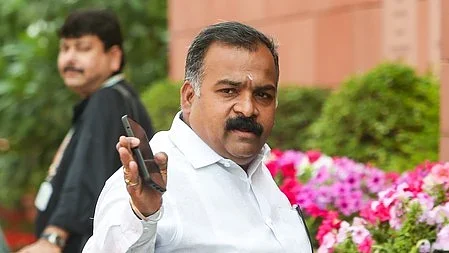
The Cauvery water dispute, one of India’s most enduring inter-state river conflicts, is set to return to the floor of Parliament. Congress MP Manickam Tagore has submitted an adjournment motion notice in the Lok Sabha, demanding an urgent debate on the Centre’s position regarding Karnataka’s proposed Mekedatu balancing reservoir project. For millions in Tamil Nadu, this is not just a political move — it is a question of survival.
Why the Mekedatu project has triggered alarm in Tamil Nadu
The Mekedatu balancing reservoir, proposed by the Karnataka government across the Cauvery River in Ramanagara district, is designed to store and regulate water for drinking and power generation. But Tamil Nadu sees it as a direct threat to its legally allocated share of Cauvery waters under the final award of the Cauvery Water Disputes Tribunal, as upheld by the Supreme Court. Tagore, in his notice to the Lok Sabha secretary-general, described the matter as one of “grave public importance”, arguing that any upstream construction capable of diverting or storing water could reduce the flow reaching Tamil Nadu’s delta region.
What the MP’s notice says — and why it matters for farmers and cities
Tagore’s notice highlights that the Cauvery River is “vital to the state’s economy and water security”, sustaining lakhs of farmers in the delta districts of Thanjavur, Tiruvaiyaru, and Nagapattinam, while providing drinking water to millions in Chennai and other urban centres. He argued that the Union government’s recent response in Parliament — which he did not detail in the notice — had created “widespread apprehension” in Tamil Nadu about the Centre’s willingness to protect the state’s water rights. The adjournment motion, if admitted, would force a structured debate in the Lok Sabha, putting the Centre on record regarding its legal and constitutional position on the project.
The long history of the Cauvery water dispute
The Cauvery water conflict between Karnataka and Tamil Nadu dates back over a century, with multiple tribunals, Supreme Court judgments, and inter-state agreements failing to fully resolve the issue. The Cauvery Water Disputes Tribunal’s final award in 2007 allocated 419 thousand million cubic feet (tmc ft) of water to Tamil Nadu, 270 tmc ft to Karnataka, and smaller shares to Kerala and Puducherry. The Mekedatu project, first proposed by Karnataka in 2013, was cleared by the state but requires approval from the Cauvery Water Management Authority (CWMA) and the Union Ministry of Environment, Forest and Climate Change. Tamil Nadu has consistently opposed the project, arguing it violates the tribunal’s award and the Supreme Court’s 2018 judgment.
Who is affected — and what is at stake for ordinary people
For Tamil Nadu’s Cauvery delta, the stakes could not be higher. The river supports the state’s rice bowl, where paddy cultivation depends on precise water releases from Karnataka’s reservoirs. Any reduction in flow — even seasonal — could devastate the kharif and rabi crops, pushing thousands of farming families into debt. Beyond agriculture, the Cauvery supplies drinking water to Chennai, which has faced acute water crises in recent years, including the 2019 “Day Zero” when reservoirs ran dry. Tagore’s motion is an attempt to bring these human consequences to the centre of the parliamentary debate.
Centre’s position remains unclear — and that is the problem, says Tagore
Tagore’s notice specifically targets the ambiguity in the Union government’s stance. While the Centre has previously stated that the Mekedatu project requires clearance from the CWMA and environmental authorities, Tamil Nadu fears that political pressure from Karnataka — especially in an election year — could lead to a favourable nod. The MP’s demand for a debate is aimed at forcing the government to clarify whether it will uphold the tribunal’s award or allow a project that could alter the water-sharing arrangement. “The Union government’s recent response in Parliament has created widespread apprehension in Tamil Nadu,” Tagore wrote, without specifying the exact statement that triggered the notice.
What the adjournment motion means — and what happens next
An adjournment motion is a parliamentary device to discuss a matter of urgent public importance, interrupting the scheduled business of the House. The Speaker of the Lok Sabha will decide whether to admit the motion. If admitted, the House will debate the issue, and the government will have to respond. If not admitted, Tagore may raise the matter during Zero Hour or through other procedural means. The outcome will depend on the political arithmetic in the House and the government’s willingness to engage on a sensitive inter-state issue.
Confirmed facts vs what remains unclear
Confirmed: Manickam Tagore has submitted an adjournment motion notice to the Lok Sabha secretary-general seeking debate on the Centre’s stand on the Mekedatu project. The notice cites “grave public importance” and concerns over Tamil Nadu’s Cauvery water share. The Cauvery Water Disputes Tribunal’s final award and the Supreme Court’s 2018 judgment remain the legal framework for water allocation. Unclear: The exact statement by the Union government that Tagore claims created “widespread apprehension” has not been publicly detailed. The Speaker’s decision on admitting the motion is pending. The current status of the Mekedatu project’s clearance from the CWMA is not specified in the notice.
Wider trend: inter-state water conflicts and parliamentary interventions
The Mekedatu debate is part of a broader pattern of inter-state water disputes — from the Krishna and Godavari to the Yamuna and Mahanadi — that increasingly find their way into Parliament. As climate change intensifies water scarcity, such conflicts are likely to become more frequent. Tagore’s move reflects a growing tendency among MPs to use parliamentary procedures to force the Centre to take a clear position on contentious state-level issues, especially when legal mechanisms like tribunals and courts have not provided finality.
What Tamil Nadu residents and farmers should know
For those directly affected, the immediate takeaway is that the issue is now on the parliamentary agenda. Residents and farmer groups can follow the debate if the motion is admitted, and may consider petitioning their local MPs to support the demand for a clear Centre stand. Legal experts suggest that any clearance for Mekedatu will likely face a challenge in the Supreme Court, given the existing judgment. Farmers in the Cauvery delta should stay in touch with the Cauvery Water Management Authority’s monthly water release schedules, which remain the only operational mechanism for managing the river’s flow.
Future outlook: what could happen next
If the adjournment motion is admitted, the Lok Sabha debate could lead to a parliamentary resolution or a government assurance, though such outcomes are rare in inter-state disputes. More likely, the debate will put political pressure on the Centre to delay any decision on Mekedatu until after the next general election. In the longer term, the dispute may require a fresh intervention by the Supreme Court or a renegotiation of the Cauvery water-sharing formula, especially if climate data shows reduced rainfall in the catchment area. For now, Tagore’s notice ensures the issue remains alive in the national political discourse.
Our Take
Tagore’s adjournment motion is a calculated political move, but it also reflects genuine anxiety in Tamil Nadu about the Mekedatu project. The Cauvery dispute has never been just about water — it is about identity, livelihoods, and the trust between states and the Centre. By forcing a parliamentary debate, Tagore is asking the government to show its cards: will it uphold the judicial award or yield to political pressure from Karnataka? The answer will have consequences far beyond the river’s banks. For now, the ball is in the Speaker’s court — and in the Centre’s hands.
Frequently Asked Questions
What is the Mekedatu project?
The Mekedatu balancing reservoir is a proposed project by the Karnataka government across the Cauvery River in Ramanagara district. It aims to store and regulate water for drinking and power generation. Tamil Nadu opposes it, arguing it could reduce the state’s legally allocated share of Cauvery waters.
Why has Congress MP Manickam Tagore moved an adjournment motion?
Tagore submitted the notice to the Lok Sabha secretary-general seeking an urgent debate on the Centre’s stand on the Mekedatu project. He argues that the Union government’s recent response in Parliament has created “widespread apprehension” in Tamil Nadu about the safety of its Cauvery water share.
What is an adjournment motion in Parliament?
An adjournment motion is a procedural device to discuss a matter of urgent public importance, interrupting the scheduled business of the House. If admitted by the Speaker, the House debates the issue and the government must respond. It is a rare and significant parliamentary tool.
What happens next in the Mekedatu project dispute?
The Lok Sabha Speaker will decide whether to admit Tagore’s motion. If admitted, a debate will follow. Separately, the project requires clearance from the Cauvery Water Management Authority and environmental authorities. Tamil Nadu may also challenge any clearance in the Supreme Court.