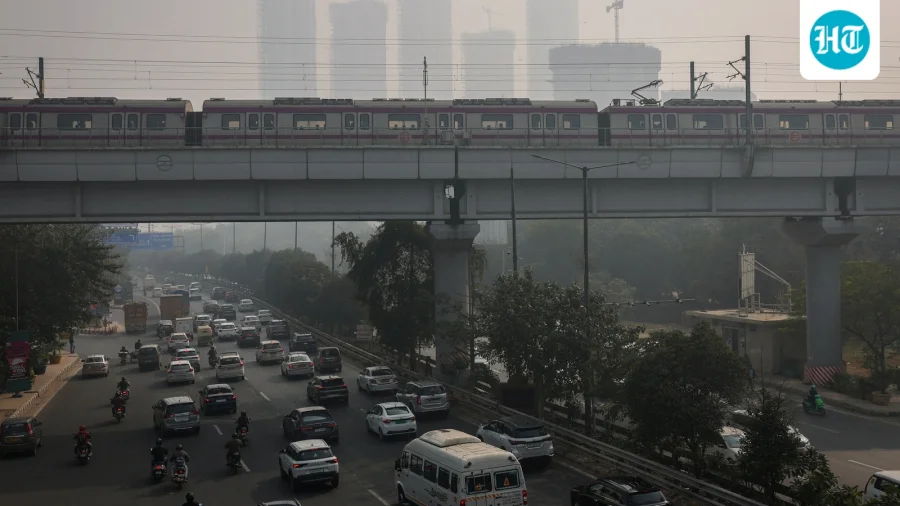
For the millions who wake up in Delhi each winter to a grey, choking haze, the announcement of a new, massive anti-pollution plan offers a rare flicker of hope. The Delhi government has approved the 'Clean Air, Healthy Delhi' project, a ₹8,300 crore initiative that signals a significant escalation in the capital's long, frustrating battle for clean air. This isn't just another policy paper; it's a financial commitment of a scale that demands attention.
What is the ‘Clean Air, Healthy Delhi’ Project?
The 'Clean Air, Healthy Delhi' project is a comprehensive, multi-year plan approved by the Delhi government to tackle the city's severe air pollution. The initiative is backed by financing from the World Bank, lending it both financial muscle and international credibility. Chief Minister Rekha Gupta announced the project, positioning it as a parallel effort that will work alongside existing pollution-control measures.
Why an ₹8,300 Crore Plan is Necessary
Delhi's air pollution is not a seasonal nuisance; it's a public health emergency. Every winter, the city's Air Quality Index (AQI) plummets to 'severe' levels, shutting down schools, grounding flights, and sending thousands to hospitals with respiratory distress. The economic cost of lost productivity and healthcare is staggering. This ₹8,300 crore plan is an acknowledgment that previous, smaller-scale efforts have not been enough to solve a crisis of this magnitude.
How the Plan Will Work: A Multi-Pronged Approach
While the full, granular details of the project are still emerging, the broad strategy involves a multi-pronged attack on pollution sources. The plan is expected to target everything from vehicular emissions and industrial pollution to dust and stubble burning. The World Bank's involvement suggests a focus on data-driven, evidence-based solutions, potentially including technology upgrades, stricter enforcement, and community engagement programs.
Who Will Benefit Most from This Initiative?
The primary beneficiaries are the over 20 million residents of Delhi, particularly the most vulnerable: children, the elderly, and those with pre-existing respiratory conditions. Commuters who spend hours on choked roads, street vendors who work in the open air, and families who cannot afford air purifiers will all be directly impacted by the success or failure of this plan. A cleaner Delhi means fewer hospital visits, more productive days, and a better quality of life for everyone.
Official Response: What the Government is Saying
Chief Minister Rekha Gupta has framed the 'Clean Air, Healthy Delhi' project as a decisive step towards a sustainable future for the capital. The government has emphasized that this is not a replacement for existing schemes but a powerful supplement. The backing of the World Bank is being highlighted as a vote of confidence in the city's ability to execute a complex, large-scale environmental project.
Breaking Down the ₹8,300 Crore Investment
The scale of the investment—₹8,300 crore—is unprecedented for a single pollution-control project in Delhi. This funding is expected to be deployed over several years, covering capital expenditure for new infrastructure, operational costs for running programs, and potentially, compensation mechanisms for affected parties. The World Bank's financing model typically involves low-interest loans and technical assistance, which could ensure long-term sustainability and accountability.
Confirmed Facts vs What Remains Unclear
Confirmed: The 'Clean Air, Healthy Delhi' project has been approved by the Delhi government. The total outlay is ₹8,300 crore. The project is supported by the World Bank. It will run alongside existing anti-pollution plans.
What Remains Unclear: The specific timeline for implementation. The exact breakdown of how the ₹8,300 crore will be spent. The detailed list of interventions (e.g., number of new buses, types of technology). The specific targets for AQI reduction. The mechanism for public accountability and monitoring.
Why This Project is Different from Past Efforts
Past efforts in Delhi have often been fragmented—a ban on old diesel cars here, a temporary odd-even scheme there. The 'Clean Air, Healthy Delhi' project is different because of its sheer financial scale and the institutional backing of the World Bank. This suggests a more structured, long-term approach rather than a series of reactive measures. The challenge will be in execution, as many well-funded plans have faltered on the ground in Delhi.
Risks and Balanced View: The Challenges Ahead
No plan is without risks. The biggest challenge is implementation. Delhi's governance is a complex web of the Delhi government, the Municipal Corporation of Delhi (MCD), and central agencies like the DPCC. Coordination will be critical. There is also the risk of funds being misallocated or projects facing delays due to bureaucratic hurdles. Furthermore, a significant portion of Delhi's pollution comes from outside its borders—stubble burning in Punjab and Haryana—which this plan may not directly address. Critics will watch closely to see if this becomes another well-intentioned but poorly executed scheme.
The Wider Pattern: A Global Shift in Pollution Financing
This project is part of a larger global trend where international financial institutions like the World Bank are increasingly funding climate and pollution mitigation projects in major cities. From Beijing to Mexico City, the model of using large, externally-financed projects to tackle urban air quality is gaining traction. Delhi's project could serve as a template for other Indian cities facing similar crises, provided it delivers tangible results.
What Delhi Residents Should Do Now
For the average Delhi resident, this plan is a long-term solution. In the short term, the usual precautions remain necessary: monitor the AQI daily, use N95 masks when pollution is high, and limit outdoor exertion during severe episodes. Citizens can also play a role by supporting the plan's goals—using public transport, avoiding open burning of waste, and reporting polluting activities. Staying informed about the project's milestones will be key to holding the government accountable.
Future Outlook: What Happens Next
The immediate next step will be the release of a detailed project implementation plan. This will be followed by tenders for various components, the establishment of monitoring frameworks, and the start of ground-level work. If successful, the project could lead to a measurable improvement in Delhi's winter air quality within 3-5 years. If it fails, it will be a costly lesson in the limits of top-down solutions. The next few months will be crucial in setting the tone for this ambitious undertaking.
Our Take
The 'Clean Air, Healthy Delhi' project is a welcome and necessary step. The ₹8,300 crore price tag reflects the severity of the crisis and the government's willingness to commit serious resources. However, money alone does not clean air. The success of this plan will depend entirely on execution, transparency, and political will. The World Bank's involvement is a positive signal, but it is not a guarantee. For Delhi's residents, this is a moment of cautious optimism. The blueprint is ambitious; now, the city needs to see the building.
Frequently Asked Questions
What is the 'Clean Air, Healthy Delhi' project?
It is a ₹8,300 crore initiative approved by the Delhi government to combat air pollution in the national capital. The project is supported by the World Bank and aims to reduce pollution through a comprehensive, multi-year strategy.
Who announced the 'Clean Air, Healthy Delhi' project?
Delhi Chief Minister Rekha Gupta announced the project, stating it will run alongside existing anti-pollution measures in the city.
How will the ₹8,300 crore be used in this project?
The exact breakdown is yet to be fully disclosed, but the funds are expected to be used for a multi-pronged approach targeting vehicular emissions, industrial pollution, dust, and other major sources. The World Bank's involvement suggests a focus on data-driven and technology-based solutions.
When will the 'Clean Air, Healthy Delhi' project start showing results?
Specific timelines are not yet public. However, large-scale infrastructure and behavioral change projects of this nature typically take 3-5 years to show significant, measurable improvements in air quality.