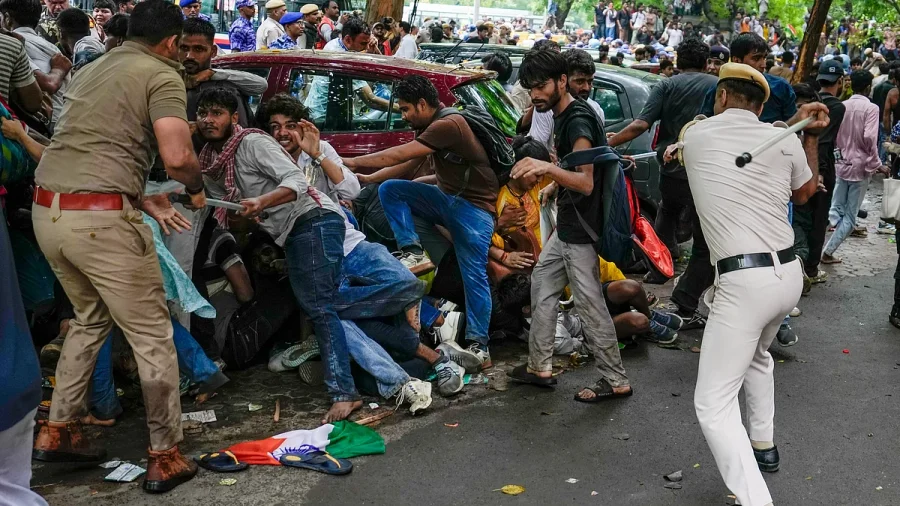
The Cockroach Janta Party (CJP) has raised a fresh alarm, claiming that students and other protesters are being detained or arrested in several states, despite the Centre’s explicit assurance that no punitive action would be taken against those who participated in the nationwide agitation over the NEET paper leak. The development threatens to reopen a wound that had only just begun to heal.
Reports of detentions in Assam, West Bengal, Bihar
In a statement shared on X by party spokesperson Saurav Das, the CJP said it had received reports of protesters being “targeted, detained or arrested” by authorities, particularly in Assam, West Bengal, and Bihar. The statement did not provide specific numbers or names but described the situation as “deeply concerning.”
Why this matters — a fragile trust broken
The reported detentions come just days after the CJP suspended its 36-day nationwide protest, a decision taken after Union ministers J. P. Nadda and Jitendra Singh assured the outfit that no punitive action would be taken. For the protesters, this was a hard-won concession after weeks of street demonstrations and public anger over the NEET paper leak. If the detentions are confirmed, it would represent a significant breach of that trust.
Timeline of the NEET protest and suspension
The CJP’s nationwide agitation began in response to the NEET paper leak, which had sparked outrage among students and parents. The protest escalated over 36 days, with demonstrations in multiple states. The turning point came when former Union Education Minister Dharmendra Pradhan resigned, a move the CJP saw as a partial victory. Following assurances from senior Union ministers, the outfit suspended the protest, calling it a “pause” rather than an end.
Who is affected — students caught in the middle
For the thousands of students who participated in the protests, the reported detentions create a climate of fear. Many had returned to their studies or daily lives after the suspension, believing the Centre’s assurance. The CJP’s fresh alarm suggests that some protesters may now face legal consequences, potentially discouraging future civic participation.
Centre and state governments yet to respond
As of now, neither the Union government nor the state governments of Assam, West Bengal, and Bihar have issued an official response to the CJP’s allegations. The CJP has not provided evidence of the detentions beyond its own reports, but the claim carries weight given the outfit’s role in the protest movement.
What the CJP’s statement really means
The CJP’s decision to go public with these allegations suggests that the outfit is testing the Centre’s commitment to its assurance. It also signals that the protest movement, though suspended, remains on a hair trigger. If the detentions are not addressed, the CJP could resume its agitation, potentially with renewed intensity.
Confirmed facts vs what remains unclear
What is confirmed: The CJP has publicly alleged that protesters are being detained in Assam, West Bengal, and Bihar. What remains unclear: The exact number of detentions, the identities of those detained, the legal basis for any arrests, and whether state governments or local police are acting independently or under central direction. The CJP has not provided documentary evidence, and no official confirmation has been received from authorities.
Risks and balanced view — both sides of the story
From the protesters’ perspective, the detentions represent a betrayal of a solemn assurance. From the government’s perspective, local law enforcement may be acting on separate complaints or maintaining public order, not targeting protesters specifically. Without official clarification, the situation remains ambiguous. However, the perception of broken promises could fuel further unrest.
Wider pattern — trust deficit in protest movements
This incident fits a broader pattern in India where assurances given to end protests are later questioned by activists. Similar concerns have been raised in the past over farmer protests, anti-CAA demonstrations, and student agitations. The gap between official promises and ground-level action often becomes a flashpoint for renewed mobilization.
What students and protesters should do now
Students who participated in the protests should document any interactions with authorities and seek legal counsel if contacted. Protesters in Assam, West Bengal, and Bihar should remain cautious and report any detentions to the CJP or civil rights organizations. The CJP has urged supporters to stay calm but vigilant.
Future outlook — could protests resume?
The CJP has not announced any fresh agitation, but the outfit’s statement is a clear warning. If the detentions continue or escalate, the protest movement could restart. The ball is now in the Centre’s court: a swift clarification and reversal of any punitive actions could defuse the situation. Silence or inaction may lead to a new wave of demonstrations.
Our Take
The CJP’s alarm over reported detentions is a reminder that trust in institutional assurances is fragile, especially after a long and emotionally charged protest. While the allegations need verification, the perception of broken promises can be as damaging as the reality. The Centre and state governments would be wise to address these concerns transparently, before a small spark reignites a larger fire. For now, the NEET paper leak protest movement is in a delicate pause — and the next move belongs to the authorities.
Frequently Asked Questions
What is the CJP’s allegation about detentions?
The Cockroach Janta Party (CJP) claims that students and protesters are being detained or arrested in Assam, West Bengal, and Bihar, despite the Centre’s assurance of no punitive action for NEET paper leak protests.
Why did the CJP suspend its protest earlier?
The CJP suspended its 36-day nationwide protest after the resignation of former Union Education Minister Dharmendra Pradhan, following assurances from Union ministers J. P. Nadda and Jitendra Singh that no punitive action would be taken.
Which states are reportedly involved in the detentions?
According to the CJP, detentions have been reported particularly in Assam, West Bengal, and Bihar.
Has the government responded to the CJP’s allegations?
As of now, neither the Union government nor the state governments of Assam, West Bengal, and Bihar have issued an official response to the CJP’s claims.