China built the world's largest renewable energy machine. Now it has to figure out how to turn it off—or at least, how to stop wasting it.
While Asian importers scramble for oil and LNG after the U.S.-Iran conflict choked the Strait of Hormuz, China's energy companies are facing a problem no other major economy has: they have too much power. The grid is strong, but the green energy flowing into it has outpaced the system's ability to use it.
When Solar Surpasses Coal, But the Grid Can't Keep Up
In July, solar overtook coal as China's largest source of installed power capacity. It was a historic milestone. It was also a warning sign.
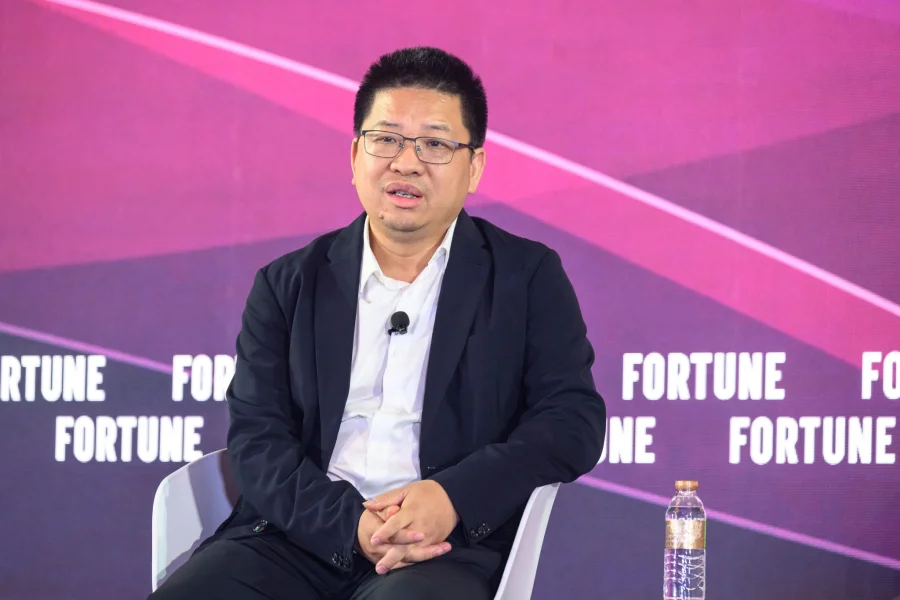
"China's grid is a very strong and stable one," Youyuan Huang, executive vice chairman of BTR New Material Group, the world's top maker of battery anode materials, said at the Fortune Leaders Forum in Macau on Sept. 8. "But we've installed too much green energy."
Huang's comment captures the paradox at the heart of China's energy transition. The country is leading the world in renewable installation—projected to account for 60% of all installed renewable capacity through 2030, according to the International Energy Agency. But installation is not the same as integration.
The Hidden Cost of Wasted Sunshine and Wind
When a grid has more power than it can transmit or store, that energy is curtailed—essentially thrown away. Solar farms are switched off on sunny days. Wind turbines are idled during peak gusts. The infrastructure exists, but the flexibility to manage it does not.
This is not a minor inefficiency. It represents billions in lost investment and a missed opportunity to reduce coal reliance. For a country that has staked its global leadership on climate action, curtailment undermines both the economics and the optics of its green push.
Why AI Is Suddenly the Most Important Tool in Energy
Daniel Liu, vice president of solar equipment giant Sungrow, and other industry leaders at the Macau forum pointed to artificial intelligence as the missing piece. AI can forecast demand, predict weather-driven supply fluctuations, and route power in real time across provinces.
In practice, that means algorithms deciding when to charge batteries, when to export power, and when to ramp down coal plants. It is a shift from building more capacity to managing the capacity that already exists.
For a grid as vast and complex as China's, human operators cannot process the volume of data required. AI can.
The Human Impact: Cheaper Power, Cleaner Air—If It Works
If AI-driven grid management succeeds, the benefits reach ordinary citizens. Less curtailment means more renewable energy actually reaches homes and factories. That reduces reliance on coal, lowers emissions, and could stabilize electricity prices.
If it fails, the overcapacity problem worsens. Investors lose confidence in renewable projects. The gap between China's climate promises and its actual emissions widens.
What Officials and Industry Leaders Are Saying
The acknowledgment from Huang and others at the Fortune Leaders Forum is significant. It signals that China's energy industry is no longer just celebrating installation records—it is confronting the operational challenge.
The IEA's projection of China's 60% renewable capacity share by 2030 adds urgency. Without smarter grid management, that capacity becomes a liability as much as an asset.
Confirmed Facts vs. What Remains Unclear
Confirmed: China's solar capacity surpassed coal in July. The IEA projects China will hold 60% of global renewable capacity through 2030. Industry leaders publicly acknowledged overcapacity at the Macau forum.
Unclear: The exact scale of curtailment, the specific AI technologies being deployed, and whether regulatory frameworks will adapt quickly enough to support AI-driven grid management.
The Moat That Matters: Why China's Grid Is Uniquely Positioned
China's advantage is not just scale—it is centralization. Unlike fragmented grids in the U.S. or Europe, China's State Grid can implement AI solutions nationwide without negotiating with dozens of independent operators. That coordination could make AI adoption faster and more effective than anywhere else.
Risks and the Balanced View
AI is not a silver bullet. Grid management involves physical infrastructure that cannot be upgraded overnight. Cybersecurity risks grow as grids become more digitized. And there is no guarantee that AI models trained on historical data can predict the chaotic weather patterns of a warming planet.
Critics also note that overcapacity is partly a policy failure—subsidies encouraged rapid installation without corresponding investment in storage and transmission.
A Global Pattern: The Next Phase of the Energy Transition
China's problem is a preview of what other countries will face as they scale renewables. The first phase of the energy transition was about building. The second phase is about managing. AI sits at the center of that shift.
What Readers Should Take Away
For investors, watch for companies integrating AI into grid operations. For policymakers, China's experience shows that installation targets must be paired with grid modernization. For everyone else, the lesson is simple: more renewable energy is not enough—smarter systems are required to use it.
Future Outlook
Expect China to accelerate AI deployment in grid management over the next two to three years. If successful, it could become a global model. If not, the overcapacity problem will only grow as more solar and wind come online.
Our Take
China's green energy overcapacity is not a failure—it is a sign of success that arrived faster than the system could handle. AI offers a path forward, but only if paired with storage investment, regulatory reform, and realistic timelines. The world is watching because every country will eventually face this same challenge.
Frequently Asked Questions
What is China's green energy overcapacity problem?
China has installed more renewable energy capacity than its grid can efficiently use or store, leading to wasted power and operational challenges.
How can AI help solve China's energy overcapacity?
AI can forecast supply and demand, optimize power routing, and manage battery storage in real time, reducing waste and stabilizing the grid.
Why did solar overtake coal in China?
Massive government subsidies and rapid installation drove solar capacity growth, surpassing coal in July as the largest source of installed power capacity.
Will AI solve the problem completely?
No. AI is a critical tool, but it must be paired with physical infrastructure upgrades, storage investment, and regulatory adaptation.