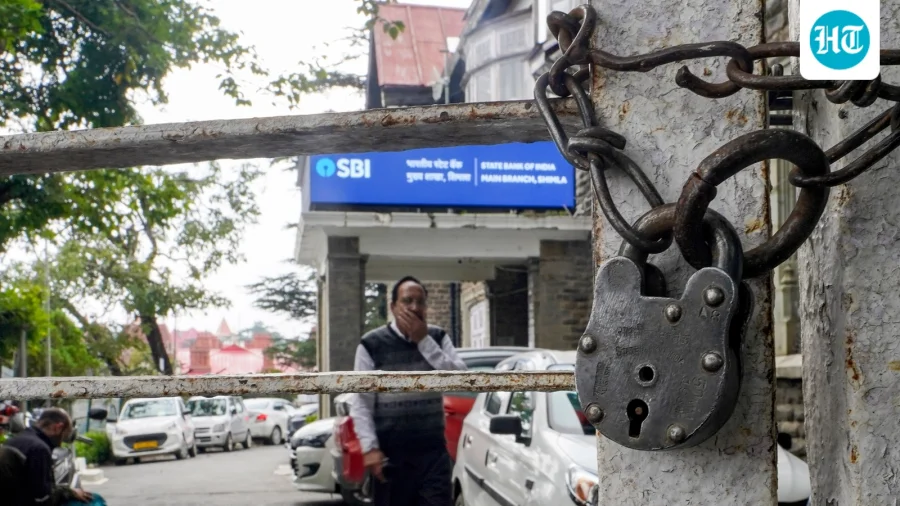
For most people, a bank holiday is an inconvenience. For a daily-wage worker waiting to deposit cash, a pensioner collecting her monthly payment, or a small trader whose cheque has to clear before a supplier deadline, it is a lost day that cannot be recovered.
That is the practical weight behind the United Forum of Bank Unions' decision to announce a three-day strike — and behind the unusual arrangement that banks will open this Sunday to clear the backlog before it begins.
What the bank unions have actually announced
The United Forum of Bank Unions has called a three-day strike. The central demand is a five-day banking week, alongside other pending demands raised by the unions.
At the time of writing, the strike has been announced — not confirmed as certain. Announcements of this kind have historically been preceded by last-minute talks, and outcomes can change.
Why the five-day banking week demand keeps returning
The five-day week argument is not new. Unions have long contended that bank employees work Saturdays in addition to a full working week, and that aligning banking with the five-day pattern followed by most other sectors is a matter of fairness.
Banks and their customers, however, have a competing interest: Saturday is often the only day salaried employees and small businesses can visit a branch in person. Any change to the working week directly affects when the public can access counter services.
Why banks are opening this Sunday
The Sunday opening is best understood as a buffer. If branches shut for three consecutive days, transactions that would normally be processed on those days do not disappear — they pile up.
Cheques awaiting clearing, cash deposits, pension disbursements, loan documentation and government-linked transfers all accumulate. Opening on a non-working day gives branches a window to reduce that backlog before it compounds.
Readers should treat the Sunday arrangement as reported, and confirm timings and branch availability locally, since not every branch or service may operate on the same schedule.
Who feels a bank strike first — and who barely notices
The impact is not evenly spread. Digital banking — UPI, net banking, card payments and ATM withdrawals — typically continues to function during bank strikes, because these systems do not depend on branch staff.
The disruption lands hardest on people whose transactions require a human at a counter: senior citizens collecting pensions, farmers depositing crop payments, small businesses clearing cheques, students paying fees at the branch, and anyone dealing with loan disbursement or documentation.
For a salaried customer who rarely enters a branch, a three-day strike may pass unnoticed. For a trader whose cheque must clear, it can stall an entire supply chain.
What is confirmed, and what is still unclear
Confirmed: The United Forum of Bank Unions has announced a three-day strike, with the five-day banking week among its demands.
Unclear: Whether the strike will proceed as announced, whether any late negotiation will alter it, which specific services will be affected, and whether the Sunday opening will apply uniformly across public sector, private and cooperative banks.
Any claim about a definite shutdown, or a definite settlement, should be treated as speculation until officially confirmed.
The risks on both sides of this standoff
For customers, the risk is straightforward: delayed payments, missed deadlines and repeated branch visits. For banks, the risk is reputational — public patience with repeated disruption is limited, particularly when digital alternatives already handle most routine transactions.
For the unions, the risk is public sympathy. A demand framed around employee welfare can lose public support if it is seen as inconveniencing pensioners and small traders. That tension is central to how this plays out.
A pattern that keeps repeating in Indian banking
This is not an isolated event. Indian banking has seen recurring cycles of union demands, strike announcements and last-minute resolutions. The pattern matters because it shapes how customers behave — many now plan transactions around anticipated disruptions rather than waiting for confirmation.
It also reflects a broader question the sector has not fully resolved: as more banking moves digital, what should the physical branch network look like, and who should staff it, on which days?
What you should do before next week
If you have a transaction that cannot wait, complete it now rather than during the strike window. Prioritise anything with a deadline — cheque clearing, fee payments, EMI-related documentation, pension collection.
Use digital channels for routine transfers and payments. If you must visit a branch, check local timings for the Sunday opening, since schedules may vary. Keep a record of any transaction you initiate, in case processing is delayed.
What happens next
The immediate question is whether talks between the unions and the relevant authorities produce a resolution before the strike date. If they do, the Sunday opening may prove unnecessary. If they do not, customers should expect branch-level disruption for three days.
Either way, the underlying demand — a five-day banking week — is unlikely to disappear. It will return.
Our Take
This story is often reported as a labour dispute. It is also a service question. The five-day week demand is reasonable on its own terms, but it collides with a reality that unions and banks both tend to underplay: for a large section of India, the branch counter is still the only way to bank.
That is why the Sunday opening matters more than it appears. It is a small acknowledgement that a strike is not just an internal matter — it is a cost transferred to people who had no part in the dispute.
Frequently Asked Questions
Will banks be open this Sunday?
Banks are expected to open this Sunday to clear pending work ahead of the announced three-day strike. Readers should confirm timings and service availability with their local branch, as schedules may vary.
Will ATMs and UPI work during the bank strike?
Digital channels such as UPI, net banking, card payments and ATM withdrawals generally continue during bank strikes, since they do not depend on branch staff. Counter-based services are the ones most likely to be affected.
What is the five-day banking week demand?
Bank unions have long demanded that banking follow a five-day working week, arguing that employees currently work Saturdays in addition to a full week. Banks and customers have raised concerns that Saturday is often the only day many people can visit a branch.
Which bank services will be affected by the strike?
Branch-level services — cash deposits and withdrawals, cheque clearing, loan processing and documentation, and pension-related counter work — are the most exposed. Digital banking is expected to function largely as usual.