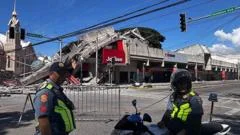
The ground shook violently for nearly a minute. Then came the dust, the screams, and the collapse of buildings that had stood for decades. At least 19 people are dead after a magnitude-7.8 earthquake struck off the coast of Mindanao island in the southern Philippines on Monday morning, officials confirmed.
What happened during the Mindanao earthquake
The quake struck at 07:37 local time (23:37 GMT Sunday) at a depth of about 32 kilometers, according to the Philippine Institute of Volcanology and Seismology. The epicenter was located off the coast of Mindanao, the country's second-largest island. Within minutes, tsunami alerts were triggered across the region, including in Indonesia and Japan.
Why this earthquake is devastating for southern Philippines
Mindanao is home to millions of people, many living in coastal communities and cities with buildings not designed to withstand such powerful shaking. The quake caused widespread panic, with people rushing out of homes and offices as structures swayed. The collapse of a Jollibee restaurant — a beloved local chain — became a symbol of the tragedy, with images of the crumbled building circulating widely.
Timeline of the 7.8 magnitude quake and tsunami alerts
The earthquake struck without warning early Monday morning. Within 30 minutes, the Pacific Tsunami Warning Center issued alerts for the Philippines, Indonesia, and Japan. Small tsunami waves of up to 1 meter (3 feet) were recorded along the coasts of Mindanao and nearby islands. The alerts were later lifted as the threat subsided, but officials warned of possible aftershocks.
Who is affected and how the quake is impacting real lives
More than 200 people have been injured, many from falling debris and collapsing structures. Hospitals in affected areas are overwhelmed, treating fractures, cuts, and crush injuries. Thousands of residents spent the morning outdoors, afraid to return to homes that may have been structurally compromised. Power outages and disrupted communication lines have hampered rescue efforts in remote areas.
Official response from Philippine authorities and international agencies
Philippine President Ferdinand Marcos Jr. has been briefed on the situation, and disaster response agencies have been deployed to affected areas. The Philippine Coast Guard and military are assisting in search and rescue operations. International agencies, including the United Nations Office for the Coordination of Humanitarian Affairs, have offered support. "We are assessing the full extent of the damage," a spokesperson for the National Disaster Risk Reduction and Management Council said.
What a 7.8 magnitude earthquake means — explained simply
A magnitude-7.8 earthquake is classified as a "major" event on the Richter scale. It can cause serious damage over a large area, especially in regions with vulnerable infrastructure. The energy released is equivalent to about 15 million tons of TNT. For context, the 1990 Luzon earthquake that killed over 2,400 people in the Philippines was magnitude 7.8.
Confirmed facts vs what remains unclear after the Mindanao quake
Confirmed: At least 19 dead, over 200 injured, tsunami waves up to 1 meter recorded, a Jollibee restaurant collapsed, tsunami alerts issued for three countries. Unclear: The exact number of missing persons, the full extent of damage in rural areas, and whether the death toll will rise significantly. Officials have not yet confirmed the number of destroyed buildings.
Why the Philippines is prone to powerful earthquakes
The Philippines sits on the Pacific Ring of Fire, a horseshoe-shaped zone of intense seismic and volcanic activity. The Philippine Sea Plate and the Eurasian Plate converge near Mindanao, creating frequent earthquakes. The country experiences hundreds of quakes each year, though most are too small to feel. Major events like this one are a reminder of the region's vulnerability.
Risks and concerns in the aftermath of the quake
Aftershocks are expected in the coming days and weeks, some potentially strong enough to cause further damage. Buildings that survived the initial quake may have weakened structures, posing risks to residents and rescue workers. Landslides in mountainous areas of Mindanao are another concern. There are also reports of looting in some affected areas, though officials have urged calm.
Wider pattern of seismic activity in Southeast Asia
This earthquake is part of a broader pattern of seismic activity across Southeast Asia. In recent years, Indonesia, the Philippines, and Myanmar have experienced major quakes. Scientists warn that climate change may not cause earthquakes, but rising sea levels could worsen tsunami impacts on coastal communities.
What residents and travelers in the region should do now
Residents in affected areas should stay away from damaged buildings and follow instructions from local authorities. Travelers in the southern Philippines should check with their airlines and hotels for updates. Those in coastal areas should remain alert for tsunami warnings, even after alerts are lifted. Emergency kits with water, food, and first aid supplies are recommended.
What could happen next — aftershocks, recovery, and rebuilding
Recovery efforts will take weeks, with the focus now on search and rescue. The Philippine government is expected to declare a state of calamity in affected areas, unlocking emergency funds. Rebuilding damaged infrastructure will be a long-term challenge, especially in poorer communities. Scientists will continue to monitor seismic activity for any signs of a larger event.
Our Take
This earthquake is a tragic reminder of the Philippines' vulnerability to natural disasters. While the country has improved its disaster response systems since the 2013 Typhoon Haiyan, the scale of destruction from a single quake shows how much work remains. The collapse of a Jollibee restaurant — a symbol of everyday life — underscores how quickly normalcy can shatter. The international community should stand ready to assist, but the real resilience will come from the Filipino people themselves.
Frequently Asked Questions
How many people died in the Philippines earthquake?
At least 19 people have been confirmed dead after the magnitude-7.8 earthquake struck off Mindanao island on June 8, 2026. The death toll may rise as rescue operations continue.
Was there a tsunami after the Mindanao earthquake?
Yes, small tsunami waves of up to 1 meter (3 feet) were recorded along nearby coasts in the Philippines, Indonesia, and Japan. Tsunami alerts were issued but later lifted.
What caused the earthquake in the southern Philippines?
The earthquake was caused by the movement of tectonic plates along the Pacific Ring of Fire, where the Philippine Sea Plate and the Eurasian Plate converge near Mindanao.
Is it safe to travel to the Philippines after the earthquake?
Travelers should check with their airlines and local authorities for updates. Affected areas in Mindanao may have disrupted services, but most tourist destinations outside the region remain safe.