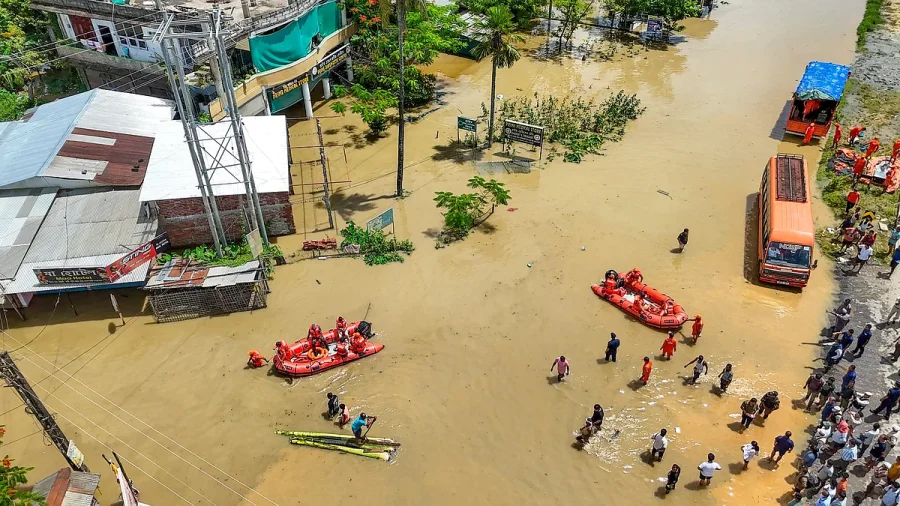
The flood situation in Assam has taken a grim turn, with the death toll climbing to 47 after six more people lost their lives in the past 24 hours. The number of affected residents has surged past 7.21 lakh, spreading distress across 11 districts as relentless waters continue to submerge villages and farmlands.
Six More Lives Lost in 24 Hours: Sivasagar and Charaideo Hit Hardest
According to the Assam State Disaster Management Authority (ASDMA), four of the latest fatalities were reported from Sivasagar district, while two occurred in neighbouring Charaideo. The deaths underscore the escalating danger as floodwaters show no signs of receding.
Why This Matters: A Crisis Deepening by the Hour
For the lakhs of families stranded in waterlogged homes, each passing day brings fresh anxiety. The sharp rise in affected numbers—from 6.43 lakh across 10 districts on Wednesday to over 7.21 lakh across 37 revenue circles and 883 villages on Thursday—signals a rapidly worsening humanitarian emergency. Access to clean water, food, and medical aid is becoming critical.
How the Flood Situation Unfolded: A Timeline of Rising Waters
The current wave of flooding began with heavy monsoon rains over the past week, causing major rivers like the Brahmaputra and its tributaries to swell beyond danger marks. By Wednesday, 10 districts were affected. Within 24 hours, the crisis expanded to 11 districts, with Sivasagar emerging as the epicentre. The ASDMA has been issuing regular bulletins as water levels continue to rise.
Who Is Affected: The Human Toll Across Assam's Districts
Sivasagar remains the worst-affected district, with around 3.75 lakh people impacted—nearly half of the total affected population. Charaideo follows closely, with nearly 1.86 lakh residents displaced or stranded. Jorhat accounts for another 1.15 lakh affected individuals. Thousands of families have lost homes, livestock, and standing crops, pushing many into a desperate search for shelter and essentials.
Official Response: ASDMA Reports and Relief Efforts Underway
The Assam State Disaster Management Authority has confirmed the latest casualties and is coordinating relief operations. Rescue teams, including the National Disaster Response Force (NDRF), have been deployed to the worst-hit areas. Relief camps and distribution centres are being set up, though access remains challenging in fully submerged villages. Officials have urged residents in low-lying areas to move to safer ground.
What the Rising Numbers Mean: A Deeper Look at the Crisis
The jump from 6.43 lakh to 7.21 lakh affected in just one day reflects not only the spread of floodwaters but also the vulnerability of Assam's riverine geography. Many villages are cut off, making accurate assessment difficult. The ASDMA's data suggests that the situation could worsen if rainfall continues, as forecast by the India Meteorological Department.
Confirmed Facts vs What Remains Unclear
Confirmed: 47 deaths, six in the last 24 hours; 7.21 lakh affected across 11 districts; Sivasagar, Charaideo, and Jorhat are the worst-hit. Unclear: The full extent of damage to infrastructure, the number of people still stranded without access to relief, and whether water levels will recede in the coming days. Speculation about further casualties remains unverified.
Risks and Balanced View: The Challenges Ahead
While relief efforts are underway, the scale of the disaster poses significant challenges. Many affected areas remain inaccessible by road, delaying aid delivery. There are concerns about waterborne diseases as floodwaters stagnate. Critics have pointed to the need for better long-term flood management infrastructure, though the immediate focus remains on saving lives and providing emergency relief.
Wider Pattern: Assam's Recurring Flood Crisis
Assam has faced devastating floods almost every monsoon season, but the intensity and frequency have increased in recent years. Experts attribute this to a combination of climate change, deforestation, and river siltation. This year's toll of 47 deaths and over 7 lakh affected is a stark reminder of the state's vulnerability and the urgent need for sustainable flood mitigation strategies.
Practical Guidance for Affected Residents
Residents in flood-affected areas should move to higher ground or designated relief camps immediately. Avoid walking or driving through floodwaters, as they may be contaminated or hide submerged hazards. Keep emergency contact numbers handy, including the ASDMA helpline and local disaster management offices. Boil drinking water or use purification tablets to prevent waterborne illnesses.
Future Outlook: What Could Happen Next
With monsoon rains expected to continue, water levels in major rivers may remain high for several more days. The ASDMA is likely to expand relief operations as more areas become accessible. The death toll may rise as rescue teams reach previously cut-off villages. Long-term recovery will require significant government and humanitarian support.
Our Take
The Assam flood crisis is not just a seasonal tragedy—it is a recurring humanitarian emergency that demands sustained attention and systemic solutions. While the immediate priority is saving lives and providing relief, the rising toll of 47 deaths and over 7 lakh affected underscores the need for better early warning systems, resilient infrastructure, and climate adaptation measures. Every life lost is a reminder of the gap between preparedness and disaster.
Frequently Asked Questions
What is the current Assam flood death toll?
The Assam flood death toll has climbed to 47 as of Thursday, with six more deaths reported in the last 24 hours, according to the Assam State Disaster Management Authority.
How many people are affected by the Assam floods?
Over 7.21 lakh people are affected across 11 districts, 37 revenue circles, and 883 villages in Assam.
Which districts are worst hit by the Assam floods?
Sivasagar is the worst-affected district with around 3.75 lakh people impacted, followed by Charaideo (1.86 lakh) and Jorhat (1.15 lakh).
What should people do if they are in a flood-affected area in Assam?
Move to higher ground or designated relief camps, avoid floodwaters, keep emergency contacts handy, and boil drinking water to prevent disease.