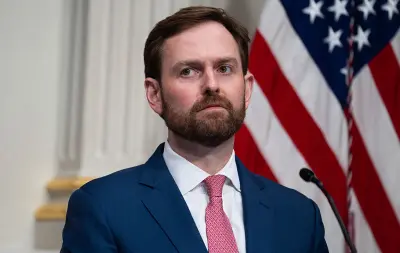
The executive who led Apple's most ambitious — and most debated — hardware project in years is walking out the door. Paul Meade, the Apple vice president responsible for the Vision Pro headset and the company's upcoming smart glasses, is leaving to join OpenAI's hardware team, according to a report from Bloomberg's Mark Gurman. The move, expected to be finalized within days, marks one of the highest-profile departures from Apple's hardware division in recent memory.
Who is Paul Meade and why his exit matters
Meade wasn't just any executive. He oversaw the development of the Vision Pro, Apple's $3,499 mixed-reality headset that launched to mixed reviews and modest sales. More critically, he also led the team working on Apple's rumored AI-powered smart glasses — a product many analysts believe could be Apple's next major computing platform. Losing the person who held both portfolios simultaneously is a significant blow to Apple's spatial computing strategy.
What OpenAI gains with this hire
For OpenAI, Meade's arrival is a clear signal of intent. The company behind ChatGPT has been quietly building a hardware division, reportedly exploring devices that could integrate its AI models in new form factors. Meade brings deep experience in shipping complex consumer hardware at scale — something OpenAI currently lacks. His expertise in AR, VR, and wearable computing could accelerate OpenAI's efforts to create AI-native hardware, potentially competing with Apple, Meta, and Google in the emerging spatial computing market.
Timeline of a talent drain
Meade's departure is not an isolated event. Apple has seen several key executives leave for AI-focused companies in recent years. In 2024, Apple's former head of machine learning, Ali Farhadi, joined an AI startup. Other engineers and managers have moved to OpenAI, Google DeepMind, and Anthropic. The pattern suggests Apple is struggling to retain top talent in the AI and hardware space, even as it invests heavily in its own AI initiatives like Apple Intelligence.
What this means for Apple's smart glasses
The most immediate concern for Apple watchers is the fate of the company's smart glasses project. Meade was reportedly the driving force behind the development of AI-powered glasses that could overlay information onto the real world — a product category that Meta has already entered with its Ray-Ban Meta glasses. Without Meade, Apple's glasses timeline could slip, or the project could lose strategic direction. Apple has not commented on the status of the glasses, but internal sources suggest the project was still in early development.
Apple's official silence and market reaction
Neither Apple nor OpenAI have issued statements about Meade's move. Apple typically does not comment on individual departures. However, the news has already generated discussion among analysts and investors. Some see it as a sign that Apple's hardware leadership is being poached by AI companies offering more cutting-edge work. Others argue that Apple's deep bench means the company can absorb the loss without major disruption.
Why this departure is different from others
Unlike previous executive exits, Meade's move is notable because he is going directly to a company that could become a competitor in hardware. OpenAI has no consumer hardware products yet, but its ambitions are clear. If OpenAI successfully launches a device powered by its AI models, it could challenge Apple's ecosystem in ways that traditional smartphone competitors have not. Meade's knowledge of Apple's product roadmap and supply chain could give OpenAI a significant head start.
Confirmed facts vs what remains unclear
Confirmed: Paul Meade is leaving Apple for OpenAI's hardware team, per Bloomberg's reporting. He oversaw Vision Pro and smart glasses development. His departure is expected within the next week.
Unclear: What specific role Meade will hold at OpenAI. Whether Apple has a successor lined up. The exact timeline for Apple's smart glasses project. Whether Meade's departure will delay any specific product launch. OpenAI has not confirmed the hire publicly.
Apple's moat in spatial computing
Despite losing Meade, Apple retains significant advantages in spatial computing. The company has thousands of engineers working on AR and VR technologies. Its chip design capabilities — particularly the R1 and M-series processors — give it a hardware edge that competitors struggle to match. Apple also has a vast ecosystem of developers, apps, and services that can be leveraged for spatial computing experiences. The company's brand and retail presence also provide distribution advantages that OpenAI cannot easily replicate.
Risks and balanced view
Critics argue that Apple's Vision Pro strategy has been flawed from the start. The headset's high price, limited use cases, and bulky design have resulted in weak sales. Some analysts believe Apple should have focused on lighter, more affordable smart glasses instead. Meade's departure could be an opportunity for Apple to rethink its approach. On the other hand, losing a key executive mid-project could create uncertainty and slow momentum. OpenAI, meanwhile, faces its own challenges: building hardware is notoriously difficult, and the company has no track record in consumer devices.
Wider trend: AI companies poaching hardware talent
Meade's move is part of a broader pattern. AI companies are aggressively hiring hardware executives from Apple, Google, and Meta as they race to build devices that can run AI models locally. OpenAI, Google DeepMind, and Anthropic have all poached senior hardware leaders in the past year. The trend reflects a belief that the next frontier of AI competition will be in hardware — not just software. Whoever builds the best AI-native device could define how billions of people interact with artificial intelligence.
What Apple users and investors should watch
For Apple users, the immediate impact is minimal. The Vision Pro will continue to receive software updates, and Apple's broader product lineup remains unaffected. However, if Apple's smart glasses project is delayed or scaled back, it could mean waiting longer for a more accessible spatial computing device. For investors, the key question is whether Apple can retain its hardware talent and execute on its long-term vision. Watch for Apple's next earnings call for any hints about leadership changes or product roadmap adjustments.
Future outlook
Meade's move to OpenAI could accelerate the timeline for AI-powered hardware from the ChatGPT maker. If OpenAI launches a device within the next two years, it will likely bear some imprint of Meade's experience. For Apple, the challenge is to find a replacement who can maintain momentum on both the Vision Pro and smart glasses projects. The company may promote from within or recruit externally. Either way, the spatial computing race just got more interesting — and more competitive.
Our Take
This departure is more than a single executive move. It reflects a fundamental shift in the tech industry's center of gravity. For years, Apple was the destination for hardware talent. Now, AI companies are becoming the new magnets. Meade's decision to leave for OpenAI suggests he believes the most exciting work in hardware is happening at the intersection of AI and devices — not in incremental improvements to existing product lines. Apple can absorb this loss, but the signal it sends to other hardware leaders is unmistakable: if you want to build the future, you might need to leave Cupertino.
Frequently Asked Questions
Who is Paul Meade and what did he do at Apple?
Paul Meade was an Apple vice president responsible for the Vision Pro headset and the development of Apple's rumored AI-powered smart glasses. He oversaw the hardware engineering and product strategy for Apple's spatial computing efforts.
Why is Paul Meade leaving Apple for OpenAI?
According to Bloomberg's Mark Gurman, Meade is joining OpenAI's hardware team. The move likely reflects OpenAI's ambition to build AI-native consumer devices and Meade's interest in working on next-generation hardware at the intersection of AI and physical products.
What does this mean for Apple's Vision Pro and smart glasses?
In the short term, the Vision Pro will continue as planned. However, Meade's departure could delay or reshape Apple's smart glasses project, which was still in early development. Apple will need to find a replacement to lead these efforts.
Is OpenAI building its own hardware device?
OpenAI has been quietly building a hardware team, though it has not announced any specific product. The company has explored devices that could integrate its AI models, potentially including wearables, smart glasses, or other form factors. Meade's hire suggests serious hardware ambitions.