For years, Apple has built its brand on a simple promise: your data stays yours. Whether it’s a photo, a message, or a voice command to Siri, the company has insisted that what happens on your iPhone stays on your iPhone — or, at most, on Apple’s own heavily encrypted servers. That promise is now being tested in a way that would have seemed unthinkable just a few years ago.
Why Apple’s AI Is Moving to Google’s Servers
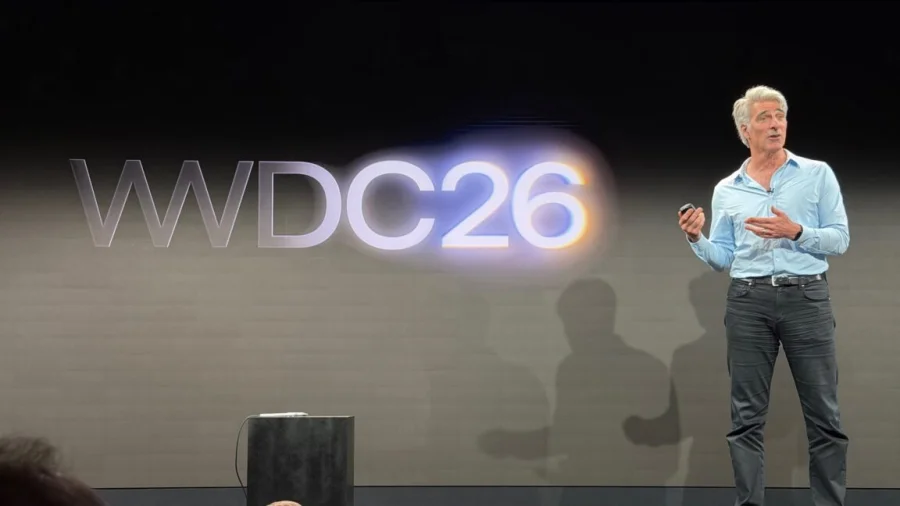
At its Worldwide Developers Conference this week, Apple confirmed that its long-awaited Siri upgrade — now branded as “Siri AI” — will rely on Google’s Gemini language models. To run those models, Apple is using Nvidia hardware installed inside Google data centers. The shift is driven by the sheer computational power needed for advanced AI tasks, which far exceeds what Apple’s own server infrastructure or on-device chips can handle.
The Privacy Promise That Hasn’t Changed
Apple is acutely aware of the trust issue. In a briefing with reporters, the company emphasized that its privacy architecture — called Private Cloud Compute — applies equally whether the AI runs on Apple’s own servers or on Google’s. The system uses end-to-end encryption, meaning data is scrambled before it leaves your device and can only be unscrambled by the specific AI model processing your request. Apple says neither Google, Nvidia, nor any Apple employee can access the raw data.
How Private Cloud Compute Actually Works
Private Cloud Compute was introduced last year as a way to extend Apple’s on-device privacy guarantees to cloud-based AI. The system creates a secure, ephemeral “enclave” for each query. Data is processed, the response is sent back, and the enclave is destroyed — with no logs, no storage, and no way for Apple or its partners to peek inside. Apple has also invited independent security researchers to audit the system, a move designed to build external credibility.
What This Means for Your Siri Queries
For the average iPhone user, the experience should feel seamless. When you ask Siri a complex question — say, “Summarize my emails from last week and draft a reply to the one about the project deadline” — the request may be routed to Google’s servers. But Apple insists you won’t notice any difference in privacy. The company says it has designed the system so that even if a server is compromised, the data remains unreadable. The key question is whether users will believe that.
Apple’s Response to Skepticism
Apple executives acknowledged the sensitivity of the move during WWDC. “We understand that trust is earned, not assumed,” said a senior Apple privacy engineer during a keynote session. “That’s why we’ve built Private Cloud Compute to be verifiable — not just by us, but by the security community.” The company has published a white paper detailing the cryptographic protocols and has pledged to release source code for key components.
The Technical Challenge: Nvidia Hardware in Google Data Centers
Using Nvidia hardware is a notable departure for Apple, which has long favored its own Apple silicon chips for AI processing. Nvidia’s GPUs are the industry standard for training and running large language models, but they also introduce a new layer of complexity. Apple says it has worked with Nvidia to ensure that the hardware itself cannot access user data — the encryption keys are held only by Apple, and the processing happens inside a trusted execution environment.
Confirmed Facts vs What Remains Unclear
What is confirmed: Apple is using Google’s Gemini models on Nvidia hardware in Google data centers for Siri AI. Apple’s Private Cloud Compute system encrypts data end-to-end. Apple has invited third-party audits. What remains unclear: whether any performance or latency differences will emerge compared to on-device processing. Also unclear is how regulators in Europe or the US will view this arrangement, given Apple’s previous claims that it avoids third-party cloud providers for privacy reasons.
Why Apple’s Moat Still Matters
Apple’s competitive advantage has never been just hardware — it’s the ecosystem of trust. By maintaining control over the user experience and privacy narrative, Apple differentiates itself from Google, Amazon, and Microsoft, which have faced repeated scandals over data handling. Even as it relies on Google’s infrastructure, Apple is betting that its cryptographic safeguards and transparency efforts will preserve that moat. If successful, it could set a new standard for how big tech companies use third-party AI without compromising privacy.
Risks and Balanced View
Not everyone is convinced. Privacy advocates point out that any third-party dependency introduces risk — whether from a software vulnerability, a legal demand for data, or a change in corporate policy. Critics also note that Apple’s promise of “no logs” is difficult to verify independently without continuous, real-time auditing. Meanwhile, competitors like Google and Samsung are likely to highlight the irony of Apple using Google’s servers after years of criticizing rivals’ cloud-based AI.
The Bigger Pattern: Big Tech’s AI Infrastructure Race
Apple’s move is part of a larger trend. OpenAI runs on Microsoft’s Azure, Google’s Gemini powers Samsung’s Galaxy AI, and Amazon’s Alexa is increasingly cloud-dependent. The computational demands of generative AI are forcing even the most privacy-conscious companies to partner with cloud giants. The question is no longer whether your data leaves your device — it’s how well it’s protected when it does.
What iPhone Users Should Know Now
If you’re an iPhone user, here’s what matters: Siri AI will be opt-in for complex queries. Simple requests — like setting a timer or checking the weather — will still be processed on-device. For advanced features, you’ll see a subtle indicator when your request is being handled by Private Cloud Compute. Apple recommends keeping your device updated to the latest iOS version to ensure you have the most recent security patches. If you’re concerned, you can disable cloud-based AI features in Settings under “Siri & Search.”
What Comes Next
Siri AI is expected to launch with iOS 19 in September, with a developer beta available now. Apple has said it will publish regular transparency reports detailing how many queries were processed via Private Cloud Compute and any security incidents. The company is also in talks with European regulators to ensure compliance with the Digital Markets Act, which could impose additional requirements on how third-party AI is used.
Our Take
Apple is walking a tightrope. It needs the power of Google’s infrastructure to deliver a competitive AI assistant, but it cannot afford to alienate the privacy-conscious users who form its core customer base. The technical safeguards Apple has described are impressive — but trust is not built on white papers alone. The real test will come when independent auditors publish their findings, and when users decide whether the convenience of a smarter Siri is worth the leap of faith. For now, Apple has done something rare: it has acknowledged a fundamental shift in how its technology works, while insisting its values remain the same. Whether that’s enough will depend on how well the company’s promises hold up under scrutiny.
Frequently Asked Questions
Does Apple’s AI send my data to Google?
Yes, for complex Siri queries, your request may be processed on Google’s servers using Nvidia hardware. However, Apple says the data is encrypted end-to-end and cannot be read by Google, Nvidia, or Apple employees.
Is Siri AI less private than before?
Apple claims it is not. The same Private Cloud Compute system that protects data on Apple’s own servers applies to Google’s servers. Independent security audits are planned to verify this.
Can I opt out of Apple’s cloud-based AI?
Yes. Simple Siri requests will still be processed on your device. For advanced AI features, you can disable cloud processing in Settings under “Siri & Search.”
Why is Apple using Google’s servers instead of its own?
Advanced AI models like Google’s Gemini require massive computational power that Apple’s own server infrastructure cannot yet provide. Using Nvidia hardware in Google data centers is a practical solution to deliver these features.