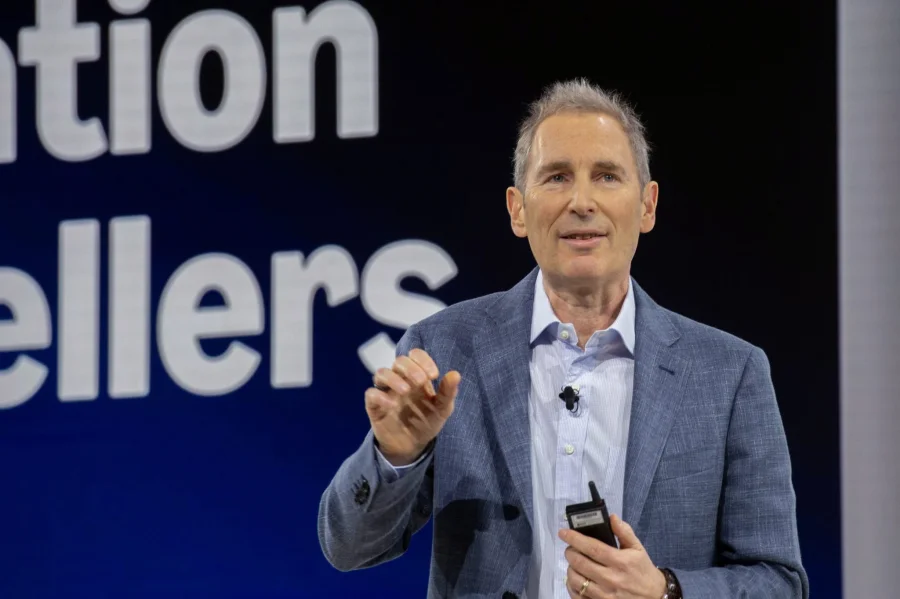
Amazon is about to spend more money in a single year than most countries spend on their entire national budgets—and its own CEO admits it still won't be enough. Andy Jassy's blunt confession came alongside earnings that sent the company's stock soaring more than 9% in after-hours trading, creating a rare moment where record investment and persistent shortage exist side by side.
The $220 Billion Reality Check for AI Infrastructure
Amazon's capital expenditure plan for 2025 stands at $220 billion, a figure that dwarfs what most rivals are committing. Yet Jassy's message was clear: the AI gold rush has created demand so voracious that even this unprecedented spending spree won't close the gap.
The bulk of this investment is flowing into data centers, custom AI chips, and networking infrastructure to power Amazon Web Services. Every dollar is aimed at one goal—capturing the exploding demand for cloud-based AI computing that shows no signs of slowing.
Why AWS Growth Suddenly Looks Like a Rocket Again
The numbers explain the urgency. AWS generated $42.2 billion in revenue during the second quarter, a 37% jump from $30.9 billion a year earlier. That marks the cloud unit's fastest growth in 18 quarters—more than four years of steady acceleration culminating in this moment.
Jassy highlighted that this represents the fifth consecutive quarter of accelerating growth. The cloud business added more than $4.6 billion in revenue quarter over quarter, a pace that would make many standalone tech companies envious as a full-year result.
Inside the Numbers: Margins and Backlog Tell the Real Story
AWS operating income hit $16.6 billion, up 64% from $10.2 billion in the same period last year. The operating margin expanded to 39.4%, up from 32.9%—proof that scale and pricing power are working in Amazon's favor even as it invests heavily.
Perhaps the most telling metric is the backlog: $496 billion in customer agreements representing future revenue. This isn't speculative demand—it's contracted, committed spending from enterprises and AI startups that have already signed on the dotted line.
What the Capacity Shortage Means for Everyday Businesses
For startups and enterprises relying on AWS, the capacity crunch translates into longer wait times for GPU instances and AI compute resources. Companies building AI products face a simple reality: even with Amazon's massive spending, getting access to the most powerful chips may require patience or prioritization.
This shortage also explains why Amazon is developing its own custom AI chips—Trainium and Inferentia—to supplement what it can source from Nvidia and other suppliers. Vertical integration isn't just a cost play; it's a survival strategy in a supply-constrained market.
Andy Jassy's Strategy: Spend Ahead of the Curve
Jassy's approach mirrors a classic Amazon playbook: invest aggressively in infrastructure before demand fully materializes, then let the scale advantage compound. The risk is overbuilding during a cyclical downturn, but the CEO is betting that AI demand is structural, not cyclical.
His public acknowledgment that $220 billion won't be enough serves a dual purpose—managing investor expectations while signaling to customers that Amazon is doing everything possible to expand capacity.
Wall Street's Verdict: Confidence Despite the Shortfall
Investors responded enthusiastically, pushing Amazon's stock up more than 9% in after-hours trading. The market's interpretation is clear: accelerating AWS growth and expanding margins outweigh concerns about the capacity gap.
Analysts view the backlog growth as the strongest signal—$496 billion in committed future revenue provides rare visibility into the company's growth trajectory for years ahead.
Confirmed Facts vs What Remains Unclear
Confirmed: AWS Q2 revenue of $42.2 billion, up 37% year-over-year. Operating income of $16.6 billion on a 39.4% margin. Backlog of $496 billion. Capital expenditure plan of $220 billion for 2025.
Unclear: The exact breakdown of how the $220 billion will be allocated across data centers, chips, and other infrastructure. Whether the capacity shortfall will ease by year-end or persist into 2026. The specific timeline for when Amazon's custom AI chips will meaningfully reduce dependence on external suppliers.
Amazon's Moat: Why Scale Creates an Unfair Advantage
Amazon's position isn't just about having the most data centers—it's about the ecosystem. AWS offers the broadest suite of cloud services, from basic storage to cutting-edge AI tools, creating switching costs that keep customers locked in.
The company's custom silicon development adds another layer. By designing its own AI chips, Amazon can optimize performance for its specific workloads and offer price-performance advantages that pure Nvidia-based competitors can't match.
The Risks Behind the Massive Bet
Not everyone is convinced the spending spree is wise. Critics point to the risk of overcapacity if AI adoption slows or if competitors like Microsoft Azure and Google Cloud capture more market share.
There's also the question of returns. Building AI infrastructure requires enormous upfront costs, and if the demand projections prove too optimistic, Amazon could face years of underutilized assets and compressed margins.
The Broader AI Infrastructure Arms Race
Amazon isn't alone in this race. Microsoft, Google, and Meta are all committing tens of billions to AI infrastructure, creating a collective spending wave that's reshaping the technology industry's capital allocation priorities.
This arms race has ripple effects across the supply chain—from chip manufacturers like Nvidia to data center builders and energy providers. The scale of investment is so large that it's becoming a macroeconomic factor in its own right.
What Businesses Should Do Now
For companies relying on AWS, the practical takeaway is to plan for capacity constraints. Reserve compute resources early, explore Amazon's custom chip options, and maintain flexibility to work across multiple cloud providers if needed.
For investors, the key metric to watch is whether AWS growth continues accelerating and whether margins hold as the company scales. The backlog provides confidence, but execution will determine the outcome.
What Happens Next in Amazon's AI Journey
The coming quarters will reveal whether Amazon's capacity investments start closing the demand gap. Jassy's team is racing to bring new data centers online, and the company's custom chip roadmap will play an increasingly important role.
If the current trajectory holds, AWS could be on track to become a $200 billion annual revenue business within the next few years—a scale that would cement Amazon's position as the dominant force in cloud computing.
Our Take
Amazon's $220 billion commitment represents a defining moment in the AI era. The fact that even this staggering sum won't fully satisfy demand tells us something profound about the scale of the AI transformation underway.
Jassy's candor about the capacity shortfall is refreshing—it signals that Amazon is prioritizing long-term market position over short-term profit optics. The bet is bold, the risks are real, but the potential payoff is historic.
Frequently Asked Questions
Why is Amazon spending $220 billion this year?
Amazon is investing $220 billion in capital expenditures, primarily for AI infrastructure including data centers, custom chips, and networking. CEO Andy Jassy says this record spending still won't be enough to meet surging demand for AI computing power from businesses and startups.
How fast is AWS growing right now?
AWS revenue grew 37% year-over-year to $42.2 billion in Q2 2025, marking the fastest growth in 18 quarters. Operating income rose 64% to $16.6 billion with margins expanding to 39.4%.
What is AWS's backlog and why does it matter?
The backlog represents $496 billion in customer agreements for future revenue. It shows committed, contracted demand from enterprises and AI companies, providing strong visibility into AWS's growth trajectory for years ahead.
Will Amazon's capacity shortage affect customers?
Yes, businesses may face longer wait times for GPU instances and AI compute resources. Amazon recommends customers reserve capacity early and consider its custom Trainium and Inferentia chips as alternatives to Nvidia-based options.