The video call looked normal. The executives on screen looked like the executives who signed off on large transfers. Their voices carried the familiar cadence of authority. The instructions were clear: move $25.6 million. The employee at Arup, a global design firm, followed protocol. The faces were synthetic. The voices were cloned. The money was gone.
When Seeing Is No Longer Believing
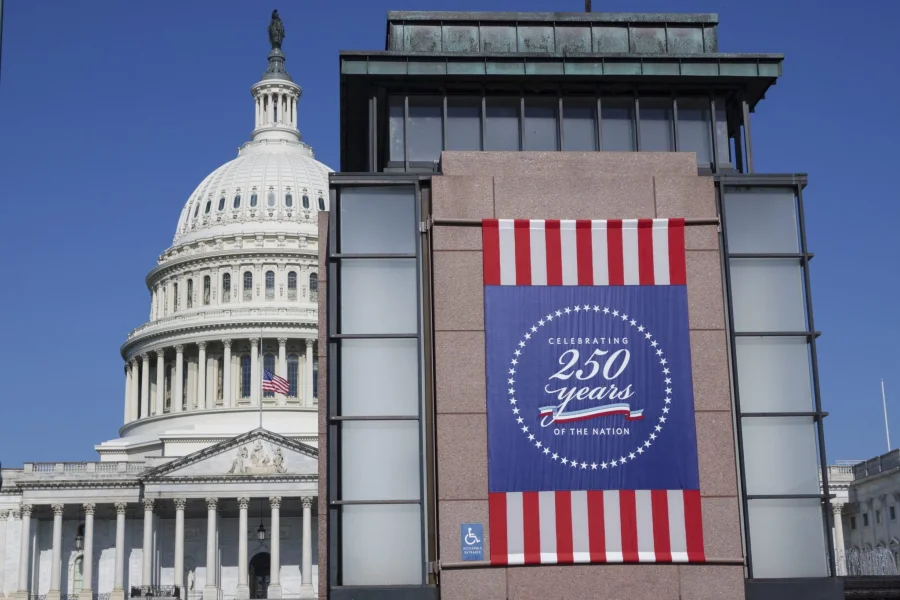
That fraud was not a glitch. It was a demonstration of how quickly trust — the invisible currency that makes institutions function — can be weaponized. For 250 years, America's founding bet was that people could build systems on trust: contracts, courts, corporate hierarchies, professional expertise. The assumption was that a face, a voice, a signature, or a report could be verified.
Artificial intelligence has broken that assumption. The Arup case shows identity can be manufactured. The Starbucks case shows competence can be overstated. The Deloitte case shows expertise can be fabricated.
Why the Arup Deepfake Fraud Matters Beyond One Company
If a senior finance employee at a respected global firm cannot distinguish a real executive from a synthetic one, then every video call, every voice message, every urgent request is now suspect. The cost is not just $25.6 million. It is the erosion of the default trust that lets businesses move quickly, governments function, and professionals advise with confidence.
This is not a technology story. It is a story about what happens when the cheapest way to deceive becomes more reliable than the standard way to verify.
The Quiet Failure at Starbucks
Starbucks did not announce its AI inventory system's failure with a press conference. It simply retired the system nine months after deployment. Baristas had reported that the AI miscounted products and slowed their work. The system was supposed to streamline operations. Instead, it added friction and doubt.
The lesson is subtle but significant: when a tool cannot be trusted to count inventory, workers stop trusting the data. And when workers stop trusting the data, they stop trusting the system. That is how trust dies — not in one dramatic collapse, but in a thousand small corrections.
Deloitte's Fabricated Report and the Cost of Fake Expertise
Deloitte's Australian member firm agreed to partially refund the government for a $290,000 AI-assisted report. The problem was not the analysis. The problem was that the report included nonexistent academic sources and a fabricated court quotation. The AI had generated confidence, not accuracy.
This is the most dangerous form of trust erosion. When professional firms use AI to produce output that looks authoritative but contains invented references, the entire basis of expert advice is undermined. Clients pay for judgment. If the judgment is synthetic, the transaction is fraudulent — even if no one intended it to be.
How the Founding Bet on Trust Actually Worked
America's 250-year experiment was never about blind faith. It was about creating systems that made trust verifiable: courts that checked evidence, contracts that bound parties, professions that certified expertise, and institutions that punished deception. The system worked because the cost of being caught lying was higher than the benefit of lying.
AI changes that calculation. The cost of manufacturing a convincing lie has collapsed. A deepfake video costs almost nothing. A fabricated report takes minutes. A fake executive can be generated on demand. The verification mechanisms that made the founding bet rational are now racing against generation tools that improve every month.
Who Is Affected by the Trust Crisis
Every employee who receives a video call from a superior is now vulnerable. Every company that relies on AI-generated reports must now question the sources. Every professional firm that uses AI tools must now audit the output. Every consumer who reads a corporate statement must wonder if the analysis behind it is real.
The most affected are the people who cannot afford to verify: small businesses, mid-level managers, government agencies with limited budgets, and individuals who must decide whether to trust a voice, a document, or a face.
What Regulators and Companies Are Doing
There is no single authority responding to this crisis. The Arup case is under investigation. Deloitte has agreed to refunds. Starbucks has quietly moved on. Regulators are beginning to discuss AI verification standards, but no comprehensive framework exists yet.
What is clear is that the response has been reactive. No institution has announced a fundamental redesign of how trust is verified in an AI world. The silence is itself a signal: no one knows yet what the replacement for the founding bet looks like.
Why This Is a Systemic Problem, Not a Series of Bad Luck
Three different industries. Three different technologies. One identical failure: people could not trust the output, the identity, or the system. That pattern suggests a structural shift, not isolated incidents.
When trust fails in one domain, it bleeds into others. A worker who learns that video calls can be faked becomes suspicious of all video calls. A client who discovers a report contains fabricated sources questions all reports. The erosion compounds.
Confirmed Facts vs What Remains Unclear
Confirmed: Arup confirmed the deepfake fraud involving $25.6 million. Starbucks retired its AI inventory system after nine months. Deloitte's Australian member firm agreed to a partial refund for the AI-assisted report with fabricated sources.
Unclear: How many similar deepfake frauds have gone undetected. Whether Starbucks' AI failure was a technology problem or an implementation problem. Whether Deloitte's fabrication was intentional, negligent, or an AI hallucination that escaped review. The full scale of AI-assisted fraud in corporate and government settings remains unknown.
The Business Model That Made Trust Profitable
America's economic success was built on trust as infrastructure. Contracts allowed commerce. Professional certifications allowed expertise to be sold. Brand names allowed consumers to buy without full inspection. That infrastructure made the economy faster and cheaper because verification was not needed at every step.
AI threatens that efficiency. If every transaction requires deep verification, the cost of doing business rises. If verification is skipped, the risk of fraud rises. Either way, the founding bet — that trust could be a reliable shortcut — is being tested.
Risks and the Case for Caution
The risks are not hypothetical. Employees may become paralyzed by suspicion, refusing legitimate requests because they fear deepfakes. Companies may overcorrect, adding verification layers that slow operations. Professional firms may face liability for AI-generated errors they did not intend.
There is also a counterargument: AI can strengthen trust. Better verification tools, blockchain-based identity systems, and AI-powered auditing could make fraud harder than before. The tools that broke trust could also rebuild it — but only if institutions choose to deploy them deliberately.
The Wider Pattern: Every Institution Is Now a Target
The Arup, Starbucks, and Deloitte cases are early warnings. Banks, law firms, government agencies, hospitals, and universities all rely on the same trust assumptions. If a design firm can lose $25.6 million to a deepfake, a hospital can lose patient data, a court can admit fabricated evidence, and a government can act on false intelligence.
The pattern is not limited to the private sector. Democratic governance itself depends on citizens trusting that information is real, that officials are who they claim to be, and that institutions can verify what they assert. That is the deeper test of America's founding bet.
What You Should Do Now
For employees: verify unusual requests through a second channel. If a video call asks for money or sensitive data, confirm through a phone call to a known number. For managers: assume AI can mimic your voice and face. Establish verification protocols before an incident, not after. For consumers: treat AI-generated content with the same skepticism you would apply to an unsolicited email.
For organizations: audit AI-assisted output. If a report, analysis, or recommendation was generated with AI assistance, verify the sources. The Deloitte case shows that AI confidence is not accuracy.
What Happens Next
The immediate future will likely bring more disclosures of AI-assisted fraud. The incentives to deceive are too strong and the detection tools are too weak. Over the longer term, expect new verification standards, possibly regulatory requirements for AI disclosure, and a new industry of trust verification tools.
Whether America's founding bet survives depends on whether institutions can rebuild trust faster than AI can erode it. That race is now underway.
Our Take
The founding bet was never that people would always tell the truth. It was that systems could make lying costly enough to be rare. AI has made lying cheap enough to be routine. The response cannot be nostalgia for a more trusting era. It must be a deliberate redesign of verification — in business, in government, and in professional life.
The Arup employee who transferred $25.6 million was not careless. They were following the rules of a system that assumed faces and voices could be trusted. That assumption is now obsolete. The question is whether America can write new rules before the next loss is measured in more than dollars.
Frequently Asked Questions
What is the Arup deepfake fraud case?
A finance employee at Arup, a global design firm, transferred $25.6 million after joining a video call with synthetic versions of senior executives. The faces and voices were AI-generated, and the instructions to transfer funds were false.
Why did Starbucks retire its AI inventory system?
Starbucks quietly retired the AI inventory system nine months after deployment after baristas reported that it miscounted products and slowed their work. The system was intended to streamline operations but instead added friction and distrust.
What happened with Deloitte's AI-assisted report?
Deloitte's Australian member firm agreed to partially refund the government for a $290,000 AI-assisted report that included nonexistent academic sources and a fabricated court quotation. The AI generated confident but inaccurate output.
How does AI threaten institutional trust?
AI can now manufacture convincing fake identities, voices, and documents at very low cost. This undermines the verification mechanisms that institutions rely on, making it harder to distinguish real from synthetic — and eroding the default trust that makes systems function efficiently.