The world came within hours of witnessing the largest U.S. military operation since World War II. Then, President Donald Trump pulled back — and the reason was not a change of heart in Washington, but a coordinated push from Gulf capitals that have the most to lose if the region erupts.
A Sunday decision that changed the trajectory
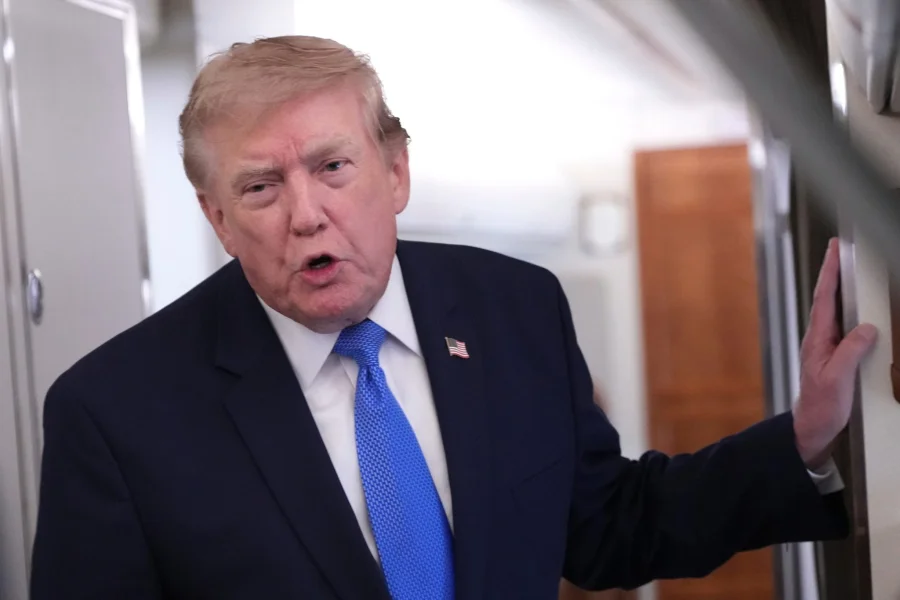
Speaking to reporters aboard Air Force One on Sunday, Trump confirmed he had approved a plan for U.S. forces to strike Iran — an operation he described as "the biggest attack since World War II." The strikes were scheduled to proceed, but the president chose to halt them after direct conversations with key Gulf leaders.
Among those who urged restraint was Saudi Crown Prince Mohammed bin Salman. Trump said he asked the Crown Prince directly: "What would you rather do? Would you rather us do this or not?" The answer, according to the president, was a preference for diplomacy.
Why Gulf allies pushed back on military action
For Qatar, Saudi Arabia, and the UAE, the stakes are existential. These nations sit on some of the world's most critical energy shipping routes, and their economies depend on stability in the Gulf. A full-scale U.S.-Iran conflict would almost certainly disrupt tanker traffic through the Strait of Hormuz — a chokepoint through which roughly 20% of global oil passes.
Analysts note that Gulf leaders have consistently preferred de-escalation over confrontation, even as they share U.S. concerns about Iran's regional behaviour. Their intervention appears to have been decisive in shifting the timeline.
The path to this moment
Tensions between Washington and Tehran have escalated sharply in recent weeks, with both sides trading threats and warnings. The U.S. had positioned military assets in the region, and Iran had responded with its own warnings about closing the Strait of Hormuz if attacked.
The planned strikes were reportedly in response to ongoing Iranian actions that U.S. officials viewed as escalatory. However, the exact trigger for the military plan has not been officially detailed.
What Monday's negotiations could address
Trump confirmed that negotiations with Iran are set to resume Monday afternoon. The scope of these talks has not been publicly detailed, but the core issues are well understood: Iran's nuclear programme, regional military activities, and the future of sanctions.
In parallel, Tehran is continuing separate discussions with Oman regarding the Strait of Hormuz. Oman has historically served as a mediator between Iran and Western powers, and its involvement suggests both sides are exploring a negotiated path on maritime security.
Official statements and what we know
Trump's comments on Air Force One remain the primary source of information. He indicated that unnamed Iranian officials had also requested the cancellation of the strikes — a detail that suggests direct or indirect channels of communication remain open between Washington and Tehran.
The White House has not issued a formal statement beyond the president's remarks. Iranian officials have not yet publicly responded to Trump's announcement.
Reading between the lines
The decision to cancel strikes after receiving input from Gulf allies — and reportedly from Iranian officials — signals that back-channel diplomacy is active. It also suggests that while the military option remains on the table, the administration is willing to test whether negotiations can achieve what pressure alone has not.
Observers note that Trump's framing — describing the plan as massive while simultaneously pulling back — serves multiple purposes. It projects strength to domestic audiences and adversaries, while also creating space for a diplomatic win if talks succeed.
What is confirmed versus what remains unclear
Confirmed: Trump cancelled planned strikes; Gulf leaders urged restraint; negotiations resume Monday afternoon; Iran is talking with Oman about Hormuz.
Unclear: The exact target list for the planned strikes; the specific demands on the table for Monday's talks; the role of unnamed Iranian officials in requesting cancellation; whether Iran's leadership has formally agreed to negotiate.
The strategic stakes for the region
The Strait of Hormuz remains the flashpoint. Any military confrontation would immediately impact global energy prices, shipping insurance rates, and the economies of every Gulf state. This is why Gulf leaders intervened — and why Oman's role as intermediary is significant.
For ordinary citizens across the region, the difference between war and diplomacy is measured in daily life: fuel prices, food costs, travel safety, and the stability of their economies. The cancellation of strikes offers a temporary reprieve, but the underlying tensions remain unresolved.
Risks and the case for caution
Critics of the decision argue that cancelling strikes after announcing them publicly weakens U.S. deterrence. They warn that Iran may interpret the move as hesitation and become more emboldened in its regional activities.
Supporters of the diplomatic path counter that a full-scale war would be catastrophic for all parties, and that every opportunity for negotiation should be exhausted before military action is considered. The Gulf allies' preference for diplomacy aligns with this view.
A pattern of brinkmanship and last-minute reprieves
This is not the first time the U.S. and Iran have approached the edge of conflict only to pull back. Previous administrations have engaged in similar cycles of escalation and negotiation. What is notable this time is the visible role of Gulf intermediaries in shaping U.S. decisions.
The pattern suggests that while the rhetoric is aggressive, both Washington and Tehran recognise the catastrophic costs of a full-scale war. The question is whether this recognition can translate into a sustainable agreement.
What should observers watch for now
For those tracking the situation, Monday afternoon's talks will be the first signal of whether this diplomatic window is real. Key indicators include: whether Iran sends senior negotiators, whether any preconditions are dropped, and whether both sides agree to a framework for further discussions.
For investors and businesses with exposure to the region, the immediate priority is monitoring oil prices and shipping insurance rates, which will react quickly to any signs of progress or breakdown.
What happens next
The next 48 hours will be critical. If Monday's talks produce a tangible outcome — even a commitment to continue dialogue — the military option may be shelved indefinitely. If talks stall, the risk of strikes returning to the table increases significantly.
Trump has made clear that the military plan remains ready. The decision to use it now rests on whether diplomacy can deliver what the president has demanded from Iran.
Our Take
This moment reveals the fragile mechanics of modern crisis management. A president with the authority to launch a massive military operation chose to pause — not because of domestic pressure, but because regional allies and even adversaries signalled a willingness to talk. That is a meaningful development, but it is not a resolution.
The real test comes Monday. If negotiations resume in good faith, this could be the beginning of a genuine diplomatic track. If they collapse, the world will have witnessed a brief pause before a conflict that no one in the region actually wants.
Frequently Asked Questions
Why did Trump cancel the strikes on Iran?
Trump cancelled the planned strikes after direct appeals from Gulf allies — Qatar, Saudi Arabia, and the UAE — and reportedly from unnamed Iranian officials. He decided to give diplomacy more time to work.
When will negotiations between the U.S. and Iran resume?
Trump stated that negotiations are set to resume Monday afternoon. The specific format and location of these talks have not been publicly confirmed.
What is the role of Oman in the Iran talks?
Iran is continuing separate discussions with Oman regarding the Strait of Hormuz. Oman has historically served as a mediator between Iran and Western nations on maritime and security issues.
Could the U.S. still strike Iran?
Yes. Trump confirmed that a military plan remains in place and described it as potentially "the biggest attack since World War II." The plan has been paused, not cancelled, pending the outcome of diplomatic efforts.