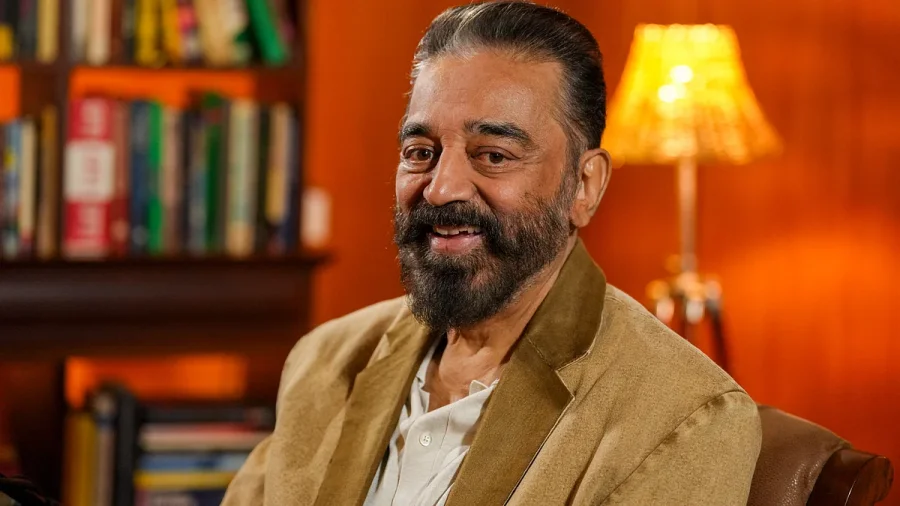
What happens when global wars start hitting your kitchen budget and your daily commute? Actor-politician Kamal Haasan has a blunt answer: it’s time for the nation’s leaders to sit together, leave politics aside, and face the storm head-on. In a powerful video message that’s already sparking conversations across social media, the Makkal Needhi Maiam chief has directly appealed to Prime Minister Narendra Modi to convene a national summit of all chief ministers to tackle what he calls an “emerging energy crisis.”
The appeal isn’t just political rhetoric. It comes at a moment when international conflicts are sending shockwaves through India’s economy — pushing up crude oil prices, disrupting maritime trade routes, and making everyday essentials like food, fuel, and fertilisers more expensive for ordinary citizens.
Kamal Haasan’s Direct Appeal to PM Modi on the Energy Crisis
In a video posted on his official X (formerly Twitter) account on Friday, Kamal Haasan didn’t mince words. He said the growing geopolitical tensions — particularly the escalating situation in West Asia — were no longer distant news headlines. They were directly impacting the lives of millions of Indians.
“International conflicts are increasingly affecting everyday life in India. Crude oil prices are rising. Maritime trade routes are being disrupted. The cost of essential goods, household energy, and agricultural inputs like fertilisers is going up,” Haasan said in the video.
His core demand is straightforward: the Prime Minister should call a national meeting of all chief ministers to discuss a coordinated response. Haasan believes that such a crisis requires a unified national strategy, not fragmented state-level actions.
Why This Matters Right Now
This isn’t just another political statement. The energy crisis Haasan is warning about is already visible in real-time. Fuel prices have been creeping up. The cost of LPG cylinders, electricity tariffs, and even the price of vegetables — which depend on transport fuel — are all feeling the pressure.
For the average Indian family, this means tighter monthly budgets. For farmers, it means higher costs for running pumps and buying fertilisers. For small businesses, it means shrinking margins. And for the economy as a whole, rising energy costs can fuel inflation, slow down growth, and create uncertainty.
Haasan’s call for a national summit is essentially a demand for proactive leadership — a recognition that waiting for the crisis to worsen would be a costly mistake.
How the Appeal Unfolded
The video message was released on Friday, April 11, 2025, and quickly gained traction on social media platforms. In it, Haasan struck a tone that was both urgent and statesman-like. He didn’t just criticise — he offered a constructive proposal.
“At moments of national crisis, our response must rise above party politics,” Haasan said, invoking former Prime Minister Atal Bihari Vajpayee’s famous remark: “Governments will come and go, but the nation shall remain.”
This reference was deliberate. By quoting Vajpayee — a respected figure across party lines — Haasan was signalling that this is not about political point-scoring. It’s about national interest.
He also backed PM Modi’s earlier call for energy conservation, suggesting that the government’s appeal to citizens to save energy is a step in the right direction — but it needs to be backed by a coordinated policy response at the highest level.
Who Is Affected and What Officials Are Saying
The impact of the energy crisis is not limited to one state or one sector. It touches every Indian who uses electricity, drives a vehicle, cooks with gas, or buys food that was transported by truck.
Haasan’s appeal is particularly significant because it comes from a regional party leader who has often positioned himself as a voice of reason and non-partisan governance. By asking for a CMs’ summit, he is essentially calling for a federal response — one that brings together states with different resources, challenges, and political colours.
While there has been no official response from the Prime Minister’s Office or the central government yet, the video has generated widespread discussion. Political analysts are watching closely to see if this appeal gains traction among other chief ministers, especially those from states that are heavily dependent on imported energy.
What We Know So Far — and What Remains Unclear
What we know:
- Kamal Haasan has formally appealed to PM Modi to convene a national summit of all chief ministers.
- The appeal is driven by rising crude oil prices and disruptions in global trade due to geopolitical tensions, particularly in West Asia.
- Haasan has backed the government’s energy conservation call but wants a more coordinated policy response.
- The video was posted on his official X account and has received significant attention.
What remains unclear:
- Whether PM Modi or the central government will respond to this appeal.
- Whether other chief ministers will support the call for a national summit.
- What specific policy measures Haasan expects the summit to discuss or implement.
- The exact timeline for any potential government action on energy prices.
Risks, Concerns, and the Balanced View
While Haasan’s appeal has been widely praised for its constructive tone, there are practical challenges. Convening a national summit of all chief ministers is a significant logistical and political exercise. It requires consensus on the agenda, timing, and expected outcomes.
Critics might argue that the central government already has mechanisms to address energy pricing — through the Petroleum Ministry, the Finance Ministry, and periodic reviews. However, supporters of Haasan’s proposal would counter that a coordinated federal response is more effective than isolated state-level measures, especially when the crisis is global in nature.
There is also the question of political will. In a highly polarised political environment, getting all chief ministers — from ruling and opposition parties — to agree on a common action plan is easier said than done.
But Haasan’s point is precisely that: national crises demand national unity. Whether the government agrees with his method or not, the underlying concern about energy security is real and growing.
Why Similar Concerns Are Growing Across India
Haasan is not alone in raising the alarm. Economists, industry bodies, and even international agencies have been warning about the impact of global conflicts on India’s energy security. The Russia-Ukraine war, the Israel-Hamas conflict, and tensions in the Red Sea have all contributed to volatility in oil prices and shipping routes.
India imports about 85% of its crude oil requirements. This makes the country highly vulnerable to global price shocks. Every $10 increase in crude oil prices can add about 0.4% to India’s inflation and widen the current account deficit.
For ordinary citizens, this translates into higher petrol and diesel prices, more expensive airfares, and costlier goods. For the government, it means tough choices between cutting taxes (which reduces revenue) or passing on the burden to consumers (which fuels inflation).
Haasan’s call for a national summit is essentially a demand for a more strategic, long-term approach to energy security — one that goes beyond short-term fixes.
“At moments of national crisis, our response must rise above party politics. Governments will come and go, but the nation shall remain.” — Kamal Haasan, quoting Atal Bihari Vajpayee
What Readers, Citizens, and Policymakers Should Know Now
For the average Indian, the immediate takeaway is simple: the energy crisis is real, and it’s affecting your daily life. Whether it’s the price of petrol at the pump, the cost of your monthly LPG cylinder, or the rising electricity bill — global geopolitics is hitting home.
What can you do? Conservation is a start — as PM Modi and now Kamal Haasan have both urged. Switching off unnecessary lights, using public transport, and reducing energy waste can help at an individual level.
But the bigger solution lies in policy. Haasan’s appeal is a reminder that citizens should demand coordinated, non-partisan action from their leaders. If you feel the pinch, let your local representatives know. Public pressure can drive political action.
For policymakers, the message is clear: waiting for the crisis to deepen is not an option. A national summit may not solve everything overnight, but it’s a step towards a unified strategy — and that’s better than fragmented, reactive measures.
What Could Happen Next
The ball is now in the Prime Minister’s court. If PM Modi responds positively to Haasan’s appeal, it could set the stage for a rare moment of cross-party cooperation on a critical economic issue. Such a summit could discuss measures like reducing excise duty on fuel, providing subsidies for vulnerable households, and accelerating the transition to renewable energy.
If the government ignores or rejects the appeal, the issue is unlikely to disappear. Rising energy costs will continue to fuel public discontent, and more political voices — from both the ruling party and the opposition — are likely to join the chorus demanding action.
Either way, Kamal Haasan has succeeded in putting the energy crisis firmly on the national agenda. Whether that translates into concrete policy action remains to be seen.
Our Take: Why This Story Matters Beyond One Appeal
Kamal Haasan’s appeal is significant not just because of who he is, but because of what it represents. It’s a rare moment when a regional leader steps out of state-specific politics to address a national issue with a constructive, non-partisan proposal.
In an era of intense political polarisation, Haasan’s invocation of Atal Bihari Vajpayee’s words is a reminder that some challenges — like energy security — transcend party lines. Whether you agree with his politics or not, the underlying concern is one that affects every Indian.
The energy crisis is not a distant problem. It’s here. And the question is not whether India needs a coordinated response — it’s whether our leaders have the wisdom and the will to deliver one.
FAQs
Why did Kamal Haasan urge PM Modi to convene a CMs’ summit?
Kamal Haasan urged PM Modi to convene a national summit of all chief ministers to address the emerging energy crisis caused by rising crude oil prices and disrupted global trade due to geopolitical tensions, which are impacting everyday life in India.
What did Kamal Haasan say about the energy crisis in his video message?
In his video message, Haasan said international conflicts are pushing up crude oil prices, disrupting maritime trade routes, and increasing the cost of essential goods, household energy, and agricultural inputs. He called for a response that rises above party politics.
Has the central government responded to Kamal Haasan’s appeal for a national summit?
As of now, there has been no official response from the Prime Minister’s Office or the central government regarding Kamal Haasan’s appeal to convene a national summit of chief ministers on the energy crisis.
How does the global energy crisis affect ordinary Indians?
The global energy crisis affects ordinary Indians through higher petrol and diesel prices, increased LPG cylinder costs, rising electricity tariffs, and more expensive food and goods due to higher transportation and fertiliser costs. It directly impacts household budgets and inflation.